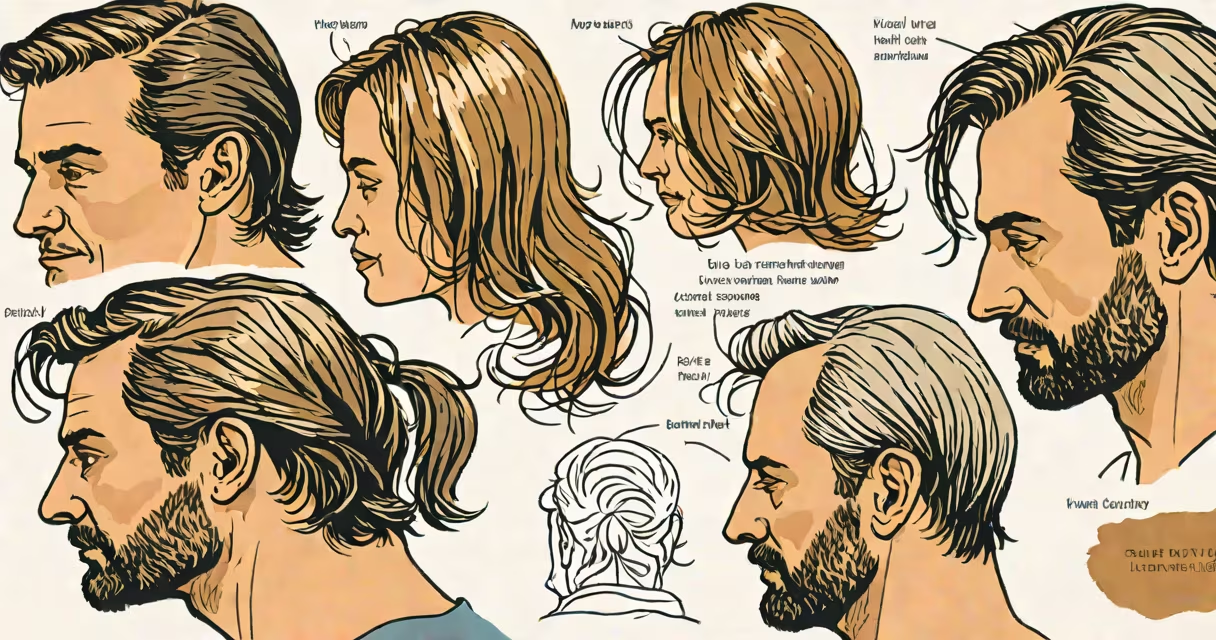
Thinning hair occurs when individual strands grow finer and weaker over time, reducing hair density. Unlike sudden hair loss, thinning happens gradually and may go unnoticed until significant density is lost.
Most people first notice thinning hair when they see more of their scalp in mirrors or photos. Common visual signs include:
I noticed my client's scalp becoming more visible during blowouts. We adjusted styling techniques to create the illusion of fullness while addressing potential underlying causes.
Unlike normal shedding, which involves losing entire strands, thinning hair retains strands but reduces their diameter. A single strand may shrink from 0.12mm to 0.04mm over time, making the hair appear wispy.
According to the American Academy of Dermatology, it's normal to shed 50-100 hairs daily. However, thinning occurs when new hair grows back finer or fails to replace lost strands.
Dermatologists use several methods to diagnose thinning hair:
| Test | Description | What It Measures |
|---|---|---|
| Pull Test | The doctor gently tugs on small sections of hair | Number of strands released (6+ may indicate thinning) |
| Trichoscopy | High-magnification examination of the scalp | Hair follicle health, miniaturization, inflammation |
| Blood Tests | Analysis of hormone levels and nutrient deficiencies | Underlying conditions like thyroid disorders or anemia |
For accurate results, avoid washing hair for 24 hours before a pull test.
Thinning hair often results from multiple factors working together. The most common causes include:
Research published in the Journal of Investigative Dermatology found that genetic factors account for about 80% of male pattern baldness cases.
Once thinning is confirmed, treatment options depend on the underlying cause. Common approaches include: