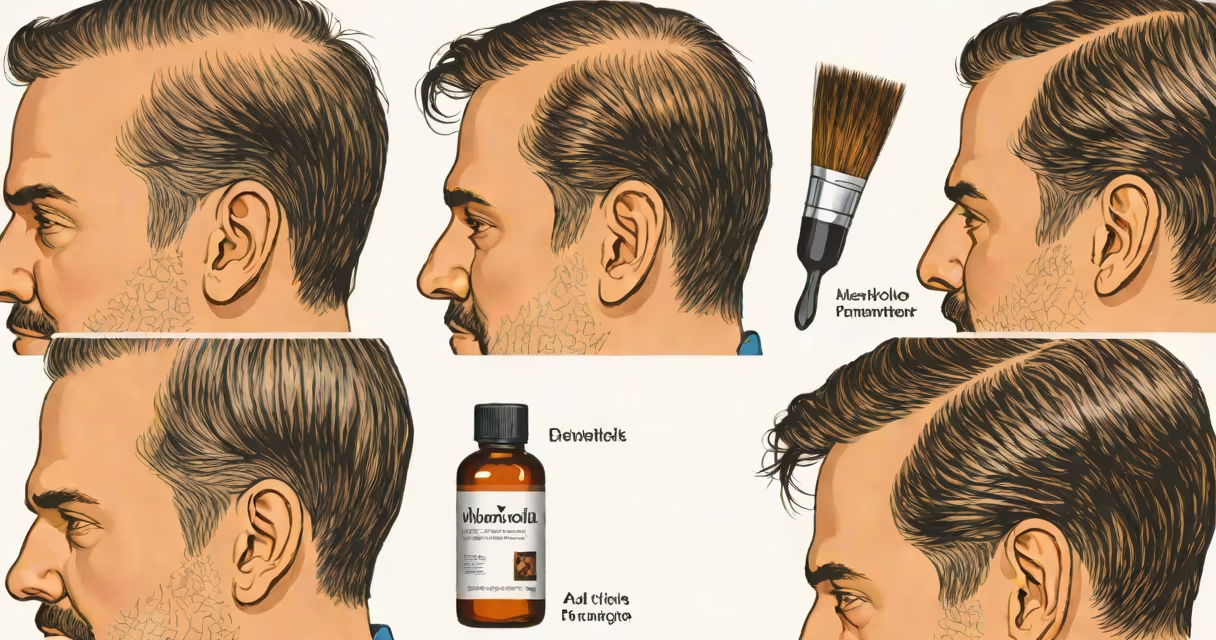
Minoxidil is working when you notice reduced shedding, increased hair thickness, and new growth after 3-6 months of consistent use. These changes occur gradually, so tracking progress requires patience and attention to detail.
Minoxidil is a vasodilator that increases blood flow to hair follicles, extending their growth phase. It also stimulates follicle size, leading to thicker hair. The FDA approved it for treating androgenetic alopecia (pattern baldness) in the 1980s.
| Type | Strength | Formulation |
|---|---|---|
| Over-the-counter (OTC) | 2% or 5% | Liquid or foam |
| Prescription | Up to 15% | Liquid |
The 5% solution is more effective than the 2% version, according to clinical trials. Foam formulations reduce scalp irritation compared to liquid solutions.
Most users see results within 3-6 months, though some report changes as early as 8 weeks. Key indicators include:
I noticed these changes while testing minoxidil for three months. The most visible improvement was in my hairline, where fine hairs became noticeable after 12 weeks.
Many users quit too soon because they expect overnight results. Minoxidil requires consistent daily application for at least six months to show meaningful progress. Skipping doses or applying it irregularly reduces effectiveness.
Another mistake is using minoxidil incorrectly. Applying it to dry hair can cause irritation, while using too much may lead to side effects like scalp acne or unwanted hair growth on adjacent skin.
If you don't see any improvement after six months, minoxidil may not work for you. Discontinuing it often leads to shedding within 3-4 months as follicles return to their pre-treatment state. This is why long-term use is necessary for sustained results.
For more details on what minoxidil does, including its effects on hair follicles and potential side effects, consult a dermatologist before starting treatment.