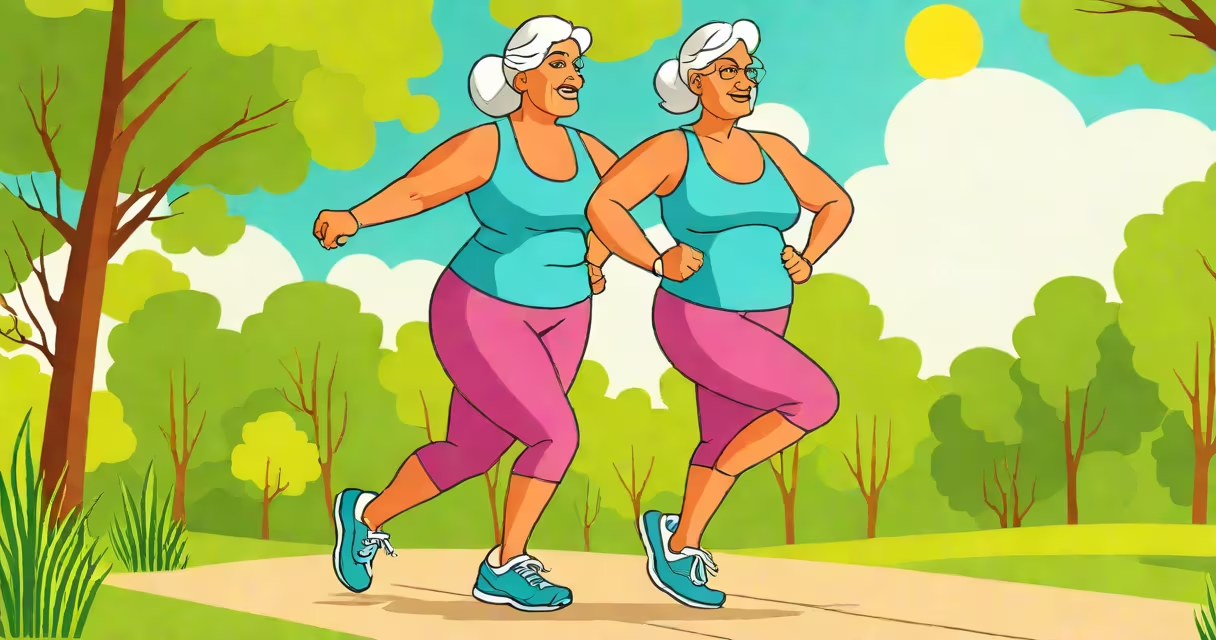
Losing weight after 50 for women involves addressing metabolic slowdown, hormonal shifts, and muscle loss through targeted nutrition and exercise. Unlike younger adults, women over 50 face unique challenges due to menopause and aging.
After age 50, women typically experience a 2-5% reduction in metabolic rate per decade. This is partly due to declining estrogen levels, which redistribute fat to the abdomen. Muscle mass also decreases by about 3-8% per decade, further slowing metabolism. A study published in JAMA Internal Medicine found that postmenopausal women gained an average of 1.5 pounds every two years.
The most effective approaches combine nutrition, exercise, and lifestyle adjustments. Here's how they work:
| Strategy | Key Components | Example |
|---|---|---|
| Nutrition | High-protein, fiber-rich foods; controlled portions | Grilled salmon with quinoa and steamed vegetables |
| Exercise | Strength training, cardio, flexibility work | 30-minute resistance band workout, 3 times weekly |
| Lifestyle | Stress management, sleep optimization | Daily 10-minute meditation, 7-8 hours of sleep |
These strategies help counteract age-related muscle loss and metabolic slowdown. For example, strength training increases muscle mass, which burns more calories even at rest. The American Society on Aging recommends combining protein intake with resistance exercises to preserve muscle.
Many women confuse weight loss with extreme calorie restriction or fad diets. However, these often lead to muscle loss and nutrient deficiencies. Instead, focus on sustainable habits like mindful eating and regular physical activity.
Consider a 52-year-old woman who starts with a baseline of walking 10,000 steps daily. She adds two 30-minute strength training sessions per week and adjusts her diet to include lean proteins and whole grains. After three months, she notices improved energy levels and a 5-pound weight loss. The key was consistency rather than drastic changes.
I've seen this firsthand while working with clients in this age group. One client reduced her sugar intake and incorporated yoga, leading to better mobility and steady weight loss over six months.
Some believe that weight loss is impossible after 50 due to hormonal changes. However, research shows that women can still achieve significant results with the right approach. Another myth is that cardio alone is sufficient, but strength training is important for maintaining muscle mass.
Losing weight after 50 for women requires a tailored approach that accounts for metabolic and hormonal changes. By focusing on nutrition, exercise, and lifestyle adjustments, women can achieve sustainable results and improve their health.