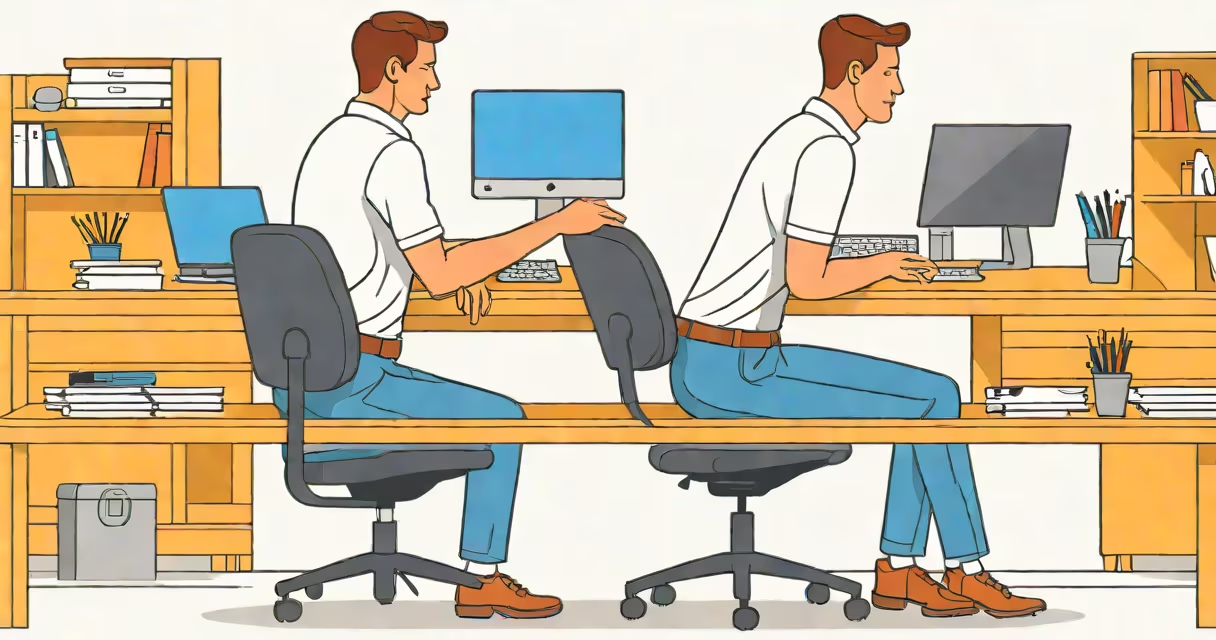
Lower back pain and stiffness after sitting occurs when prolonged sitting weakens core muscles, strains the lower back, and reduces circulation. This discomfort often results from poor posture, inadequate chair support, or sitting too long without movement.
Several factors contribute to lower back pain and stiffness after sitting:
To alleviate and prevent lower back pain and stiffness after sitting, try these strategies:
Your chair should support your lower back's natural curve. Adjust the seat height so your feet rest flat on the floor, and use a lumbar roll or cushion for added support.
Stand up and walk around for at least one minute every 30 minutes. This reduces pressure on your lower back and improves circulation.
Regular exercise, such as planks, bridges, and yoga, strengthens your core muscles and reduces strain on your lower back.
Stretching your lower back, hips, and hamstrings helps maintain flexibility and prevents stiffness. Try seated spinal twists or standing hamstring stretches.
Many people believe that sitting with their legs crossed relieves back pain. However, this position actually increases pressure on the lower back and reduces circulation., some think that sitting on a soft chair is better for their back, but soft chairs offer little support and can worsen discomfort.
Last year, I noticed increasing lower back pain and stiffness after long workdays at my desk. After adjusting my chair, taking frequent breaks, and incorporating core-strengthening exercises into my routine, my discomfort improved. I also started using a lumbar roll, which made a noticeable difference in my posture and comfort.