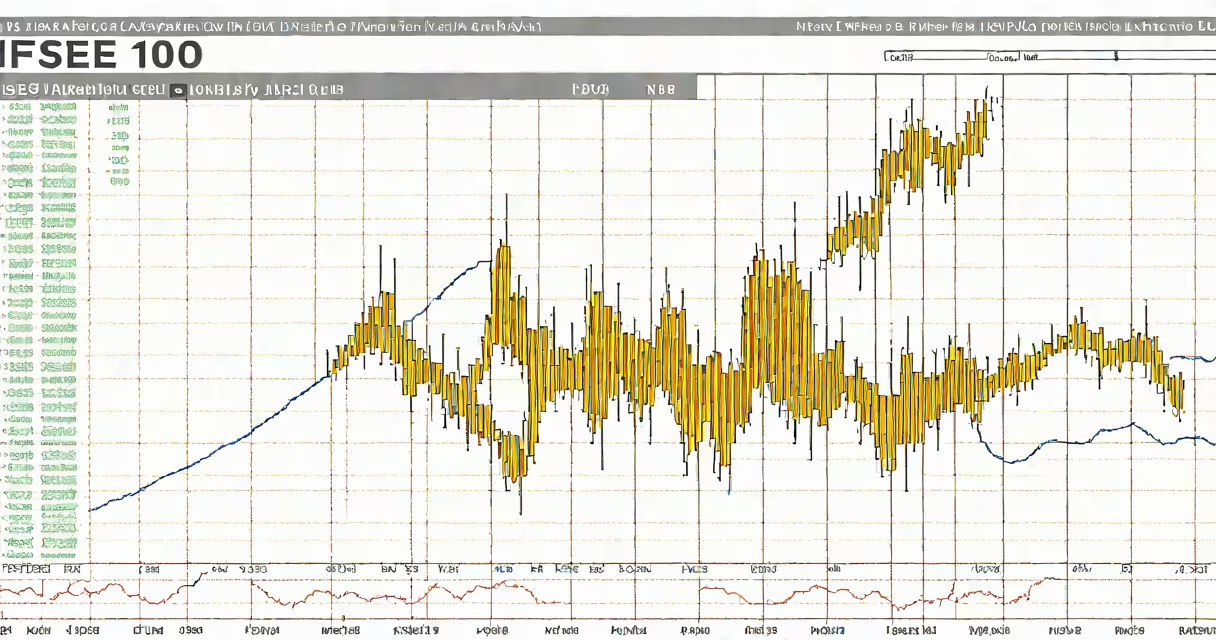
The LSE FTSE Index is a financial benchmark tracking the performance of the largest companies listed on the London Stock Exchange (LSE). The most well-known version is the FTSE 100 Index, which includes the 100 highest-value companies.
The index calculates the combined share price movements of its constituent companies. Each company's influence is weighted by its market capitalization-the total value of its shares. The index starts at a base level of 1,000 points, and changes reflect percentage movements in share prices.
| Index Name | Number of Companies | Market Representation |
|---|---|---|
| FTSE 100 | 100 | Largest UK companies by market cap |
| FTSE 250 | 250 | Mid-cap companies |
| FTSE All-Share | 600+ | Complete UK market coverage |
The index serves as a barometer for the UK economy. Investors use it to gauge market trends, while fund managers create index-tracking funds to replicate its performance. When the FTSE 100 rises, it generally indicates investor confidence in the UK economy.
A common misconception is that the FTSE 100 solely represents UK-based businesses. In reality, many constituents earn significant revenue overseas, making the index somewhat globalized. For instance, companies like Shell and BP derive substantial income from international operations.
In early 2020, the FTSE 100 dropped sharply due to pandemic-related uncertainty. By March 2020, it had fallen by around 30% from its February high. However, it recovered steadily through 2021, reflecting investor optimism as lockdowns eased and vaccination programs progressed.
According to the London Stock Exchange, the FTSE 100's composition is reviewed quarterly to ensure it remains representative of the UK's largest companies by market capitalization.
Many people confuse the FTSE 100 with the entire UK stock market. While it includes large companies, smaller firms listed on the FTSE 250 and AIM (Alternative Investment Market) also contribute to the economy., the FTSE 100's performance doesn't always align with the broader UK economy due to its global revenue streams.
I once observed how the FTSE 100 reacted during the Brexit referendum in 2016. Immediately after the vote, the index dropped by around 12%, reflecting initial market uncertainty. However, it gradually recovered as investors adjusted to the new political field.
The LSE FTSE Index, particularly the FTSE 100, provides a important snapshot of the UK's economic health. By tracking the performance of leading companies, it offers valuable insights for investors, economists, and policymakers alike. Understanding its composition and dynamics can help stakeholders make informed decisions in the ever-changing financial field.