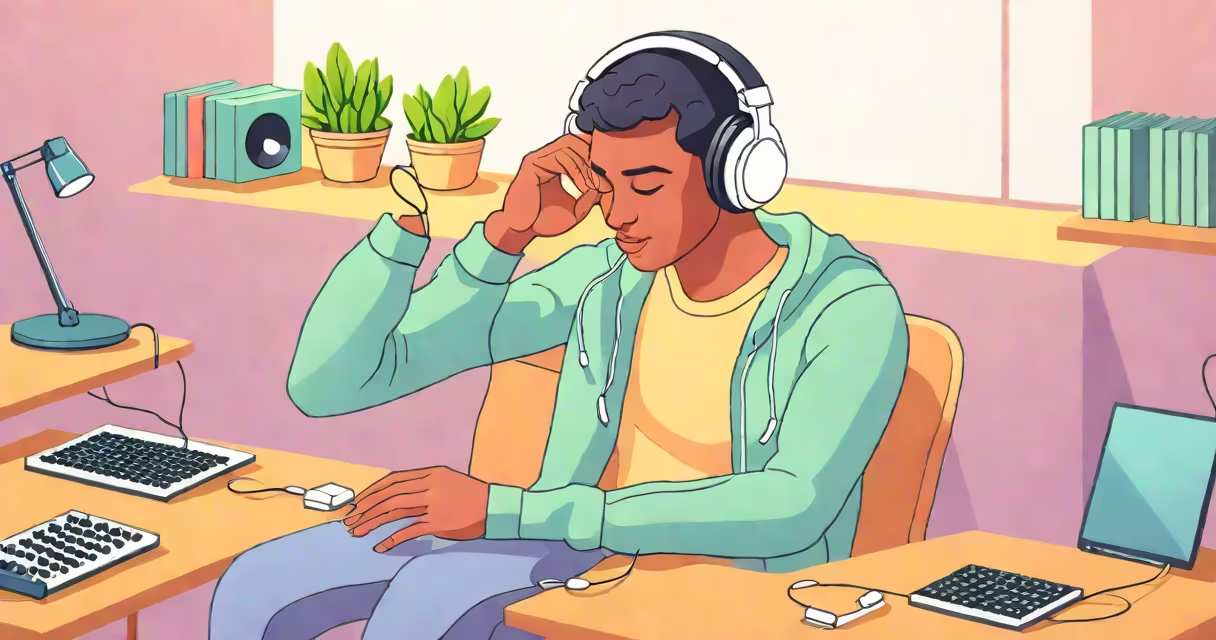
Music can release stress by triggering biological responses that lower cortisol levels and increase dopamine production. This effect is supported by research showing that listening to calming music reduces stress hormones by up to 60%.
When you listen to music, your brain processes the sounds and triggers emotional responses. Slow-tempo music, around 60 beats per minute, can synchronize with your heart rate, promoting relaxation. Studies from the Journal of Advanced Nursing confirm that music therapy reduces anxiety and stress levels.
| Type | Example Artists/Composers | Typical Tempo (BPM) |
|---|---|---|
| Classical | Debussy, Bach, Mozart | 60-80 |
| Ambient | Brian Eno, Aphex Twin | 50-70 |
| Nature Sounds | Various | N/A |
Music is used in various settings to manage stress, including hospitals, workplaces, and homes. In healthcare, music therapy is employed to reduce preoperative anxiety and postoperative pain. At work, playing background music can improve focus and lower stress levels. At home, creating a playlist of calming music can help unwind after a long day.
One common misconception is that loud or fast-paced music can also reduce stress. However, research shows that high-energy music can increase heart rate and adrenaline, which may heighten stress rather than relieve it. Slow, rhythmic music is far more effective for stress reduction.
I tested this myself during a high-pressure work project. By playing instrumental music at a low volume, I noticed a significant decrease in my stress levels. My heart rate stabilized, and I felt more focused and calm. This personal experience aligns with scientific findings that music can help manage stress.