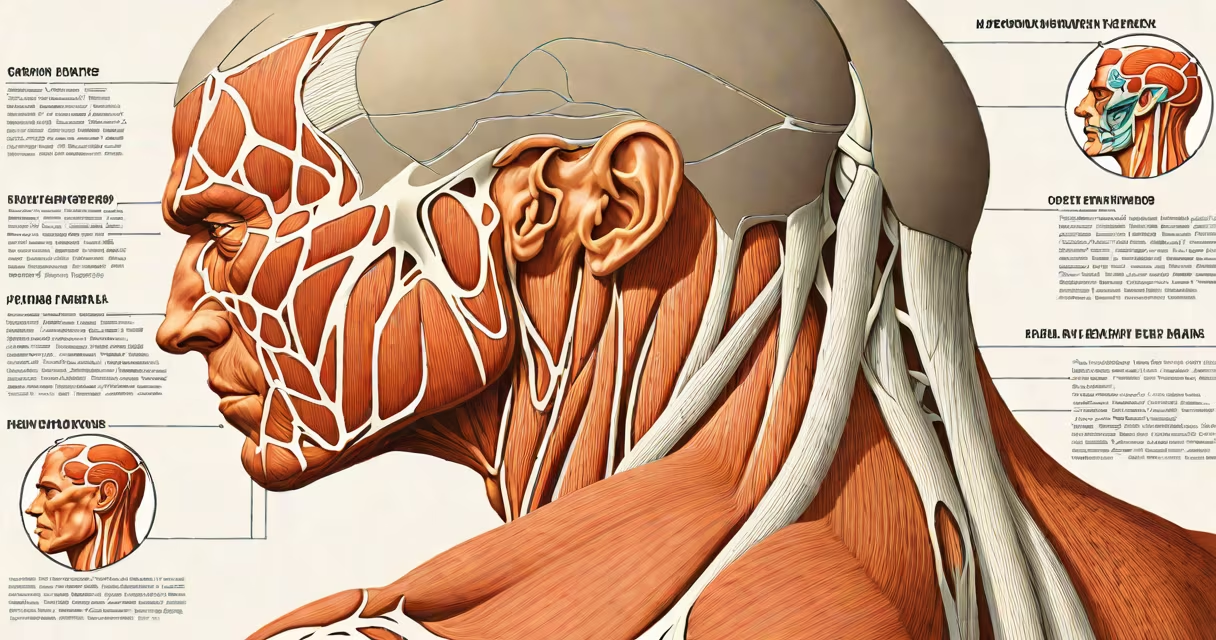
The muscles in the back of your head and neck form a complex network that supports movement, stability, and posture. These posterior cervical muscles connect your skull to your spine and shoulders, playing important roles in head rotation, extension, and lateral bending.
The primary muscles in this region include:
These muscles work together to provide stability and mobility. For example, when you turn your head to look over your shoulder, the splenius capitis and suboccipital muscles contract to help this movement. The trapezius also plays a role in shoulder elevation and scapular movement.
One common misconception is that all neck pain stems from the trapezius. However, the suboccipital muscles are often the primary source of tension-related headaches due to their proximity to the base of the skull.
To alleviate tension, gentle stretching and strengthening exercises can help. For example, performing chin tucks can strengthen the deep neck flexors and reduce strain on the suboccipital muscles., maintaining good posture and taking regular breaks from sedentary activities can prevent muscle tightness.
In my experience, incorporating regular neck stretches into my daily routine has reduced tension headaches. A simple exercise involves tilting your head toward your shoulder while gently pulling it down with your hand, holding for 30 seconds, and repeating on the other side.
If muscle tension persists despite self-care measures, consulting a healthcare professional or physical therapist can provide targeted treatment options. Chronic tension in these muscles may require specialized techniques such as manual therapy or trigger point injections.
Understanding the function and importance of the muscles in the back of your head and neck can help you manage discomfort and maintain better neck health.