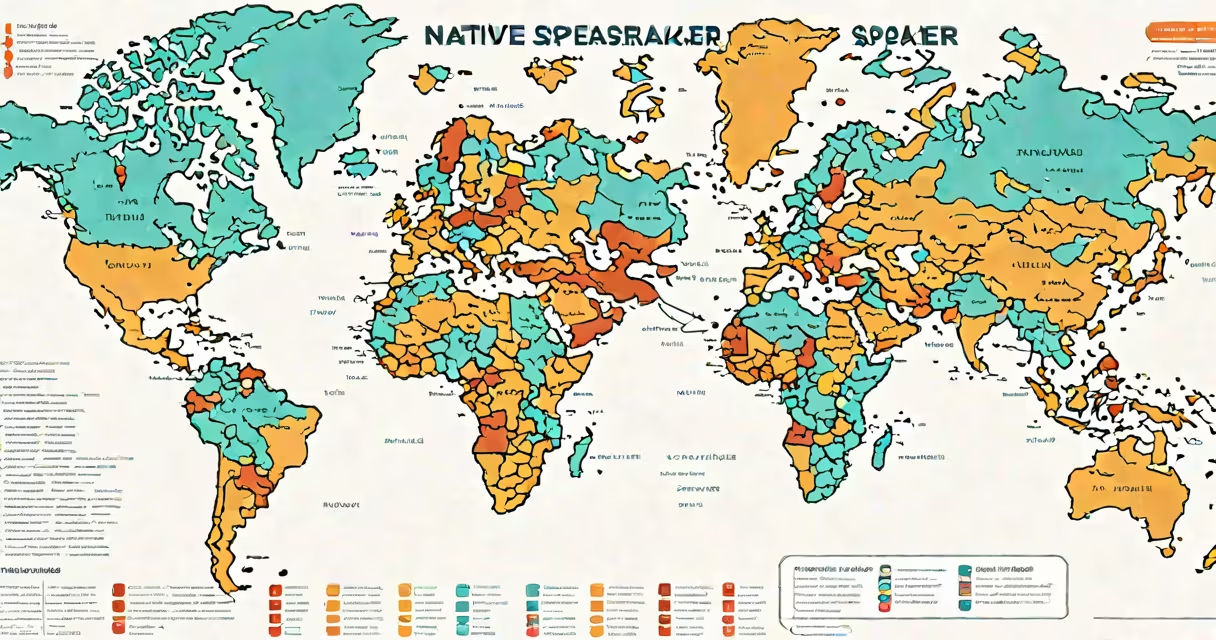
A native speaker is someone who learned a language naturally during childhood as their primary means of communication. This typically occurs through immersion in a community where the language is spoken natively.
Children acquire language through constant exposure and interaction. They develop phonetic, syntactic, and semantic knowledge intuitively rather than through formal study. Research shows that this process occurs most effectively between birth and puberty, with the most critical period being the first six years of life.
Native speakers fall into several categories:
| Type | Description | Example |
|---|---|---|
| Monolingual | Speaks only one language natively | Child raised in rural Japan speaking only Japanese |
| Bilingual | Speaks two languages natively from birth | Child raised in a French-English bilingual household |
| Multilingual | Speaks three or more languages natively | Child raised in a Swiss family speaking German, French, and Italian |
Native speakers serve important roles in education, translation, and research. Language schools often employ them as teachers because they provide authentic pronunciation and usage. In religious contexts, such as sacramental rituals, native speakers ensure proper pronunciation of sacred texts. Researchers study native speakers to understand language development and processing.
However, native speakers aren't always perfect. Some may have regional accents or dialects that differ from standard forms. A 2018 study published in the journal Language Learning found that even native speakers make grammatical errors, particularly in complex sentence structures.
Many assume native speakers are automatically excellent language teachers. While they have intuitive knowledge, teaching requires additional skills like lesson planning and student assessment. A native speaker might struggle to explain grammar rules explicitly, whereas a non-native teacher with formal training might excel at this.
Another misconception is that native speakers always have superior language abilities. Some may have limited vocabulary or poor literacy skills due to lack of education. Conversely, highly educated non-native speakers often outperform native speakers in standardized language tests.
I once worked with a Spanish native speaker from rural Mexico who spoke with a thick accent and limited formal education. While his conversational skills were excellent, he struggled with reading and writing complex documents. Meanwhile, a German non-native speaker with a PhD in linguistics had near-perfect command of written Spanish.
Native speakers play a important role in preserving endangered languages. When a language has few remaining speakers, each native speaker becomes invaluable for documenting and transmitting cultural knowledge. Organizations like UNESCO work with native speakers to create language learning materials and revitalization programs.
For example, the Hawaiian language nearly became extinct in the 20th century. However, efforts by native speakers and educators have increased the number of fluent speakers from just 22 in 1978 to over 24,000 today. These speakers maintain traditional chants, stories, and place names that would otherwise be lost.