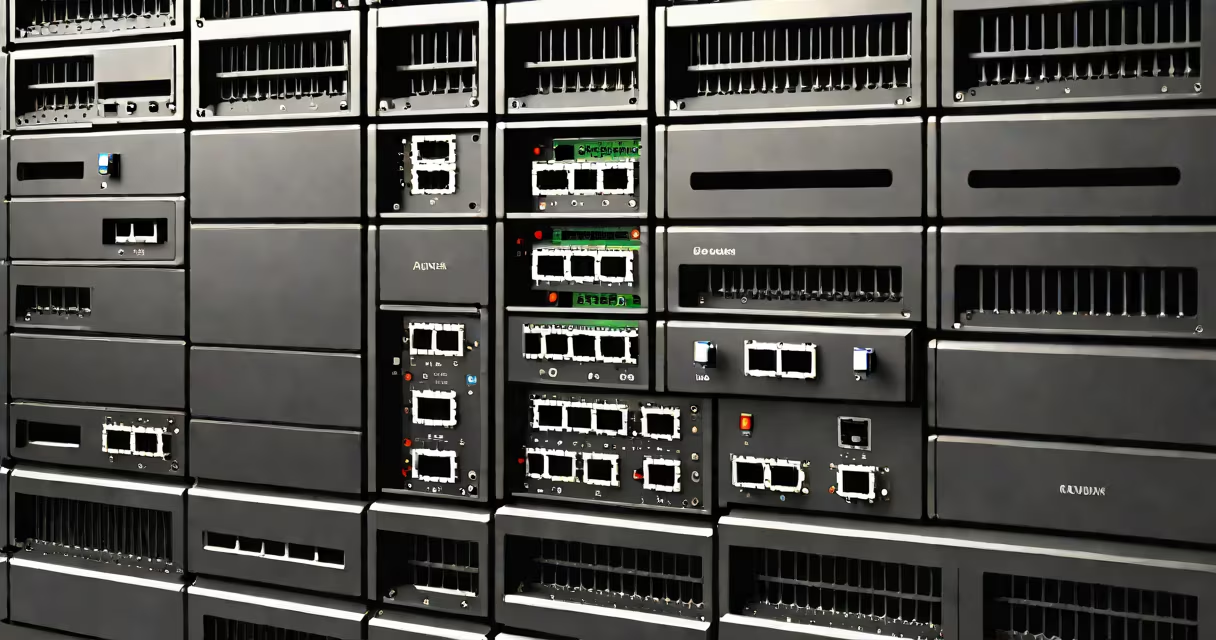
Network hardware types are physical devices that connect, transmit, and manage data within a computer network. These components create the infrastructure needed for devices to communicate, forming local area networks (LANs) or wide area networks (WANs).
Network hardware operates by converting data into signals that travel through cables or wireless frequencies. Routers direct traffic between networks, switches manage connections within a network, and modems convert signals between devices and service providers. For example, a router assigns IP addresses to devices on a home network, while a switch ensures data reaches the correct device.
Network hardware falls into several categories, each serving distinct functions:
For example, a business might use a router to connect to the internet, switches to link office computers, and access points to provide Wi-Fi coverage throughout the building.
Many people confuse routers and modems, assuming they perform the same function. While both are essential for internet access, routers manage traffic within a network, whereas modems connect a network to an internet service provider (ISP). A modem alone cannot distribute internet access to multiple devices without a router.
Another misconception is that all network hardware is complex and expensive. Basic hardware like Ethernet cables and small switches are affordable and easy to set up, even for home users.
Network hardware is essential in various environments, enterprises. Home networks typically use routers, modems, and Wi-Fi access points. Businesses rely on more advanced hardware, including servers, firewalls, and high-capacity switches. Data centers use specialized hardware like load balancers and fiber-optic cables to handle massive data flows efficiently.
For instance, a university might deploy multiple switches to connect thousands of devices across campus, while a small business could use a single router and switch to manage its network.
Network hardware is the core of modern communication and data exchange. Without it, devices couldn't share resources, access the internet, or communicate securely. Investing in quality hardware ensures reliable performance, scalability, and security. For example, a business with outdated hardware may experience frequent downtime, whereas one with modern equipment can maintain smooth operations even during peak usage.
As networks grow more complex, understanding the different types of hardware becomes important for troubleshooting and optimization. Properly configured hardware can improve speed, reduce latency, and improve network reliability.
For more detailed information on specific network devices, see this guide.