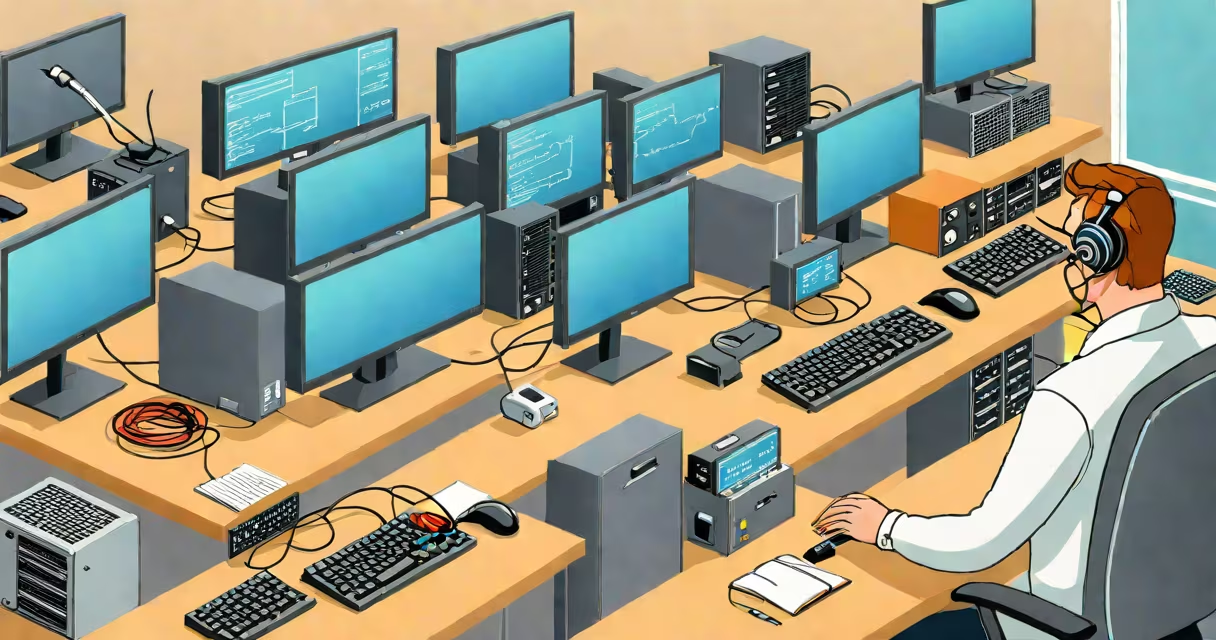
A network support technician maintains, troubleshoots, and repairs computer networks to ensure business operations run smoothly. They install hardware, configure software, and resolve connectivity issues.
These professionals work in various settings, including offices, data centers, and remote locations. They often collaborate with other IT staff, such as network administrators and system analysts, to address complex issues. Their work involves both proactive maintenance and reactive troubleshooting.
| Role | Primary Responsibilities | Typical Work Environment |
|---|---|---|
| Help Desk Technician | Responds to user inquiries, resolves basic technical issues, and escalates complex problems | Office or call center |
| Network Support Specialist | Maintains network infrastructure, troubleshoots connectivity issues, and ensures security compliance | On-site or remote |
| Field Service Technician | Travels to client sites to install, repair, and maintain network equipment | Various locations |
Network support technicians are essential in any organization relying on IT infrastructure. They ensure minimal downtime, improve security, and improve productivity. For example, a hospital's network support team ensures electronic health records remain accessible, while a university's team supports online learning platforms.
Many confuse network support technicians with network engineers. While both roles involve networks, technicians focus on maintenance and troubleshooting, whereas engineers design and implement new systems., network support isn't just about fixing issues-it includes regular maintenance to prevent problems.
At a mid-sized company, a network support technician might start the day by checking network performance metrics. They notice a slow connection in the finance department and trace the issue to a faulty switch. After replacing the switch, they verify the connection is stable and document the incident for future reference.
One time, I observed a technician at a local school district resolve a widespread Wi-Fi outage. The technician isolated the problem to a misconfigured router, updated the firmware, and restored internet access within an hour. This quick response minimized disruption to online classes.
For those interested in this career path, consider earning certifications like CompTIA A+, Network+, or Cisco Certified Network Associate (CCNA). These credentials validate skills and improve job prospects. Learn more about network technician certification options.