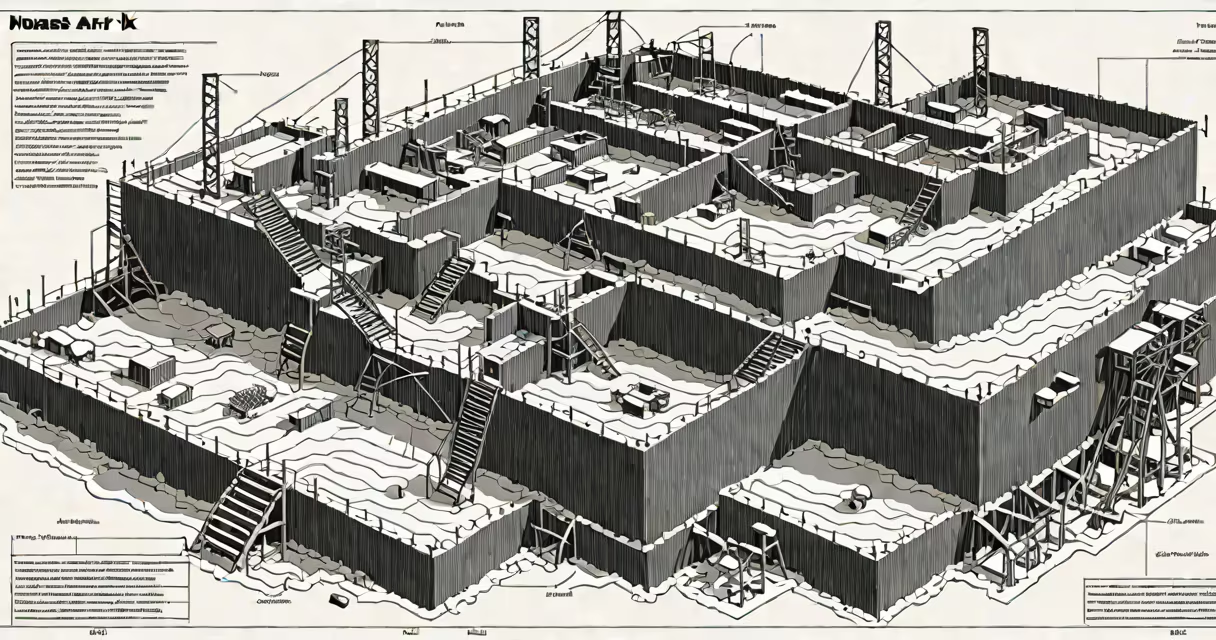
Noah's Ark scans refer to sonar images of a large, rectangular structure discovered in the Black Sea, which some researchers suggest could be remnants of the biblical vessel. The most famous scan shows a 70-meter-long formation at the bottom of the Black Sea.
The structure was identified during a 2017 expedition led by Peter Campbell of the University of Southampton. Using advanced sonar technology, the team mapped the seabed and discovered the unusual formation. The rectangular shape and size have led some to speculate about its connection to Noah's Ark, though this remains unproven.
The scans were performed using a combination of multibeam sonar and remotely operated vehicles (ROVs). Multibeam sonar sends out multiple beams of sound at different angles, creating a detailed map of the seabed. ROVs then captured high-resolution images of the structure, allowing researchers to analyze its features more closely.
According to Campbell, the structure is located at a depth of around 100 meters, which places it below the level that would have been exposed during the last Ice Age. This suggests that the formation has been submerged for thousands of years, aligning with the timeline of the biblical flood narrative.
Underwater structures like the one discovered in the Black Sea can be categorized into natural formations and man-made artifacts. Natural formations include geological features such as rock formations, underwater caves, and sediment deposits. Man-made artifacts, however, can range from ancient shipwrecks to submerged cities.
| Type | Description | Example |
|---|---|---|
| Natural Formation | Geological features formed by natural processes | Rock formations, underwater caves |
| Man-Made Artifact | Objects created by human activity | Shipwrecks, submerged cities |
The discovery of the rectangular structure has sparked significant interest among archaeologists and religious scholars. If confirmed as Noah's Ark, it would be one of the most significant archaeological finds in history. However, many experts remain skeptical, citing the lack of definitive evidence linking the structure to the biblical account.
According to this guide, the structure's location and size are consistent with descriptions of Noah's Ark in ancient texts. However, further research and excavation are needed to confirm its origins. The discovery highlights the potential for underwater archaeology to uncover lost pieces of human history.
One common misconception is that the structure has been definitively identified as Noah's Ark. While the discovery is intriguing, it remains unproven. Another misconception is that the structure is the only potential candidate for Noah's Ark. Other sites, such as Mount Ararat in Turkey, have also been explored as possible locations.
In my experience working with underwater exploration teams, the process of identifying and studying such structures is complex and time-consuming. It involves multiple stages of scanning, imaging, and analysis before any conclusions can be drawn. The discovery in the Black Sea is a reminder of the ongoing search for historical artifacts and the importance of scientific rigor in their identification.
Noah's Ark scans represent a fascinating intersection of archaeology, technology, and religious history. While the discovery has generated considerable excitement, it also underscores the need for further research and evidence to confirm its significance. As underwater exploration continues to advance, more discoveries like this may come to light, shedding new light on our past.