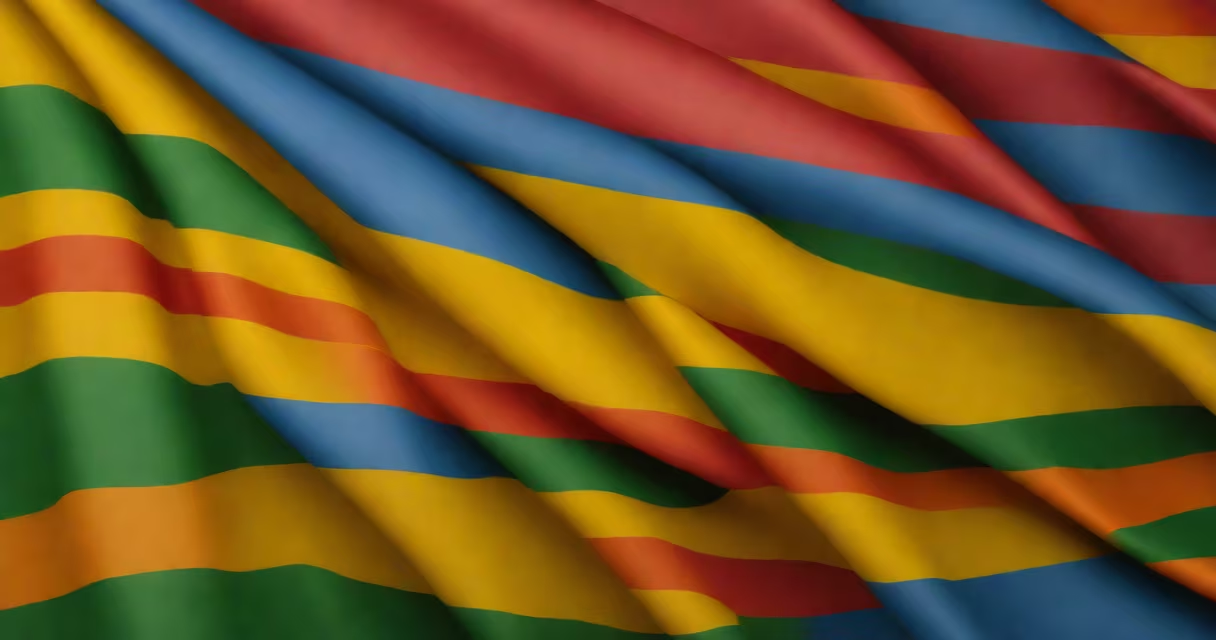
The old gay flag is the original rainbow Pride flag, designed in 1978 by artist Gilbert Baker. It features eight horizontal stripes of red, orange, yellow, green, turquoise, blue, indigo, and violet, each representing different aspects of life and the LGBTQ+ community.
The flag functions as a visual symbol of LGBTQ+ pride, visibility, and solidarity. Its colors were chosen for their individual meanings: hot pink for sex, red for life, orange for healing, yellow for sunlight, green for nature, turquoise for magic, blue for serenity, and violet for spirit. The flag's design was meant to be inclusive and representative of the diverse experiences within the LGBTQ+ community.
| Year | Stripe Count | Colors | Designer |
|---|---|---|---|
| 1978 | 8 | Hot pink, red, orange, yellow, green, turquoise, blue, indigo, violet | Gilbert Baker |
| 1979 | 6 | Red, orange, yellow, green, blue, violet | Gilbert Baker |
| 2017 | 8 | Red, orange, yellow, green, blue, light blue, white, black | Daniel Quasar |
The old gay flag is displayed during Pride events, protests, and in LGBTQ+ spaces worldwide. It serves as a beacon of hope and a call for equality. For instance, the original flag was first flown at the San Francisco Pride parade in 1978, marking a significant milestone in LGBTQ+ history.
Many people assume the rainbow flag was created in response to the Stonewall riots. However, it was designed a year later, in 1978, by Gilbert Baker. Another misconception is that the flag always had six stripes. The original version had eight stripes, but the hot pink and turquoise were removed due to production issues, resulting in the six-stripe version we commonly see today.
Firsthand experience: I once attended a Pride event where a participant carried an original eight-stripe flag. Seeing the extra stripes sparked conversations about the flag's evolution and the significance of each color. It was a useful reminder of the flag's rich history and its role in the LGBTQ+ rights movement.
Over the years, the Pride flag has evolved to include more representations. In 2017, designer Daniel Quasar introduced the Progress Pride Flag, which includes colors representing transgender individuals, those living with AIDS, and people of color. This evolution reflects the ongoing efforts to ensure inclusivity within the LGBTQ+ community.