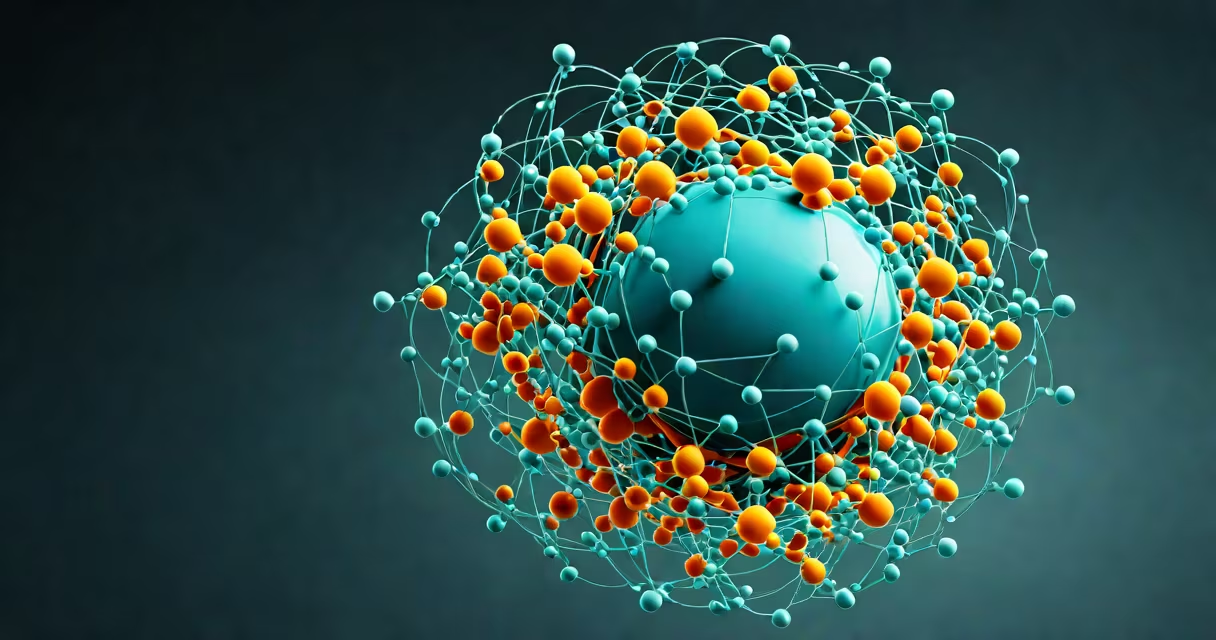
The particles found in the nucleus of an atom are protons and neutrons, collectively called nucleons. These subatomic particles form the dense central region of an atom, known as the atomic nucleus.
The nucleus contains nearly all of an atom's mass due to the relatively large size of protons and neutrons compared to electrons. Protons carry a positive electrical charge, while neutrons have no charge. The number of protons determines the element's identity, while the number of neutrons can vary, creating isotopes of the same element.
There are two primary types of particles found in the nucleus:
For example, a carbon atom always has six protons, but it can have six, seven, or eight neutrons, resulting in different isotopes like carbon-12, carbon-13, and carbon-14.
Many people confuse the nucleus with the entire atom or assume electrons are part of the nucleus. However, electrons orbit the nucleus at much greater distances., the nucleus is incredibly small-if an atom were the size of a football stadium, the nucleus would be about the size of a marble.
The nucleus plays a critical role in defining an element's properties and behavior. Without the nucleus, atoms would lack stability, and chemical reactions as we know them wouldn't occur. Understanding the particles within the nucleus is fundamental to fields like nuclear physics, chemistry, and materials science.