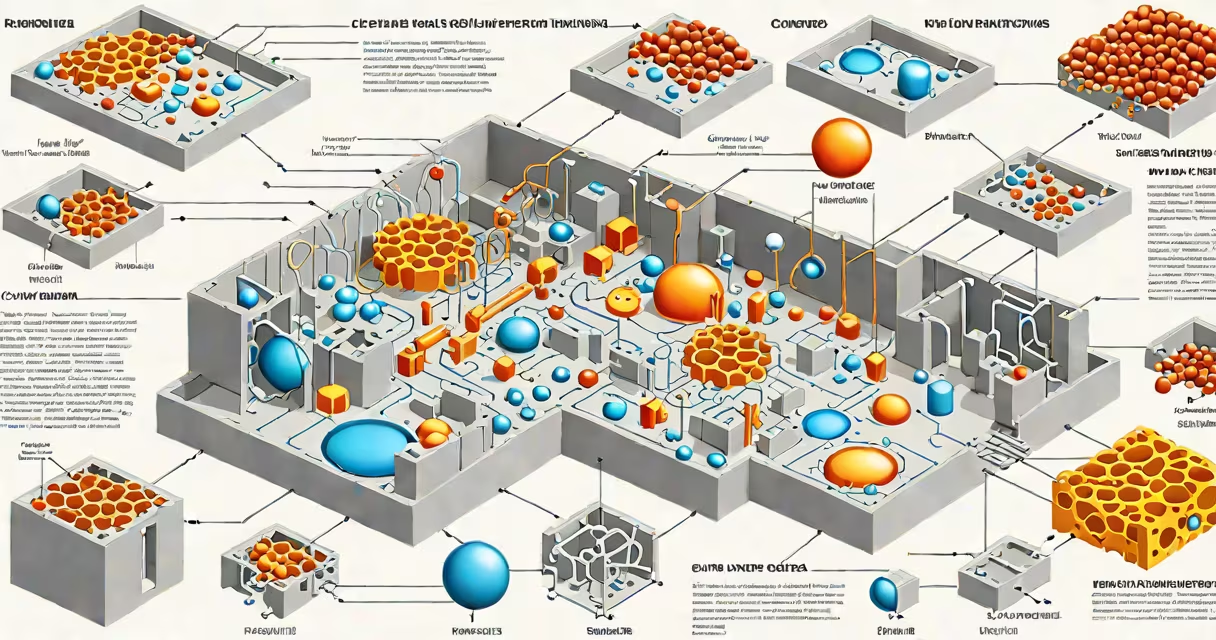
Cells are the basic building blocks of life, composed of various parts called organelles, each performing specific functions. These structures work together to maintain the cell's life and carry out essential processes.
Cells function through the coordinated efforts of their organelles. Energy production, waste removal, and information processing all occur within specialized compartments. The cell membrane controls what enters and exits, while the cytoplasm provides a medium for chemical reactions.
Cells contain different organelles, each with unique roles. Animal cells and plant cells share some structures but differ in others. Here's a breakdown of key cell parts:
| Organelle | Function |
|---|---|
| Nucleus | Contains DNA and controls cell activities |
| Mitochondria | Produces energy through cellular respiration |
| Ribosomes | Synthesizes proteins |
| Endoplasmic Reticulum | Facilitates protein and lipid synthesis |
| Golgi Apparatus | Modifies, sorts, and packages proteins and lipids |
These organelles operate within the cell to sustain life. The nucleus acts as the control center, directing cellular activities. Mitochondria generate energy, powering cellular processes. Ribosomes assemble proteins, important for growth and repair. The endoplasmic reticulum and Golgi apparatus process and package these proteins for transport.
Many confuse the endoplasmic reticulum with the Golgi apparatus, assuming they perform identical functions. However, the endoplasmic reticulum synthesizes proteins and lipids, while the Golgi apparatus modifies, sorts, and packages them. Another mistake is overlooking the role of lysosomes, which digest waste materials and cellular debris, maintaining cellular cleanliness.
Consider a factory analogy: the nucleus is the management office, mitochondria are the power plants, ribosomes are assembly lines, and the endoplasmic reticulum and Golgi apparatus are quality control and packaging departments. Each part contributes to the factory's productivity.
When studying biology, I found it helpful to visualize these organelles working together. For instance, understanding how mitochondria convert nutrients into energy clarified metabolic processes. Recognizing the nucleus's role in storing genetic information highlighted its importance in inheritance and cell division.