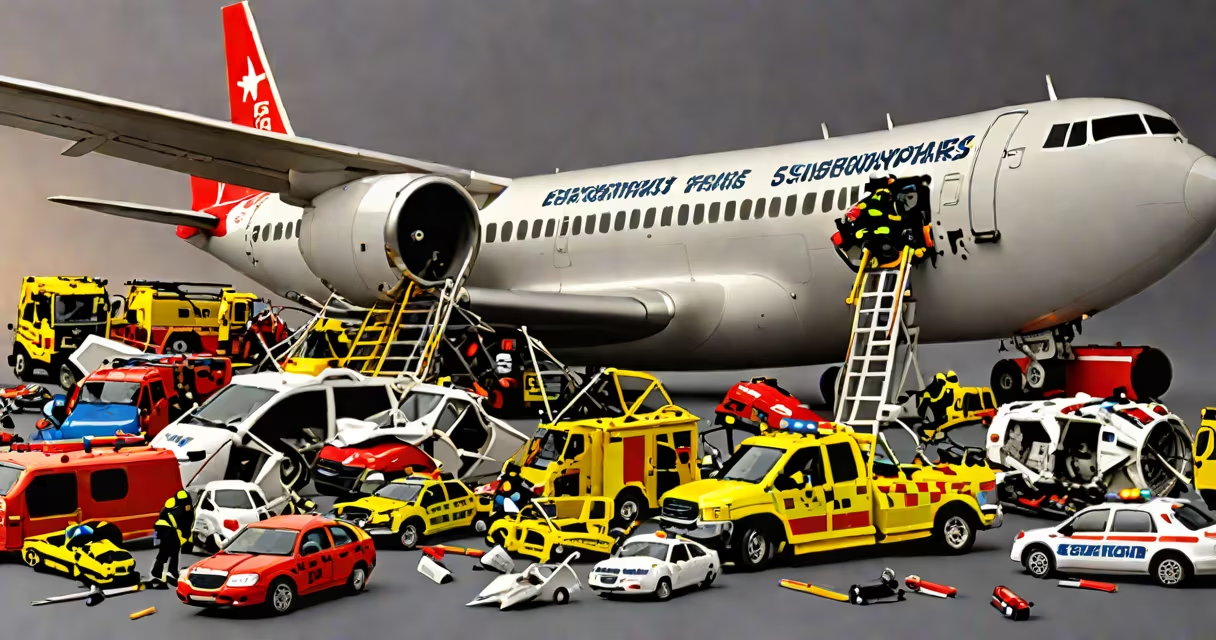
A plane carrying 25 passengers and crew crashed with no survivors, marking a tragic aviation disaster. Such incidents, though rare, show critical safety measures in commercial flight.
Plane crashes result from a combination of mechanical failure, human error, or extreme weather conditions. The National Transportation Safety Board (NTSB) investigates each incident to determine the cause and improve safety protocols.
Fatal crashes typically fall into these categories:
| Type | Cause | Example |
|---|---|---|
| Controlled Flight Into Terrain (CFIT) | Pilot error or spatial disorientation | Air France Flight 447 (2009) |
| Loss of Control in Flight | Mechanical failure or turbulence | Lion Air Flight 610 (2018) |
| Mid-Air Collision | Air traffic control errors | Charkhi Dadri mid-air collision (1996) |
Commercial aviation remains one of the safest modes of transportation. According to the International Air Transport Association (IATA), the fatal accident rate for major airlines is 0.13 per million flights. Improved technology and stringent regulations have reduced crash rates over the decades.
Many believe turbulence causes most crashes, but turbulence rarely leads to fatal accidents. Most crashes result from a combination of factors, including pilot error, mechanical failure, and adverse weather conditions. Understanding these factors helps improve safety measures and prevent future incidents.
For instance, the crash of a plane carrying 25 people often involves multiple system failures. Pilots undergo rigorous training to handle emergencies, and airlines implement strict maintenance protocols to ensure safety. Despite these measures, accidents still occur, emphasizing the need for continuous improvement in aviation safety.
The crash of a plane carrying 25 people with no survivors underscores the importance of aviation safety. While such incidents are rare, they show the need for continuous improvements in technology, training, and regulations to prevent future tragedies.