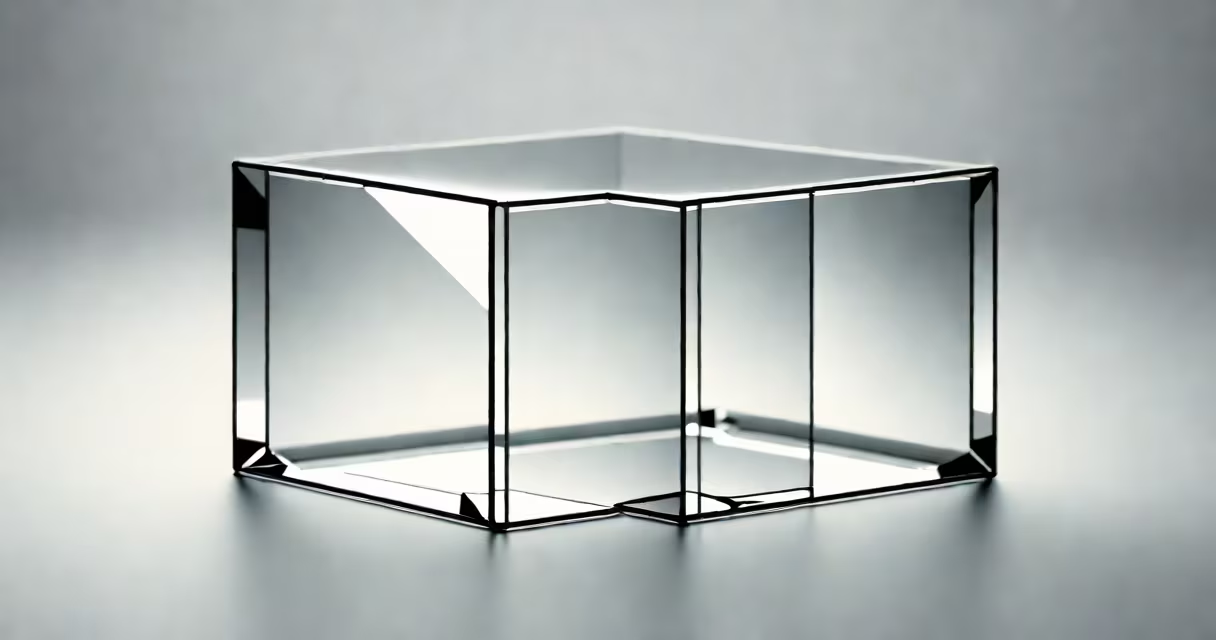
A rectangular prism volume calculation determines the space inside a box-shaped object by multiplying its length, width, and height. This applies to any rectangular prism, whether it's a shoebox or a building.
The volume of a rectangular prism measures how much three-dimensional space the object occupies. The formula is straightforward: multiply the prism's length (L), width (W), and height (H) together. The result is always in cubic units (e.g., cubic inches, cubic feet).
For example, consider a shoebox with dimensions 12 inches long, 6 inches wide, and 4 inches tall. Its volume is calculated as:
Volume = L × W × H
       = 12 × 6 × 4
= 288 cubic inchesRectangular prisms come in different forms, but they all use the same volume formula. The differences lie in their proportions:
| Type | Proportions | Example |
|---|---|---|
| Cube | All sides equal | Dice, storage cubes |
| Standard Rectangular Prism | Different length, width, height | Shoeboxes, small appliances |
| Long Rectangular Prism | One dimension longer | Books, planks |
Rectangular prism volume calculations are essential in various fields. In construction, builders use them to determine material quantities for projects. In shipping, companies calculate volumes to ensure proper packaging and pricing. Even in everyday life, people use this calculation to determine how much stuff fits into a moving box.
For instance, if you're moving and need to pack books into a box that's 18 inches long, 12 inches wide, and 12 inches tall, you'd calculate its volume as follows:
Volume = 18 × 12 × 12
       = 2,592 cubic inches
This tells you the box can hold 2,592 cubic inches of books or other items.
Many people confuse rectangular prism volume with surface area. Surface area calculates the total area of all the prism's faces, while volume measures the space inside. Another mistake is assuming all rectangular prisms are cubes. Cubes are a specific type of rectangular prism where all sides are equal.
Some forget that volume is measured in cubic units, not square units. For example, a room that's 10 feet long, 10 feet wide, and 8 feet high has a volume of 800 cubic feet, not 80 square feet.
I once helped a friend build a doghouse and had to calculate the volume of the wooden box frame. Using the formula, we determined the exact amount of insulation needed to fill the space inside. This practical application reinforced the importance of accurate volume calculations.