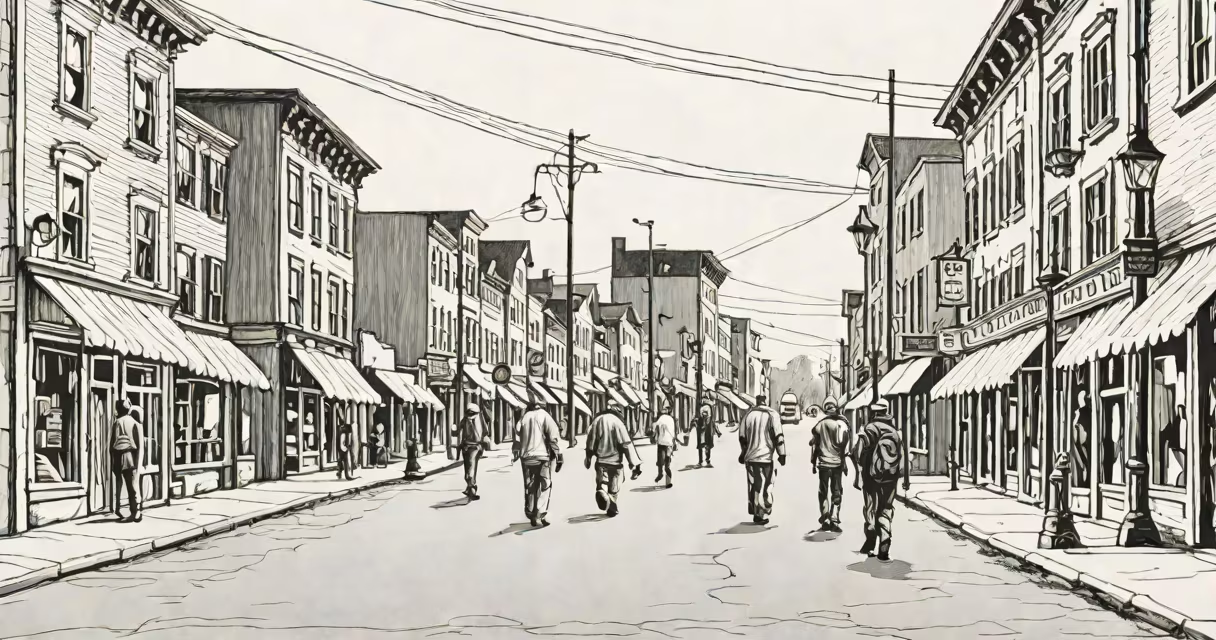
A small town kid is someone who grew up in a community of fewer than 25,000 people, where everyone knows each other and local traditions bind residents together. This upbringing fosters close relationships, strong community ties, and a distinct worldview shaped by slower-paced living and shared experiences.
Small towns operate on interpersonal connections rather than anonymity. Residents rely on each other for support, creating a safety net that urban areas often lack. For example, in a town of 5,000 people, the local grocery store owner might know every customer by name and remember their preferences. This level of familiarity builds trust but can also limit privacy.
Small towns vary widely in character and economy. The U.S. Department of Agriculture categorizes them into:
| Type | Population | Key Features |
|---|---|---|
| Rural | Under 2,500 | Agriculture-based, sparse population, limited services |
| Urban Cluster | 2,500-10,000 | More services, some light industry, still close-knit |
| Suburban | 10,000-25,000 | Commuter towns, mix of residential and commercial |
Small towns thrive in areas where land is abundant and populations are spread out, such as the American Midwest or Appalachia. They persist because they offer lower costs of living, stronger community bonds, and a slower pace of life compared to cities. However, they often struggle with limited job opportunities and access to specialized services.
Many small towns also serve as hubs for nearby rural areas. A town of 3,000 people might support surrounding farms by providing schools, medical facilities, and social gatherings. This central role keeps the town relevant even as larger cities grow.
People often assume small towns are backward or lacking in opportunity. In reality, many offer unique advantages, such as lower crime rates, stronger social networks, and a focus on mental well-being. For example, studies show that rural residents report higher life satisfaction than urban dwellers, despite lower incomes (Centers for Disease Control and Prevention, 2020).
Another myth is that small towns are homogeneous. Many have diverse populations, especially those near borders or with historical immigrant communities. A town in upstate New York might have a strong Polish heritage, while one in Texas could have deep Mexican roots.
Growing up in a small town of 8,000 people, I experienced both the benefits and drawbacks firsthand. The local diner was a gathering place where everyone knew your name, and community events like the annual fair brought people together. However, leaving for college felt like stepping into a entirely new world, where anonymity and vast resources replaced the tight bonds of home.