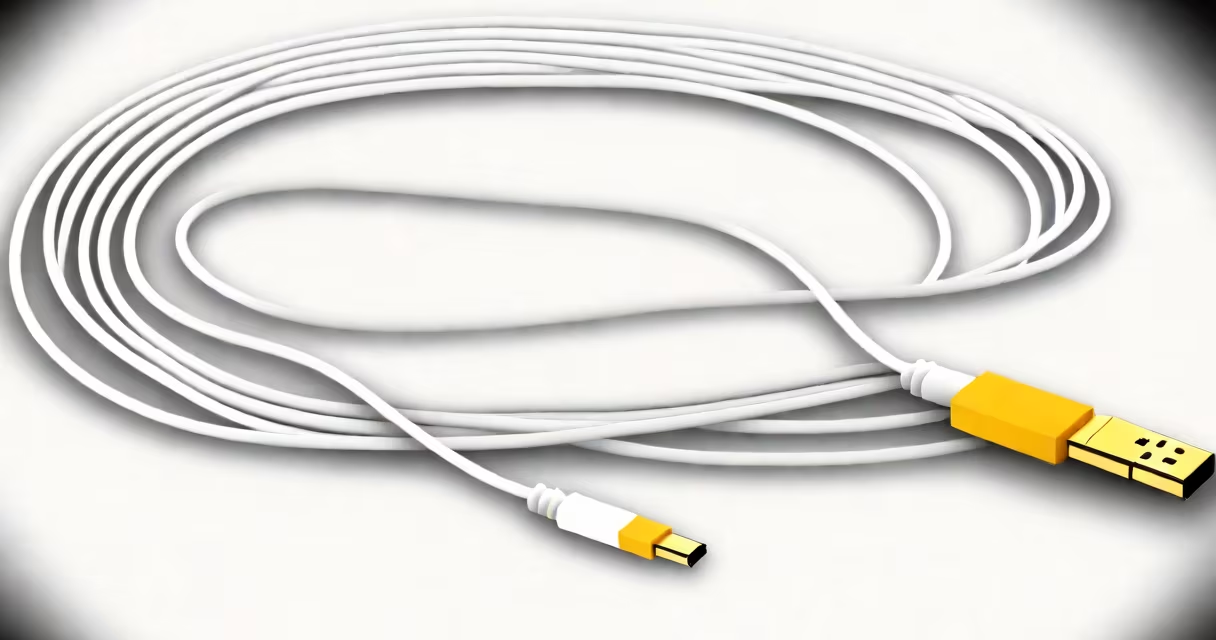
An ultra thin HDMI cable is a high-speed HDMI cable designed to be slimmer and more flexible than standard HDMI cables while maintaining performance standards for 4K video and high-bandwidth audio.
Ultra thin HDMI cables use the same core technology as standard HDMI cables but with a redesigned structure. Traditional HDMI cables have thick shielding and insulation to protect the internal wiring, which can make them bulky. Ultra thin versions achieve the same level of protection with lighter materials and tighter manufacturing tolerances.
The cables still support the same bandwidth and features as their thicker counterparts. For example, an ultra thin HDMI 2.1 cable supports 8K resolution at 60Hz, changing HDR, and variable refresh rates, just like a standard HDMI 2.1 cable.
| Type | Max Resolution | Max Refresh Rate | Bandwidth |
|---|---|---|---|
| HDMI 2.0 | 4K | 60Hz | 18Gbps |
| HDMI 2.1 | 8K | 120Hz | 48Gbps |
Most ultra thin HDMI cables are rated for HDMI 2.0 or HDMI 2.1, with the latter being more common in newer models. Some ultra thin cables are also certified for specific features like HDMI Ethernet Channel (HEC) or Audio Return Channel (ARC).
Ultra thin HDMI cables are popular in settings where space is limited or where cable management is important. For example, they are often used in home theater systems, gaming setups, and office environments. Their flexibility makes them easier to route through tight spaces, such as behind TVs or through cable management systems.
They are also used in professional settings, such as video production studios or conference rooms, where multiple cables are needed but clutter must be minimized. The reduced size of ultra thin HDMI cables makes them easier to bundle and organize.
One common misconception is that ultra thin HDMI cables are less durable than standard HDMI cables. While it's true that some ultra thin cables use lighter materials, many are designed to be just as durable as their thicker counterparts. For example, some ultra thin HDMI cables feature reinforced connectors or additional shielding to protect against wear and tear.
Another misconception is that ultra thin HDMI cables cannot support high-bandwidth features like 8K video or changing HDR. In reality, many ultra thin HDMI cables are certified for HDMI 2.1 and can support all the latest features, including 8K video and changing HDR.
I recently set up a home theater system using an ultra thin HDMI 2.1 cable to connect my 4K TV to a soundbar. The cable was easy to route behind the TV and through a cable management system, and it supported all the features I needed, including 4K video and high-bandwidth audio. The reduced size of the cable made the setup process much simpler and resulted in a cleaner look.
According to the HDMI Licensing Administrator, ultra thin HDMI cables are becoming increasingly popular as consumers seek to reduce clutter and improve cable management in their homes and offices. The organization recommends looking for cables that are certified for the specific features you need, such as 8K video or changing HDR.