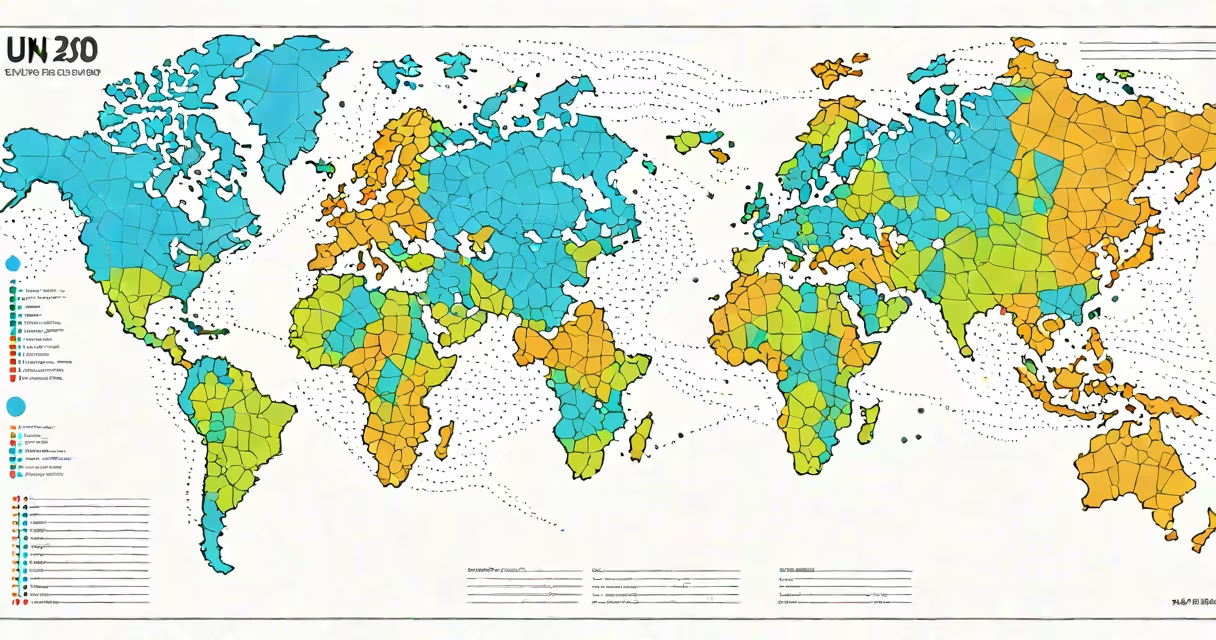
The UN 2030 goals are 17 interconnected objectives known as the Sustainable Development Goals (SDGs), adopted by all 193 UN member states in 2015 to achieve a sustainable future by 2030. These goals address global challenges related to poverty, inequality, climate change, peace, and justice.
The SDGs build upon the Millennium Development Goals (MDGs) and aim to leave no one behind. They are integrated, indivisible, and balance the three dimensions of sustainable development: economic, social, and environmental. The goals are monitored through a set of global indicators, with countries reporting progress annually.
The 17 goals cover many areas:
| Goal Number | Goal Name | Key Targets |
|---|---|---|
| 1 | No Poverty | Eradicate extreme poverty for all people everywhere |
| 2 | Zero Hunger | End hunger, achieve food security, improve nutrition |
| 3 | Good Health and Well-being | Ensure healthy lives and promote well-being for all ages |
| 4 | Quality Education | Ensure inclusive and equitable quality education |
| 5 | Gender Equality | Achieve gender equality and help all women and girls |
| 6 | Clean Water and Sanitation | Ensure availability and sustainable management of water |
| 7 | Affordable and Clean Energy | Ensure access to affordable, reliable, sustainable energy |
| 8 | Decent Work and Economic Growth | Promote sustained, inclusive, and sustainable economic growth |
| 9 | Industry, Innovation, and Infrastructure | Build resilient infrastructure, promote inclusive industrialization |
| 10 | Reduced Inequalities | Reduce inequality within and among countries |
| 11 | Sustainable Cities and Communities | Make cities and human settlements inclusive, safe, resilient |
| 12 | Responsible Consumption and Production | Ensure sustainable consumption and production patterns |
| 13 | Climate Action | Take urgent action to combat climate change |
| 14 | Life Below Water | Conserve and sustainably use the oceans, seas, and marine resources |
| 15 | Life on Land | Protect, restore, and promote sustainable use of terrestrial ecosystems |
| 16 | Peace, Justice, and Strong Institutions | Promote peaceful and inclusive societies, provide access to justice |
| 17 | Partnerships for the Goals | Strengthen the means of implementation and revitalize global partnerships |
The UN 2030 goals are used globally by governments, businesses, and civil society to guide policies, investments, and actions towards sustainable development. For example, the goal of Climate Action (SDG 13) involves reducing greenhouse gas emissions, while Good Health and Well-being (SDG 3) focuses on universal health coverage and access to essential medicines.
Countries implement the UN 2030 goals through national strategies and policies. For instance, Sweden has integrated the SDGs into its national development plan, focusing on innovation, equality, and sustainability. The UN provides support through capacity-building, data collection, and global partnerships.
As of 2023, progress has been uneven. While some goals, like access to electricity (SDG 7), have seen significant advancements, others, such as climate action (SDG 13) and biodiversity (SDG 15), require more urgent attention. The COVID-19 pandemic has also disrupted progress, particularly in areas like poverty reduction (SDG 1) and education (SDG 4).
The UN 2030 goals represent a collective effort to address the world's most pressing challenges. Achieving them requires collaboration among governments, businesses, and individuals. As the deadline approaches, increased focus on financing, innovation, and policy implementation will be important.
In my work with international development organizations, I've seen firsthand how the UN 2030 goals serve as a structure for projects ranging from renewable energy initiatives in rural communities to educational programs for marginalized groups. These efforts show the practical application of the SDGs in creating tangible, positive change.