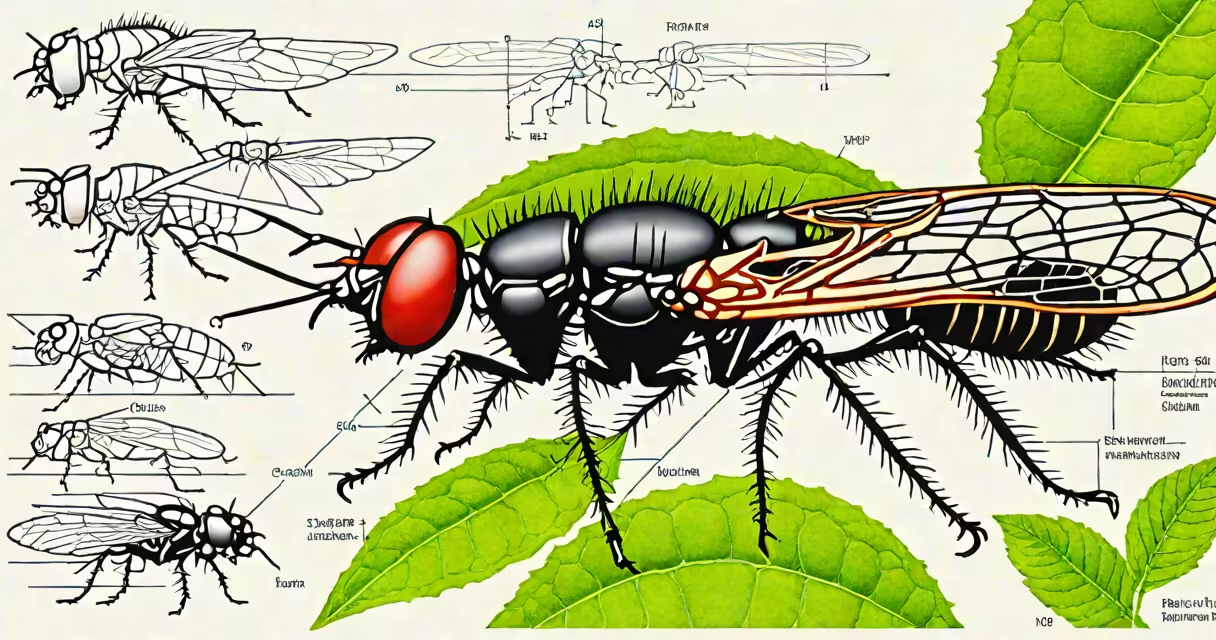
The USDA New World screwworm is a flesh-eating parasitic fly that lays eggs in open wounds or natural body openings of warm-blooded animals, including humans. This invasive species causes significant economic damage to livestock industries, particularly in tropical and subtropical regions.
New World screwworms (Cochliomyia hominivorax) have a life cycle of about 7-10 days. Adult females lay eggs in open wounds or mucous membranes. The larvae hatch within 12-24 hours and burrow into the tissue, feeding on living flesh. This causes severe pain, secondary infections, and can lead to death if untreated.
The New World screwworm is distinguishable by its metallic blue or green color and its preference for warm-blooded hosts. Unlike other flies, screwworms are obligate parasites, meaning they rely on living tissue to survive. Their life cycle includes four stages: egg, larva, pupa, and adult.
| Stage | Duration | Description |
|---|---|---|
| Egg | 12-24 hours | Laid in clusters of 200-300 in open wounds or mucous membranes. |
| Larva | 3-7 days | Feeds on living tissue, causing severe damage. |
| Pupa | 3-5 days | Forms a protective casing around itself as it transforms into an adult. |
| Adult | 10-20 days | Mates and lays eggs, continuing the cycle. |
The New World screwworm is native to the Americas but has been eradicated from the continental United States through extensive control programs. However, it remains a significant threat in Central and South America, the Caribbean, and parts of Africa. The economic impact on livestock industries is substantial, with losses estimated in the millions annually.
The USDA and other agricultural agencies use various methods to control the spread of the New World screwworm. These include the sterile insect technique (SIT), where male flies are sterilized and released to mate with wild females, resulting in infertile eggs., vigilant monitoring and immediate treatment of infested animals are important.
In 2016, the New World screwworm was detected in the Florida Keys, prompting a rapid response from the USDA and local authorities. The outbreak was successfully contained using SIT and other control measures, highlighting the importance of early detection and intervention.
Many people confuse the New World screwworm with other flies, such as blowflies or bottle flies. However, unlike these flies, which typically lay eggs on dead or decaying tissue, screwworms specifically target living tissue. This distinction is critical for understanding their parasitic nature and the need for immediate treatment.
Another misconception is that screwworms only affect livestock. While they do pose a significant threat to cattle, goats, and sheep, they can also infest pets, wildlife, and even humans. Open wounds or surgical incisions can provide entry points for the eggs, leading to severe infections.
The USDA New World screwworm remains a serious threat to livestock and public health in affected regions. Understanding its life cycle, characteristics, and control methods is essential for preventing outbreaks and minimizing economic damage. Early detection and intervention are key to managing this invasive species effectively.