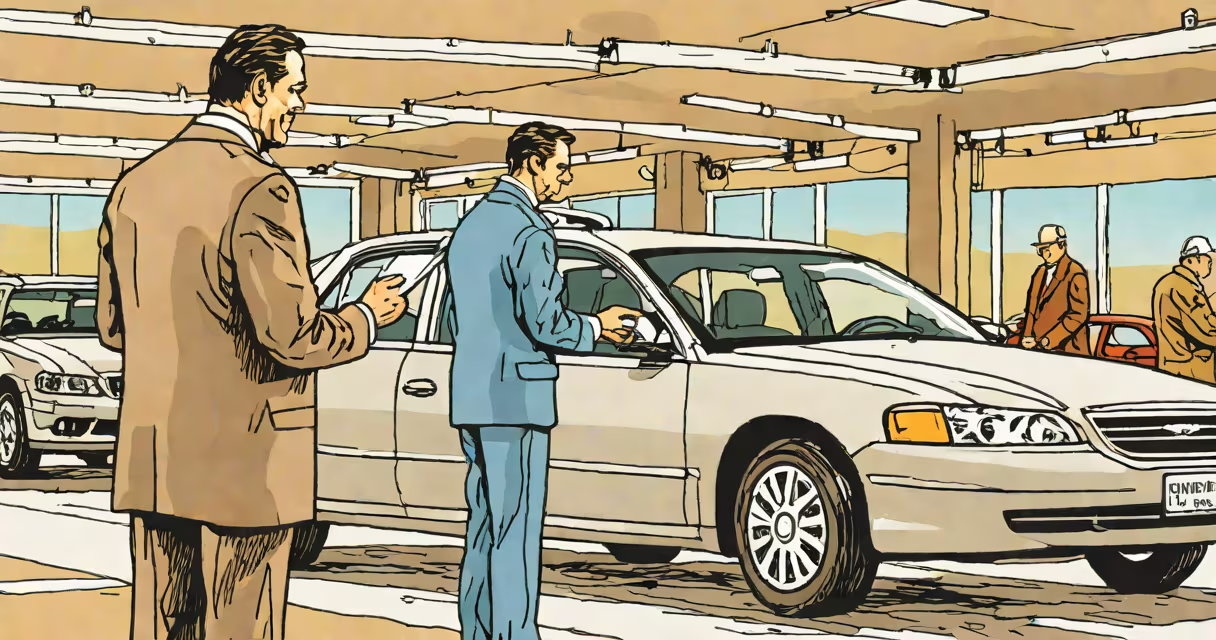
Used car dealer value is the wholesale price dealers pay for used vehicles to resell. This price is lower than retail values because dealers account for reconditioning costs, holding periods, and profit margins. Dealers determine this value through auctions, trade-ins, or direct purchases from owners.
Dealers use several methods to assess used car dealer value:
For example, a 2018 Honda Accord in good condition might sell for $15,000 at auction but retail for $18,000. The $3,000 difference covers dealer expenses and profit.
| Type | Description | Example |
|---|---|---|
| Wholesale Auction Value | Price paid at dealer-only auctions | $14,500 for a 2017 Toyota Camry |
| Trade-In Value | Price offered for customer trades | $13,800 for the same Camry |
| Private Party Purchase Value | Price paid directly to owners | $15,200 for the Camry |
These values fluctuate based on location, seasonality, and vehicle condition. Dealers adjust prices to stay competitive.
Understanding used car dealer value helps sellers get fair offers and buyers find better deals. Sellers who research dealer pricing can negotiate better trade-in offers or private sales. Buyers can compare dealer prices to retail listings to identify undervalued vehicles.
For instance, if a dealer pays $16,000 for a used SUV at auction, they might list it for $22,000-giving buyers insight into potential negotiation room.
Many assume used car dealer value equals retail value, but dealers deduct reconditioning and holding costs. Another myth is that trade-in values are set in stone; dealers adjust them based on local demand and competition.
A 2020 study by Black Book found that trade-in values averaged 82% of retail prices, not the commonly believed 90%. This gap reflects dealer overhead and profit needs.
To maximize used car dealer value, clean and maintain your vehicle thoroughly. Provide service records and address minor issues before appraisal. Compare offers from multiple dealers using tools like car valuation services.
I once helped a friend sell his car by cleaning it, fixing small dents, and gathering maintenance records. He received three trade-in offers 12% higher than initial quotes.
For example, a dealer might pay $12,000 for a used sedan (dealer value) and sell it for $16,500 (retail value). The $4,500 difference accounts for reconditioning, holding costs, and profit.