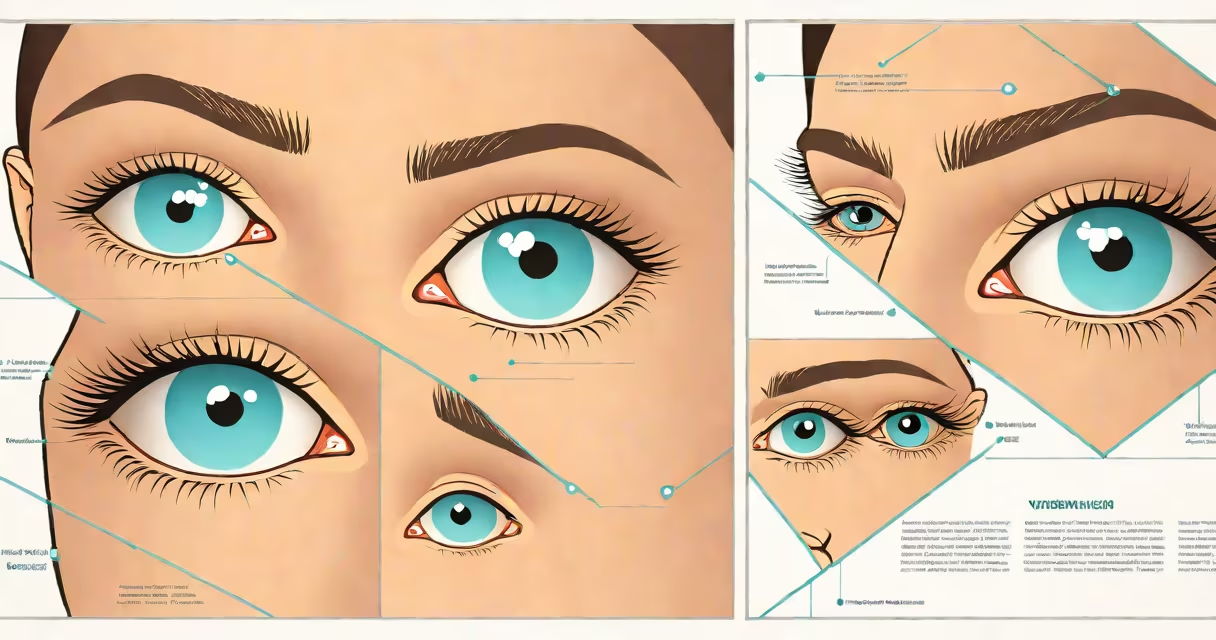
Vertical double vision occurs when your eyes misalign vertically, causing images to appear split or overlapping. This condition, known as vertical diplopia, happens when the eyes don't move together properly, leading to one eye seeing an image higher or lower than the other.
Your brain combines images from both eyes to create a single, three-dimensional view. When your eyes are properly aligned, this process happens smoothly. However, if one eye is misaligned vertically, your brain perceives two separate images instead of one. This misalignment can occur due to problems with the eye muscles or the nerves controlling them.
Vertical double vision can be classified into two main types:
| Type | Description |
|---|---|
| Binocular Diplopia | Occurs when both eyes are involved, and the double vision disappears when one eye is closed. |
| Monocular Diplopia | Occurs in one eye only, and the double vision persists even when the other eye is closed. |
Several conditions can lead to vertical double vision:
According to the American Academy of Ophthalmology, vertical double vision is often associated with thyroid eye disease, particularly in adults over 40.
If you experience vertical double vision, it's important to consult an eye care professional. Diagnosis typically involves a complete eye exam, including tests to assess eye movement and alignment. Treatment options vary depending on the underlying cause and may include:
In some cases, vertical double vision may be temporary and resolve on its own, especially if caused by a minor issue like fatigue or mild dehydration. However, persistent double vision should always be evaluated by a healthcare provider.
Seek immediate medical attention if vertical double vision is accompanied by other symptoms such as headache, nausea, or sudden loss of vision. These symptoms can indicate a more serious underlying condition, such as a stroke or neurological disorder. According to the American Stroke Association, sudden onset of double vision is a warning sign of a stroke and requires urgent medical evaluation.
I once experienced temporary double vision after a long day of computer work. The strain caused my eyes to misalign slightly, resulting in brief episodes of double vision. Resting my eyes and taking frequent breaks helped resolve the issue. However, if the double vision had persisted or been accompanied by other symptoms, I would have sought medical attention immediately.