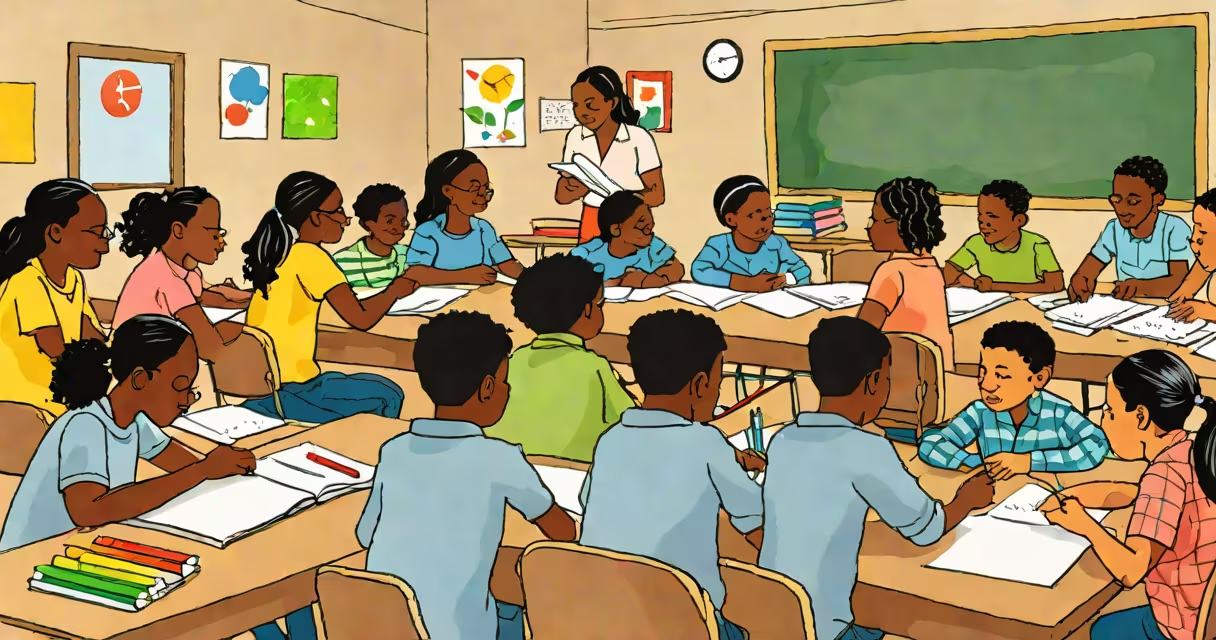
Inclusive classrooms are learning environments that welcome and support students of all abilities, including those with disabilities, learning differences, and diverse backgrounds. These classrooms prioritize accessibility, adaptability, and equity to ensure every student can participate fully.
Inclusive classrooms operate on the principle that all students benefit from learning together. Teachers use differentiated instruction to tailor lessons to various learning styles and abilities. For example, a teacher might provide written instructions for visual learners, verbal explanations for auditory learners, and hands-on activities for kinesthetic learners.
Inclusive classrooms typically include several key elements:
Inclusive classrooms benefit all students by fostering empathy, understanding, and collaboration. Research from the National Center for Education Statistics shows that inclusive education improves academic outcomes for students with disabilities and promotes social skills for all learners. For instance, a study found that students in inclusive classrooms were more likely to develop positive attitudes toward diversity and inclusion.
Inclusive classrooms also prepare students for a diverse world. By learning alongside peers of different abilities, students develop essential skills like problem-solving, communication, and teamwork. This preparation is important in a global society where diversity is the norm.
One common misconception is that inclusive classrooms lower academic standards. However, inclusive education aims to meet the needs of all students while maintaining high expectations. Another misconception is that inclusive classrooms are only beneficial for students with disabilities. In reality, all students benefit from the diverse learning environment.
Inclusive classrooms are not about lowering standards but about providing the necessary support and resources for every student to succeed. For example, a student with dyslexia might receive additional reading support, while a student with ADHD might have a structured seating arrangement to minimize distractions.
One example of an inclusive classroom is a school that implements universal design for learning (UDL). UDL is an educational structure that provides multiple means of engagement, representation, and action and expression. For instance, a teacher might use visual aids, audio recordings, and interactive activities to present the same lesson in different ways.
Another example is a classroom that uses assistive technology. Assistive technology includes tools like speech-to-text software, text-to-speech software, and digital math notation. These tools help students with disabilities access the curriculum and participate fully in class activities.
I once visited a school that had transformed its library into a multimedia learning center. The center included Braille books, audiobooks, and interactive digital stations. This setup ensured that students of all abilities could access and enjoy the resources available.
Inclusive classrooms are essential for creating equitable learning environments that support all students. By embracing diversity and providing the necessary resources and support, schools can ensure that every student has the opportunity to succeed. For more detailed information on inclusive classrooms, visit what is an inclusive classroom.