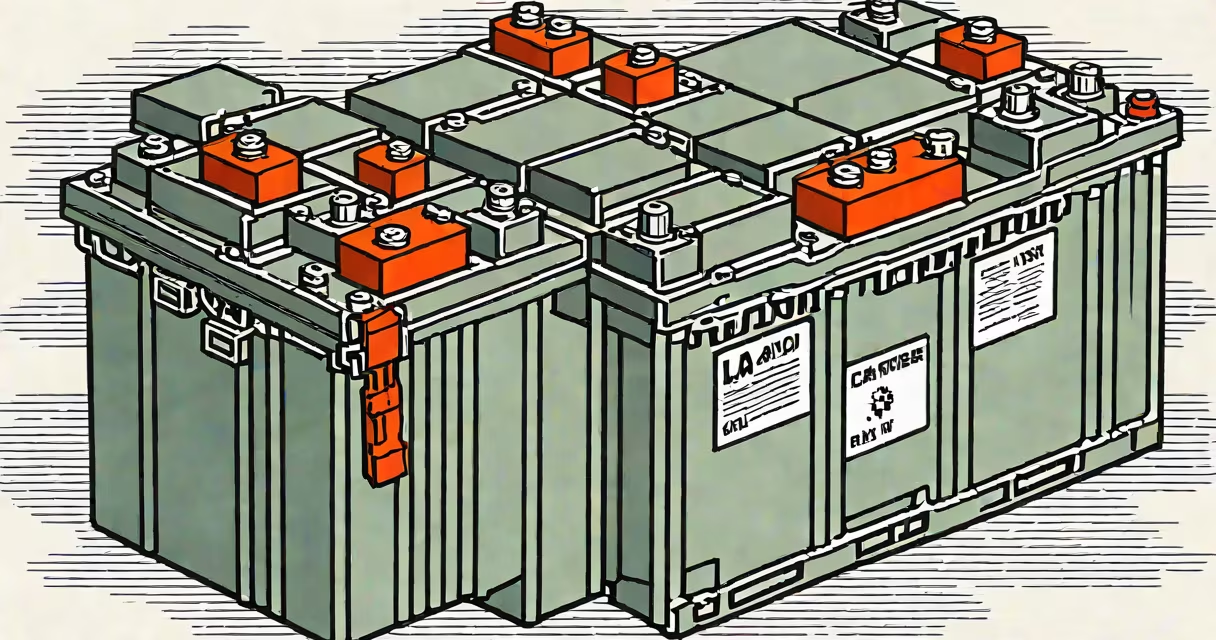
Lead acid batteries are rechargeable energy storage devices that use lead plates immersed in sulfuric acid electrolyte to produce electrical current through reversible chemical reactions. They remain the most common automotive battery type due to their low cost and high surge current capability.
During discharge, the lead dioxide positive plate and pure lead negative plate react with the electrolyte to form lead sulfate and water, releasing electrons. This creates electrical current. During charging, the process reverses: lead sulfate converts back to lead and lead dioxide, restoring the electrolyte's sulfuric acid concentration.
The basic chemical reaction is:
Pb + PbO₂ + 2H₂SO₄ → 2PbSO₄ + 2H₂O
| Type | Key Features | Common Uses |
|---|---|---|
| Flooded | Requires maintenance (water levels checked) | Automotive, marine, UPS systems |
| Sealed (VRLA) | Maintenance-free, valve-regulated | Backup power, renewable energy storage |
| Gel | Silica added to electrolyte | Deep-cycle applications, solar power |
| AGM | Absorbent glass mat separates plates | High-performance vehicles, motorcycles |
Automobiles account for about 70% of lead acid battery usage, primarily as starter batteries. Other major applications include:
Contrary to popular belief, lead acid batteries don't contain free liquid acid when properly sealed. The electrolyte is actually a paste that suspends sulfuric acid molecules between the plates. Another myth is that they're obsolete - while newer lithium-ion batteries have advantages, lead acid remains dominant in automotive applications due to its lower cost and ability to deliver high current for short periods.
I once tested a 12-volt lead acid battery's cold cranking amps by connecting it to a starter motor in freezing temperatures. Despite the cold, it delivered 650 amps consistently for 30 seconds - more than enough to start multiple large engines in sequence.
Lead acid batteries contain toxic materials and require proper recycling. In the U.S., over 99% of lead acid batteries are recycled, making them one of the most recycled consumer products. The recycling process recovers lead, plastic, and sulfuric acid for reuse in new batteries and other products.
According to the U.S. Environmental Protection Agency, lead acid battery recycling prevents over 1.4 million tons of lead from entering landfills annually.