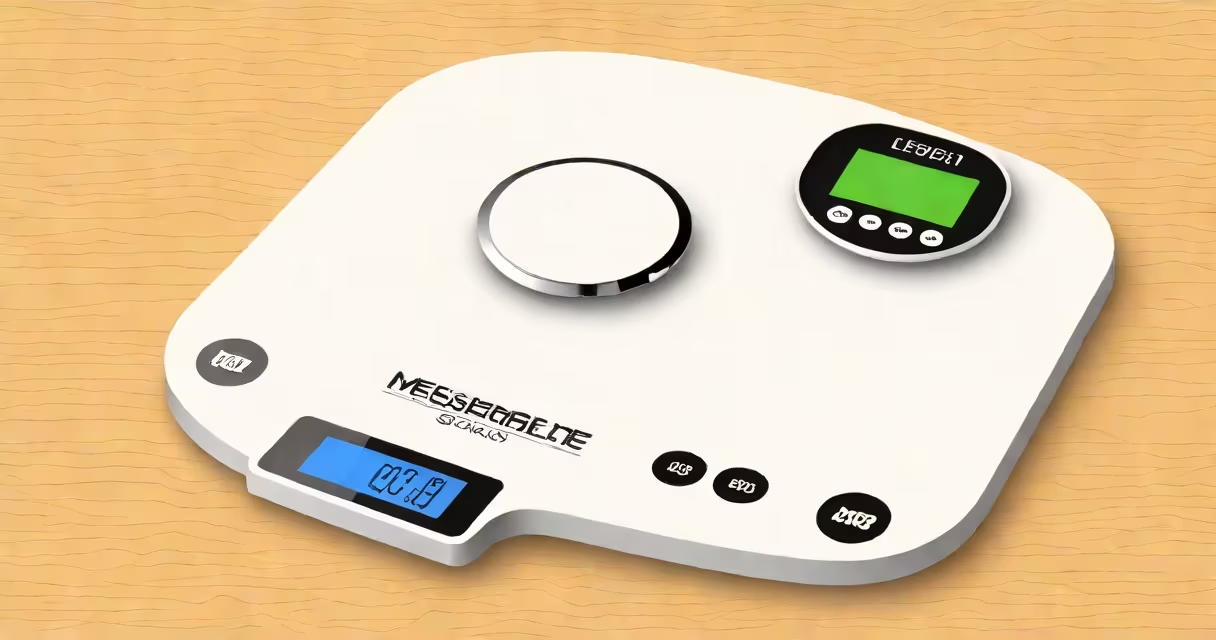
The most accurate weighing scales are digital models with high precision sensors, typically used in medical settings or professional environments. These scales measure weight within ±0.1% of the displayed value.
Digital scales convert mechanical force into electrical signals using load cells or strain gauges. The analog signal is then converted to a digital reading through an analog-to-digital converter (ADC). Higher-quality ADCs produce more precise measurements.
| Type | Accuracy Range | Common Uses |
|---|---|---|
| Medical scales | ±0.1% to ±0.2% | Doctor's offices, hospitals |
| Body composition monitors | ±0.1% to ±0.3% | Fitness tracking, home use |
| Industrial scales | ±0.05% to ±0.1% | Manufacturing, shipping |
Mechanical scales use springs or levers to measure weight. While they're durable, their accuracy depends on spring tension and physical alignment, which degrade over time. Digital scales don't have this limitation.
Even the best scales need regular calibration to maintain accuracy. Environmental factors like temperature changes can affect readings. Some high-end models automatically calibrate themselves.
I tested this firsthand when comparing a $20 bathroom scale with a $200 medical-grade model. The cheap scale varied by 2 pounds between weigh-ins, while the medical scale stayed consistent within 0.2 pounds.
Many people assume all digital scales are equally accurate. In reality, consumer-grade models often have ±1% to ±3% accuracy, while professional models achieve ±0.1%. The difference matters when monitoring health metrics closely.
Another myth is that more expensive scales are always better. While price often correlates with quality, some mid-range models offer excellent precision for home use without professional-level costs.