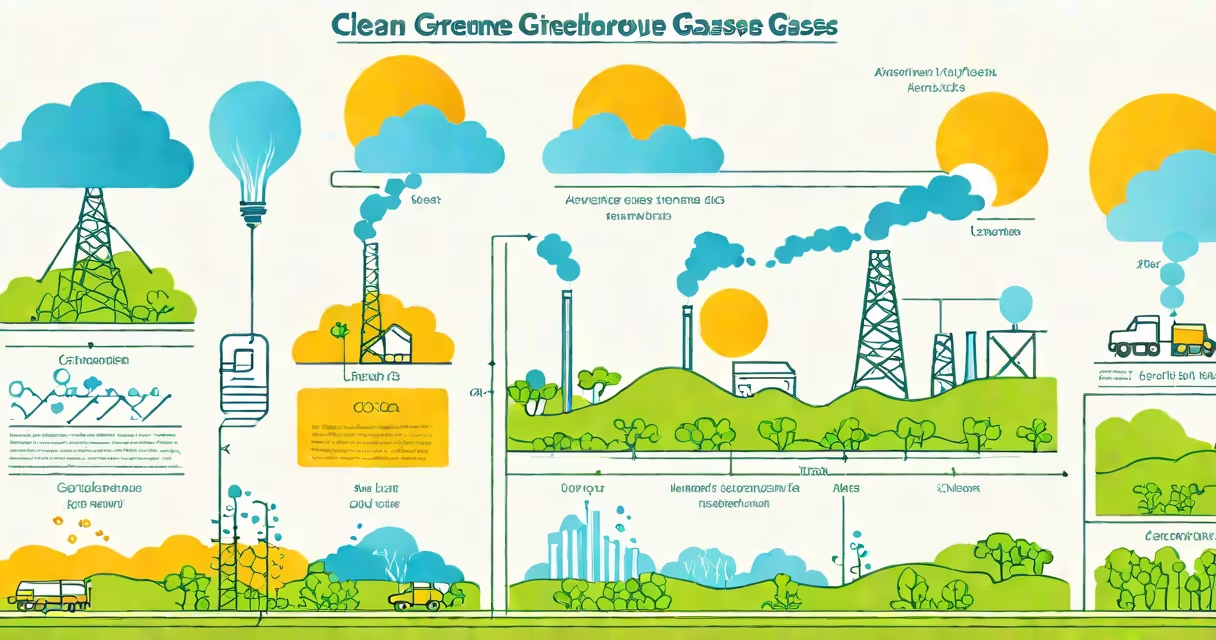
The four primary greenhouse gases are carbon dioxide (CO₂), methane (CH₄), nitrous oxide (N₂O), and fluorinated gases. These gases trap heat in Earth's atmosphere, contributing to global warming.
Greenhouse gases absorb infrared radiation (heat) emitted by the Earth and reradiate it in all directions, including back toward the surface. This process, known as the greenhouse effect, keeps the planet warm enough to support life. However, excessive amounts of these gases improve this effect, leading to global warming.
The four main greenhouse gases differ in their sources, lifespans, and warming potential. Here's a breakdown:
| Gas | Sources | Lifespan in Atmosphere | Global Warming Potential (over 100 years) |
|---|---|---|---|
| Carbon Dioxide (CO₂) | Burning fossil fuels, deforestation, industrial processes | 100-1,000 years | 1 |
| Methane (CH₄) | Livestock digestion, landfills, natural gas leaks, rice paddies | 12 years | 28-36 |
| Nitrous Oxide (N₂O) | Agricultural activities, industrial processes, combustion engines | 114 years | 265-298 |
| Fluorinated Gases | Industrial applications, refrigeration, semiconductor manufacturing | 500-10,000 years | 4,500-14,800 |
Human activities increase the concentration of these gases in the atmosphere. For example, burning fossil fuels releases CO₂, while agricultural practices contribute to methane and nitrous oxide emissions. Fluorinated gases are primarily released through industrial processes.
Natural sources also contribute to greenhouse gas levels. Volcanic eruptions release CO₂, while wetlands emit methane. However, human activities have amplified these natural processes, leading to higher concentrations of greenhouse gases in the atmosphere.
Many people confuse greenhouse gases with other pollutants, such as ozone (O₃). While ozone in the stratosphere protects Earth from harmful UV radiation, ground-level ozone is a pollutant that contributes to smog but is not a primary greenhouse gas.
Another misconception is that water vapor (H₂O) is the most significant greenhouse gas. While water vapor is abundant and does contribute to the greenhouse effect, its concentration in the atmosphere is regulated by temperature rather than human activities. The four main greenhouse gases are more directly influenced by human actions.
The accumulation of these gases in the atmosphere enhances the greenhouse effect, leading to global warming. According to the Intergovernmental Panel on Climate Change (IPCC), CO₂ is the most significant contributor to global warming, followed by methane and nitrous oxide. Fluorinated gases, though less common, have a much higher warming potential.
Understanding the sources and impacts of these gases is important for developing strategies to mitigate climate change. Reducing emissions from fossil fuels, improving agricultural practices, and finding alternatives to fluorinated gases are key steps in addressing this global challenge.
For more detailed information on the two most prevalent greenhouse gases, see this guide. To explore the broader impact of greenhouse gases on the environment, visit this resource.