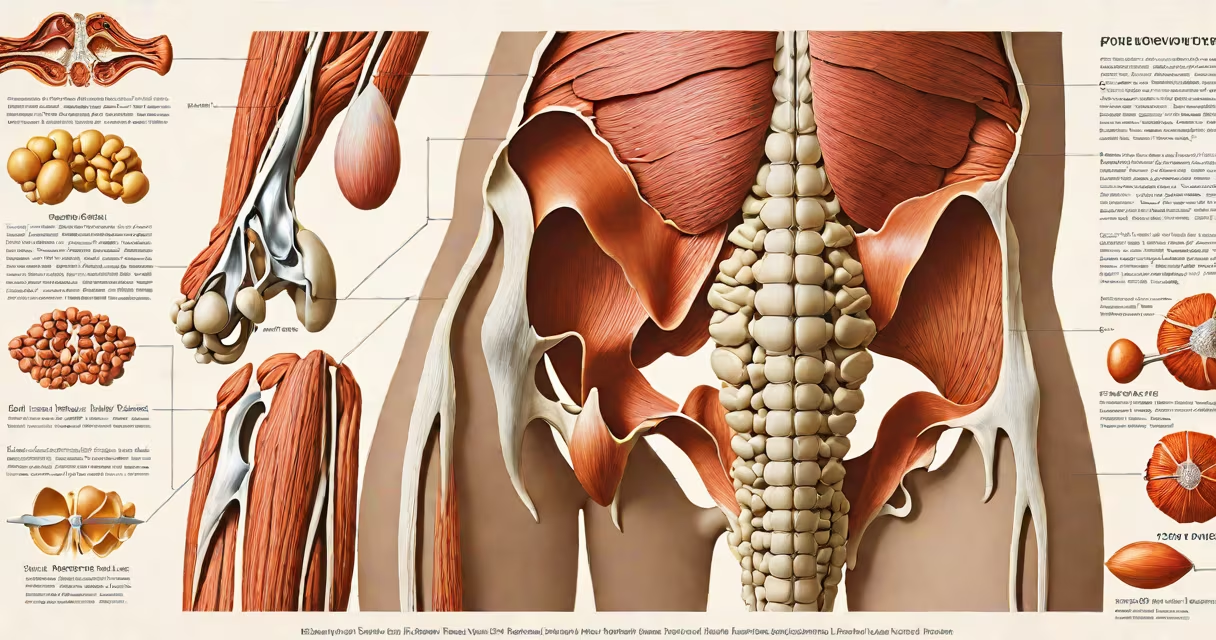
The muscles of the pelvic floor form a supportive hammock-like structure at the base of the pelvis, spanning the area between the pubic bone and the tailbone. These muscles play a critical role in supporting pelvic organs, controlling bladder and bowel functions, and maintaining core stability.
The pelvic floor muscles work in tandem with the diaphragm, abdominal muscles, and back muscles to provide stability to the spine and pelvis during movement. They contract automatically during activities like coughing, sneezing, and lifting to prevent leakage from the bladder or rectum. When weakened, these muscles can lead to issues such as urinary incontinence or pelvic organ prolapse.
The primary muscles of the pelvic floor include the levator ani and the coccygeus. The levator ani is further divided into three parts: the pubococcygeus, iliococcygeus, and puborectalis. These muscles work together to support the pelvic organs and control the openings of the urethra, vagina (in women), and anus.
| Muscle | Function |
|---|---|
| Pubococcygeus | Supports the urethra and vagina (in women) and controls their openings |
| Iliococcygeus | Supports the lateral pelvic organs and assists in closing the pelvic floor |
| Puborectalis | Forms a sling around the rectum, helping to maintain fecal continence |
| Coccygeus | Stabilizes the sacroiliac joint and supports the posterior pelvic floor |
Many people believe that only women need to worry about pelvic floor health. However, men also have pelvic floor muscles that require attention, especially as they age. Another misconception is that pelvic floor exercises are solely for those who have given birth. In reality, anyone can benefit from strengthening these muscles, particularly those who engage in high-impact activities or have sedentary lifestyles.
One non-obvious fact is that the pelvic floor muscles are connected to the diaphragm through the thoracolumbar fascia. This connection allows for coordinated movement and pressure management within the abdomen and pelvis. For instance, during exhalation, the diaphragm descends, and the pelvic floor relaxes to accommodate changes in intra-abdominal pressure.
When I first learned about the pelvic floor muscles, I was surprised to discover how integral they are to core stability. Understanding their function helped me appreciate the importance of exercises like Kegels, which can strengthen these muscles and prevent issues related to incontinence and back pain.