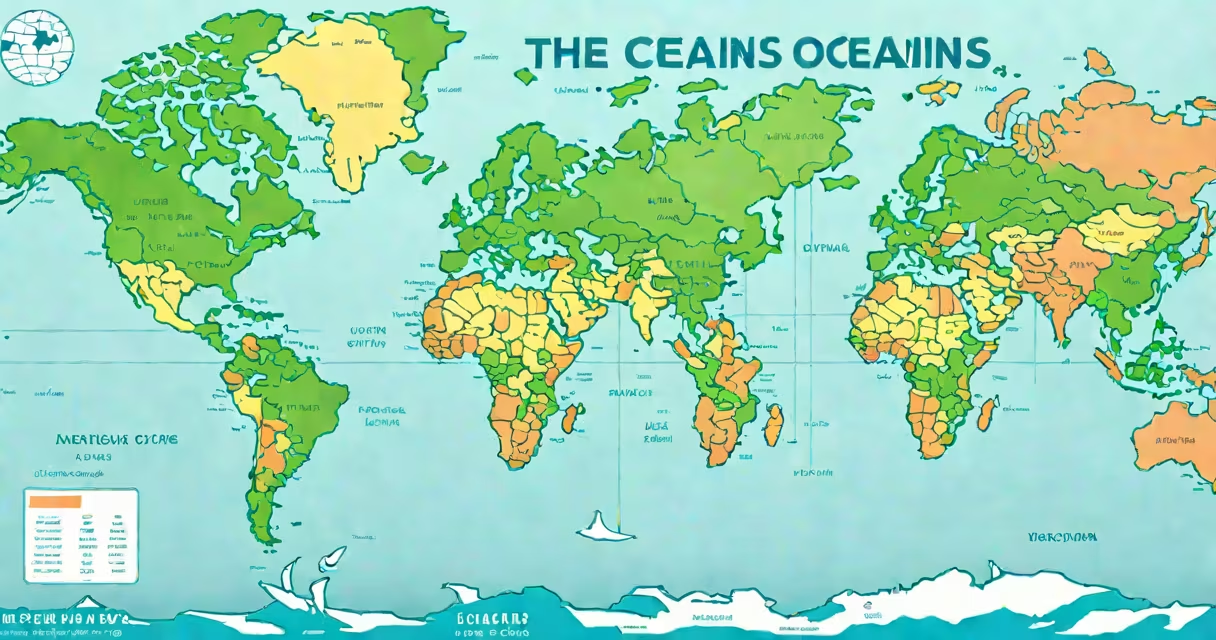
The oceans of the world are five vast bodies of saltwater covering 71% of Earth's surface: the Pacific, Atlantic, Indian, Arctic, and Southern Oceans. These interconnected basins regulate climate, support biodiversity, and help global trade.
Salt content varies slightly between oceans due to evaporation rates and freshwater input. The Atlantic Ocean averages 35 parts per thousand salinity, while the Baltic Sea (part of the Atlantic basin) drops to 7-10 ppt in some areas.
| Ocean | Area (sq mi) | Average Depth (ft) | Unique Feature |
|---|---|---|---|
| Pacific Ocean | 63.8 million | 14,000 | Deepest point: Mariana Trench (36,070 ft) |
| Atlantic Ocean | 41.1 million | 12,880 | Mid-Atlantic Ridge (longest mountain range) |
| Indian Ocean | 28.3 million | 12,960 | Warmest ocean temperatures |
| Arctic Ocean | 5.4 million | 3,950 | Seasonal sea ice coverage |
| Southern Ocean | 7.8 million | 10,850 | Circumpolar Current (strongest ocean current) |
Oceans absorb 90% of Earth's excess heat from greenhouse gases, moderating global temperatures. They also produce over half of the world's oxygen through phytoplankton photosynthesis.
Contrary to popular belief, the Southern Ocean isn't always icy. Its western portion near South America remains ice-free year-round due to the Antarctic Circumpolar Current.
While often called "seas," the Caribbean and Mediterranean are actually part of the Atlantic Ocean. Seas are typically partially enclosed by land, while oceans are fully open.
During a research expedition in the North Atlantic, I witnessed firsthand how plastic pollution accumulates in gyres. Even in remote areas, microplastics were present in surface water samples collected 500 miles from shore.