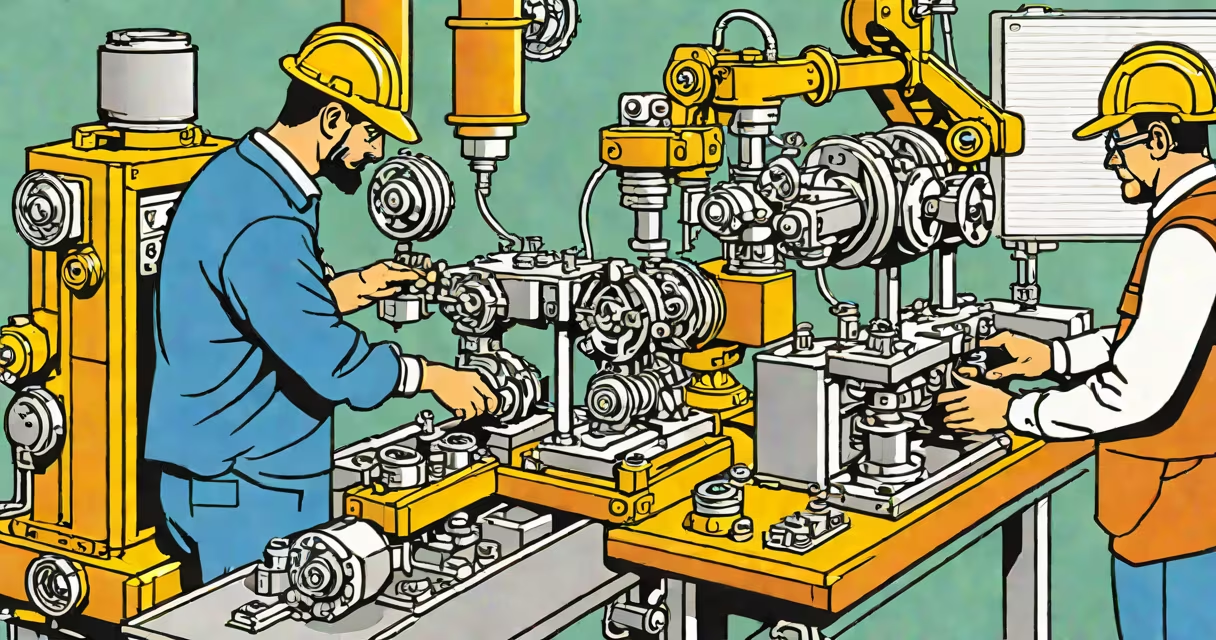
A mechanical engineer designs, develops, tests, and maintains mechanical systems and devices, applying principles of physics and materials science to solve real-world problems. Their work spans industries, focusing on efficiency, safety, and sustainability.
Mechanical engineers perform many technical and managerial tasks. They design components and systems using computer-aided design (CAD) software, conduct stress analysis to ensure structural integrity, and oversee manufacturing processes. They also troubleshoot malfunctions, improve performance, and collaborate with interdisciplinary teams to integrate mechanical systems with electrical, electronic, and software components.
For example, a mechanical engineer might design a new engine part, simulate its performance under various conditions, and then work with manufacturers to produce and test prototypes. They often create detailed technical reports and documentation, ensuring compliance with industry standards and regulations.
| Type | Key Focus Areas | Industries |
|---|---|---|
| Design Engineering | Product development, CAD modeling, prototyping | Automotive, consumer goods, medical devices |
| Thermal Engineering | Heating, cooling, energy systems | Aerospace, HVAC, power generation |
| Manufacturing Engineering | Production processes, automation, quality control | Automotive, electronics, industrial machinery |
| Research and Development | Innovation, material science, system optimization | All industries |
Another misconception is that mechanical engineering is solely about building machines. While this is part of their role, they also focus on improving efficiency, reducing environmental impact, and ensuring safety. For instance, a mechanical engineer might develop a more fuel-efficient car engine or design a wind turbine to generate renewable energy.
Mechanical engineers work in diverse settings, including offices, laboratories, production plants, and construction sites. They use tools like CAD software, simulation programs, and testing equipment. For example, they might use SolidWorks to design a new product or ANSYS to simulate its performance under different conditions.
I once visited a manufacturing plant where mechanical engineers were using 3D printers to create prototypes of machine parts. This allowed them to test and refine designs quickly before moving to full-scale production.
Most mechanical engineers hold a bachelor's degree in mechanical engineering or a related field. Key skills include problem-solving, creativity, mathematical proficiency, and knowledge of materials and manufacturing processes. Many also pursue advanced degrees or certifications to specialize in areas like robotics or energy systems.
According to the U.S. Bureau of Labor Statistics, employment of mechanical engineers is projected to grow 7%, driven by advancements in technology and the need for sustainable solutions. Mechanical engineers will continue to play a important role in developing new technologies and improving existing systems.