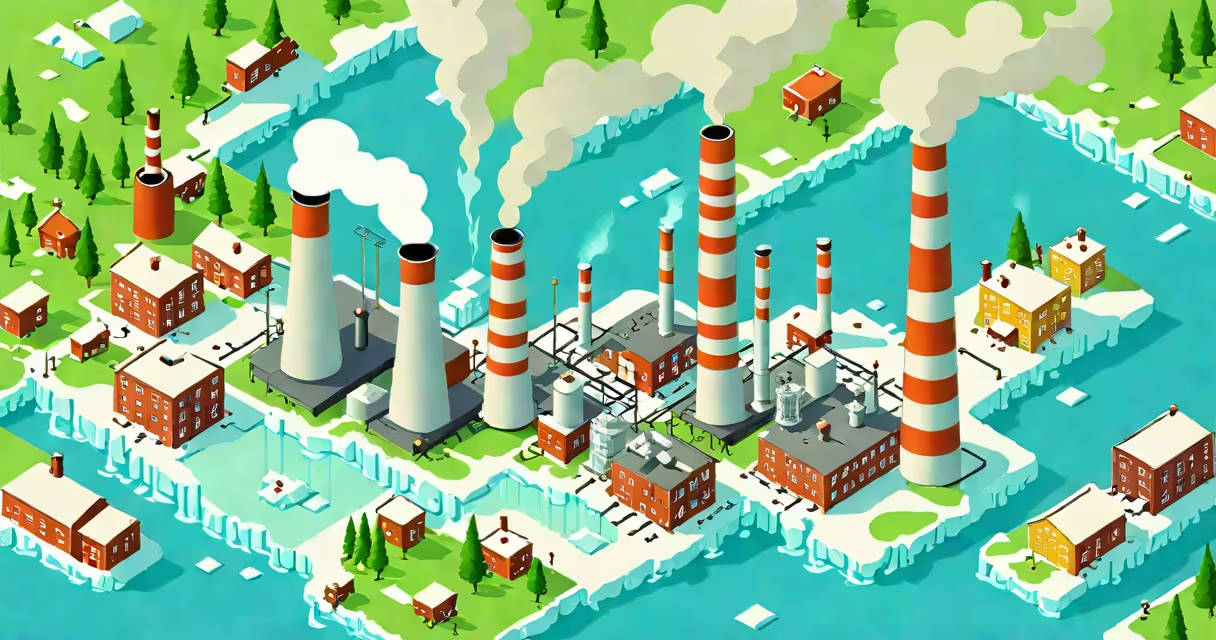
Climate change results primarily from human activities that increase heat-trapping greenhouse gas concentrations in the atmosphere. These activities include burning fossil fuels, deforestation, and industrial processes.
Greenhouse gases like carbon dioxide (CO₂) and methane (CH₄) trap heat from the sun, creating the greenhouse effect. Without them, Earth would be too cold to support life. However, excessive amounts of these gases thicken the atmospheric layer, trapping more heat than necessary. This imbalance causes global temperatures to rise, leading to climate change.
The primary causes of climate change fall into two categories: natural and human-induced. Natural causes have always existed, while human-induced causes have accelerated over the past century.
| Category | Examples | Contribution to Climate Change |
|---|---|---|
| Natural Causes | Volcanic eruptions, changes in solar radiation, variations in Earth's orbit | Minimal, slow changes over thousands of years |
| Human-Induced Causes | Burning fossil fuels, deforestation, industrial processes, agriculture | Significant, rapid changes over the past century |
Human activities that cause climate change occur worldwide, particularly in industrialized nations and rapidly developing countries. These activities support economic growth, energy production, and agriculture but come at a cost to the environment.
One common misconception is that climate change is solely caused by natural factors. While natural factors do play a role, scientific consensus indicates that human activities are the primary drivers of the current rapid changes. According to the Intergovernmental Panel on Climate Change (IPCC), human influence has been the dominant cause of observed warming since the mid-20th century.
Another misconception is that individual actions, such as recycling or using reusable bags, can mitigate climate change. While these actions are important, they are not enough on their own. Systemic changes, such as transitioning to renewable energy sources and implementing sustainable practices on a global scale, are necessary to address the root causes of climate change.
Consider the burning of coal for electricity. When coal is burned, it releases CO₂ into the atmosphere. According to the U.S. Environmental Protection Agency (EPA), the electricity sector is the largest source of CO₂ emissions in the United States. These emissions contribute to the greenhouse effect, trapping heat and causing global temperatures to rise.
To reduce the impact of burning coal, many countries are transitioning to renewable energy sources like wind and solar power. For instance, Germany has set a goal to generate 65% of its electricity from renewable sources by 2030. This shift promotes energy independence and economic growth.
I once visited a coal-fired power plant and witnessed firsthand the massive amount of smoke and emissions released into the atmosphere. The plant's operators explained that they were implementing new technologies to reduce emissions, but the sheer scale of the operation made it clear that systemic changes are necessary to make a significant impact.
Addressing the primary causes of climate change requires a multi-faceted approach. Individuals can reduce their carbon footprint by using public transportation, conserving energy, and supporting sustainable practices. Governments and businesses must implement policies and technologies that promote renewable energy, energy efficiency, and sustainable agriculture.
For more on practical steps, see what we can do about climate change and three solutions to climate change.