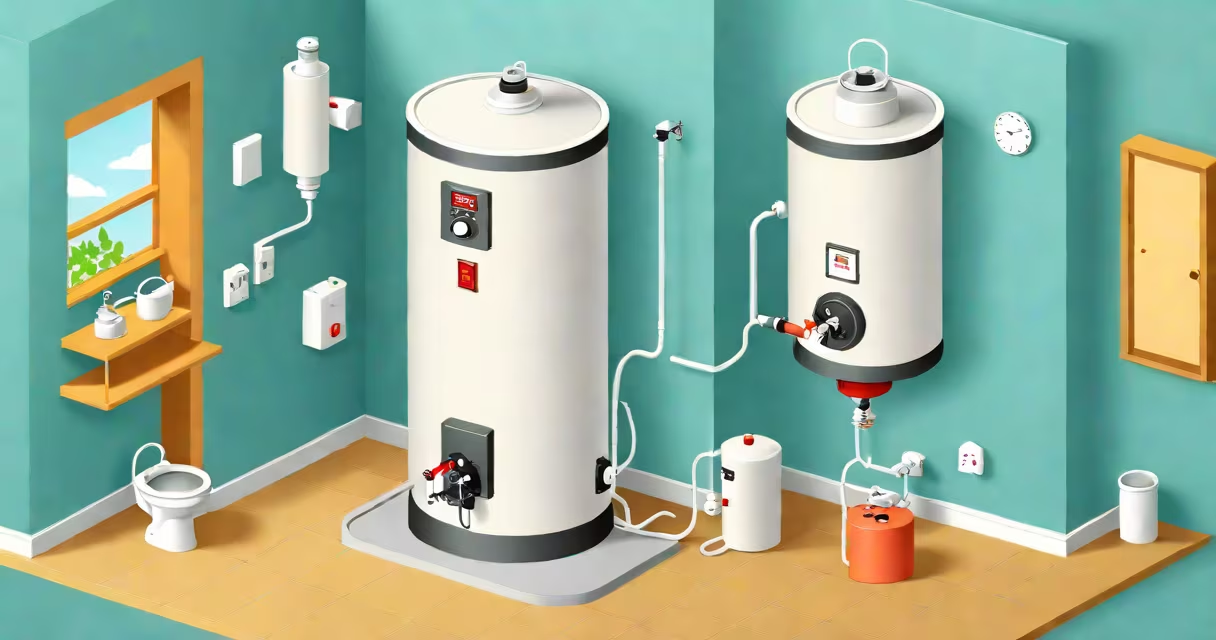
A water heater can leak due to several reasons, including pressure issues, tank corrosion, or loose connections. These leaks often stem from specific components failing or wearing out over time.
Water heaters store and heat water for household use. They consist of a tank, heating elements, a drain valve, and inlet/outlet connections. When leaks occur, they typically come from the tank itself, the connections, or the pressure relief valve.
Leaks can originate from different parts of the water heater:
| Leak Location | Common Causes |
|---|---|
| Tank Base | Corrosion or rust inside the tank |
| Pressure Relief Valve | Excessive pressure or faulty valve |
| Cold/Hot Water Connections | Loose or damaged fittings |
| Drain Valve | Cracked valve or sediment buildup |
Most leaks result from wear and tear, poor maintenance, or excessive pressure. For example, a corroded tank can develop small holes, while loose connections may drip over time. The pressure relief valve can also leak if the water pressure exceeds safe levels.
One non-obvious cause is sediment buildup. Over time, minerals in the water settle at the bottom of the tank, creating hot spots that weaken the tank walls. This can lead to cracks and leaks. Regular flushing can prevent this issue.
If you notice a leak, turn off the power and water supply immediately. Check the connections and tighten any loose fittings. If the leak persists, the tank may be damaged beyond repair. In such cases, replacing the water heater is often the best solution.
To avoid leaks, inspect your water heater regularly for signs of corrosion or damage. Install a water softener to reduce mineral buildup, and ensure the pressure relief valve functions properly. If your water heater is over 10 years old, consider replacing it before it fails.
I once noticed a small puddle under my water heater. After tightening the connections, the leak stopped. However, if the leak had continued, I would have replaced the unit to prevent further damage.