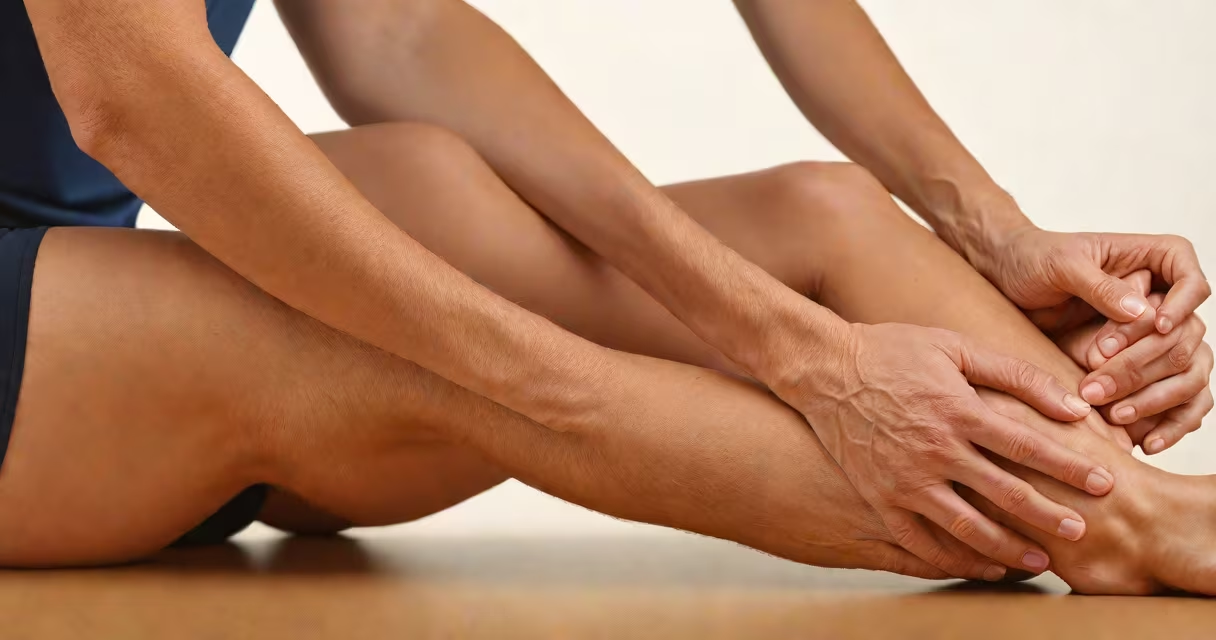
Aching muscles result from overexertion, injury, or underlying conditions like anemia. Muscle soreness typically peaks 24-72 hours after intense activity.
Muscle pain occurs when tiny fibers tear during exertion, triggering inflammation and soreness. This process, called delayed onset muscle soreness (DOMS), happens most often after new or strenuous exercise.
For example, a beginner lifting weights may feel muscle aches in their arms and shoulders 1-2 days later, even if they didn't feel pain during the workout.
While mild soreness is normal, severe or persistent muscle pain may indicate an underlying issue. Aching legs, for instance, could stem from anemia-a condition where the body lacks healthy red blood cells.
If muscle pain lasts longer than a few days, worsens, or comes with swelling, fever, or weakness, see a doctor. These symptoms could point to infections, autoimmune disorders, or nutrient deficiencies.
Most muscle soreness improves with rest, hydration, and gentle stretching. Applying heat or ice can reduce inflammation, while over-the-counter pain relievers may help temporary discomfort.
For chronic issues, addressing the root cause is key. If anemia is the culprit, treatments like iron supplements or dietary changes can help. Always consult a healthcare provider before starting new medications or supplements.
Many assume muscle aches only come from exercise, but they can also result from dehydration, electrolyte imbalances, or even stress. For example, sitting at a desk all day can cause tension in the neck and shoulders, leading to aches.
Another misconception is that stretching before exercise prevents DOMS. Research shows stretching doesn't reduce muscle soreness-proper warm-ups and gradual increases in intensity do.