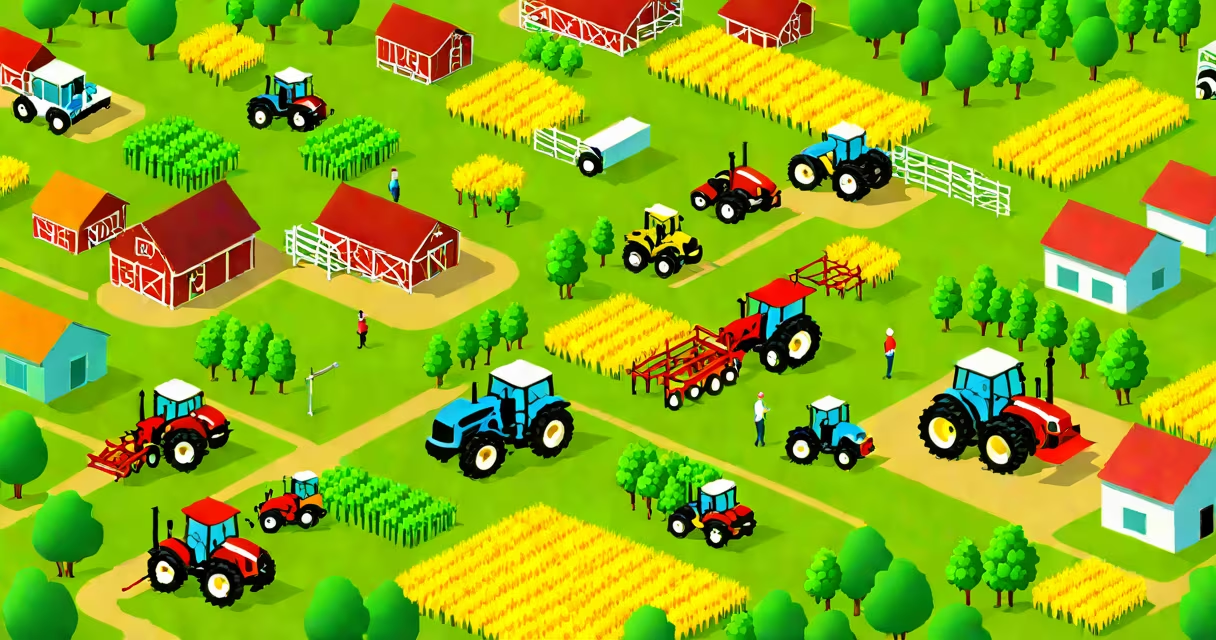
An agribusiness degree prepares you for careers in farming, agricultural policy, food production, and supply chain management. Graduates work in fields ranging from farm management to international trade.
Agribusiness programs combine courses in agriculture, economics, and business. Core subjects include crop production, livestock management, agricultural marketing, and supply chain logistics. Many programs offer hands-on experience through internships or research projects.
According to the U.S. Bureau of Labor Statistics, employment in agricultural and food scientists is projected to grow 6%. This growth is driven by demand for efficient food production and sustainable practices.
| Career Path | Key Responsibilities | Average Salary (U.S.) |
|---|---|---|
| Farm Manager | Oversee daily operations, manage staff, and improve production | $60,000-$90,000 |
| Agricultural Consultant | Advise farmers on best practices, sustainability, and profitability | $50,000-$80,000 |
| Food Scientist | Develop new food products, improve processing techniques | $70,000-$100,000 |
| Supply Chain Analyst | Improve distribution networks for agricultural products | $65,000-$95,000 |
Graduates work in farms, agricultural companies, government agencies, and nonprofits. Some pursue roles in international organizations focused on food security. Others work in research institutions developing sustainable farming techniques.
For example, the United Nations Food and Agriculture Organization (FAO) employs professionals to address global hunger and improve agricultural systems. Domestically, the U.S. Department of Agriculture (USDA) offers roles in policy, research, and extension services.
Many assume agribusiness degrees only lead to farming jobs. However, graduates also enter finance, marketing, and policy roles. For instance, agricultural economists analyze market trends and advise businesses on investment strategies.
I once spoke with a graduate who worked as a commodity trader, analyzing grain markets and advising clients on trading strategies. This role required a deep understanding of both agriculture and financial markets.
Some graduates pursue advanced degrees in agricultural economics, business administration, or environmental science. A master's degree can open doors to higher-level roles in research, policy, or academia.
For those interested in exploring other degree paths, what you can do with different degrees varies widely. Agribusiness stands out for its blend of practical and theoretical knowledge.
If you're considering a bachelor's degree in agribusiness, this guide provides insights into program structures and career outcomes.
An agribusiness degree offers diverse career opportunities in farming, policy, and food science. Graduates work in fields ranging from farm management to international trade, contributing to sustainable food production and economic growth.