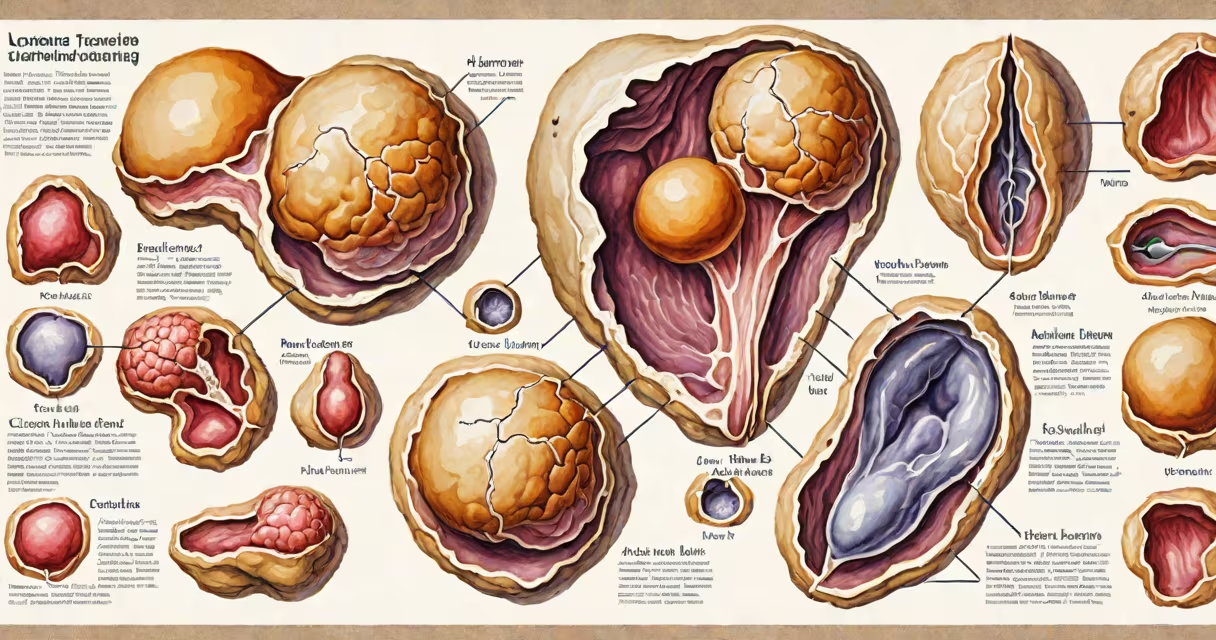
Lumps on testicles are abnormal growths or swellings in the scrotum, often caused by cysts, infections, or tumors. Most are harmless, but some require immediate medical attention.
Testicular lumps develop when cells grow abnormally or fluid accumulates in the scrotum. The testicles produce sperm and hormones, making them susceptible to various conditions. Most lumps are painless, but some may cause discomfort or swelling.
Testicle lumps vary in size, texture, and cause. The most common types include:
| Type | Description | Common Cause |
|---|---|---|
| Cysts | Fluid-filled sacs | Blocked tubes |
| Varicoceles | Enlarged veins | Poor blood flow |
| Hernias | Protruding intestines | Weak abdominal muscles |
| Hydroceles | Fluid around testicles | Injury or infection |
| Tumors | Abnormal cell growth | Genetic mutations |
Most testicular lumps are benign, but some may indicate serious conditions like testicular cancer. See a doctor if you notice sudden swelling, pain, or changes in size. Early detection improves treatment outcomes.
According to the American Cancer Society, testicular cancer is highly treatable when caught early. Regular self-exams can help detect lumps before they become severe.
Many people assume all testicular lumps are cancerous, but most are harmless. Others believe lumps will disappear on their own, which isn't always true. Some lumps require medical intervention to prevent complications.
For example, varicoceles-enlarged veins-often go unnoticed until they cause discomfort. A study published in the journal Urology found that varicoceles affect about 15% of men and can lead to infertility if untreated.
Last year, I noticed a small, painless lump on my testicle during a self-exam. Concerned, I scheduled an appointment with my doctor, who diagnosed it as a harmless cyst. The lump was monitored and eventually resolved without treatment. This experience reinforced the importance of regular self-checks.