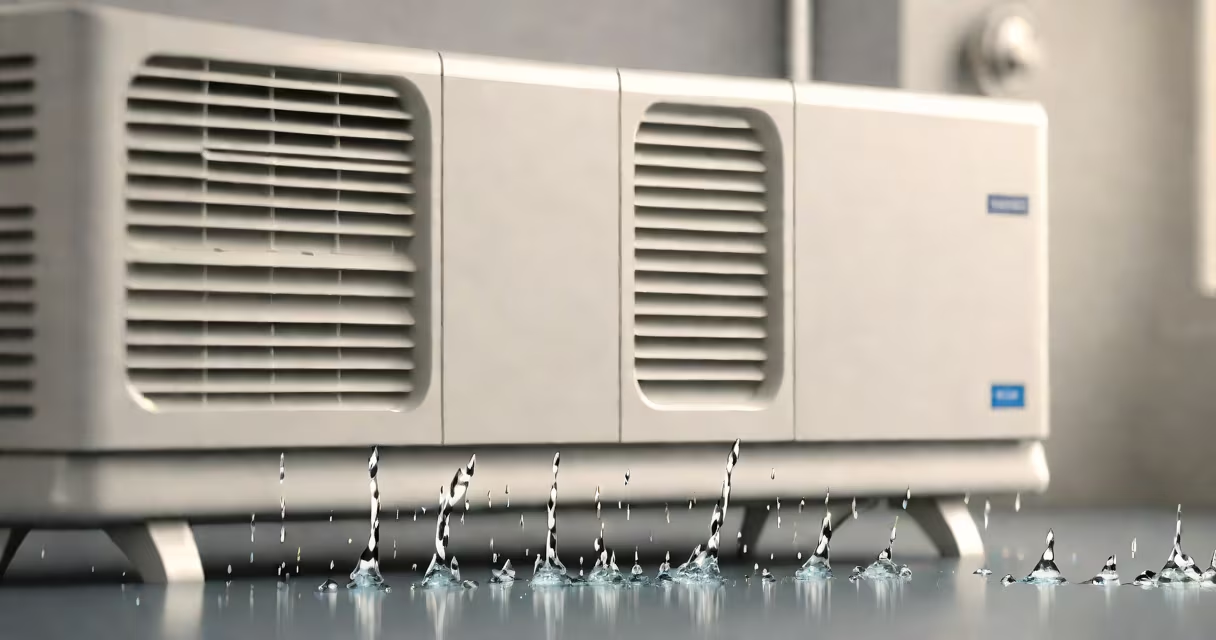
Leaks in air conditioners typically result from refrigerant loss or condensation drainage issues, both of which require prompt attention to prevent further damage.
Air conditioners cool your home by removing heat and humidity. The process involves a refrigerant that changes, releasing heat outside. Condensation forms as warm air passes over cold coils inside the unit. If the drain pan or condensate drain line clogs, water backs up and leaks. Refrigerant leaks occur when the copper coils develop cracks or holes, often due to corrosion or physical damage.
| Type of Leak | Cause | Common Location |
|---|---|---|
| Refrigerant Leak | Corrosion, physical damage, or poor installation | Coils, valves, or connections |
| Condensate Leak | Clogged drain line or cracked drain pan | Drain pan or drain line |
Refrigerant leaks often occur due to formic acid buildup from improper off-gassing of household materials like wood, carpets, and insulation. This acid corrodes the copper coils over time. Physical damage from debris or improper handling during installation can also cause leaks. Condensate leaks happen when the drain line becomes clogged with algae, mold, or sludge, causing water to back up and overflow.
Many people assume that all leaks are due to refrigerant issues, but condensate leaks are just as common. Another myth is that leaks only occur in older units. While aging can contribute, even new systems can leak if they were improperly installed or if formic acid corrosion begins early.
Last summer, my AC unit started leaking water near the indoor unit. I noticed a musty smell, indicating a clogged drain line. I turned off the power, located the drain line, and used a wet/dry vacuum to clear the clog. For refrigerant leaks, a professional HVAC technician would use electronic leak detectors or UV dye to pinpoint the exact location before repairing or replacing the damaged coil section.
Regular maintenance, such as changing air filters and scheduling annual inspections, can prevent many leaks. Ensuring proper off-gassing of household materials and using acid-resistant coatings on coils can also help. If you encounter a leak, address it promptly to avoid further damage to your system or home.