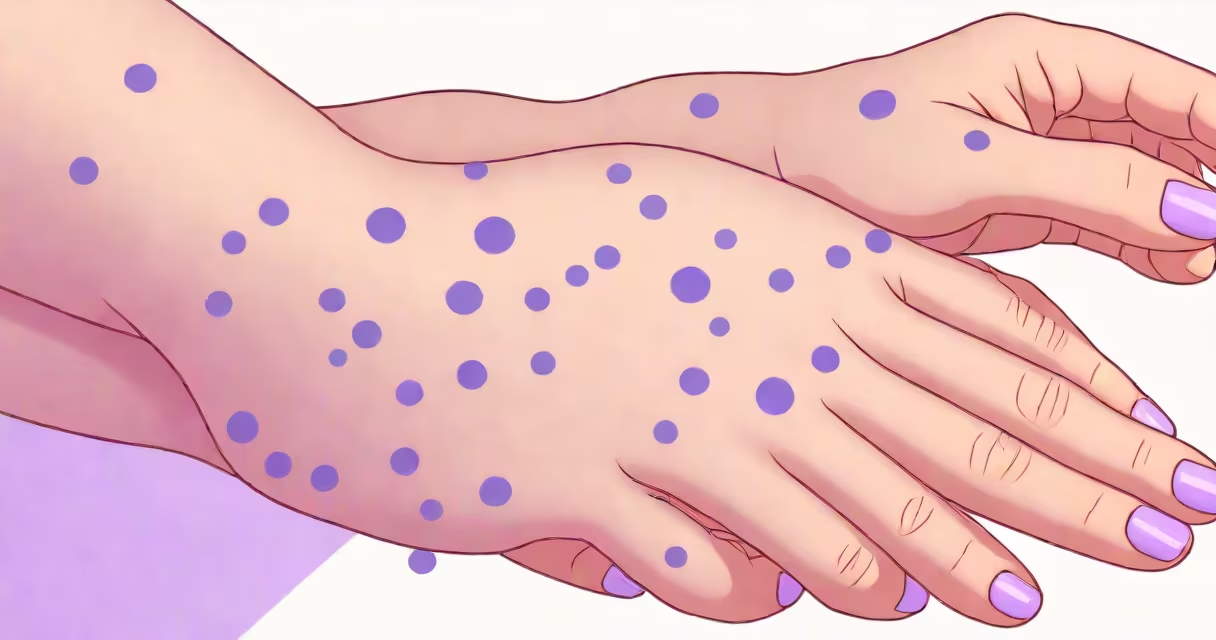
Purple spots on skin result from blood pooling under the skin due to broken blood vessels, clotting disorders, or inflammation. These spots, called purpura, range from tiny petechiae to large ecchymoses.
Most purple spots appear when small blood vessels burst, allowing blood to seep into surrounding tissues. This happens due to:
Unlike bruises, which change color over time, many purple spots remain purple indefinitely unless treated.
| Type | Size | Common Causes |
|---|---|---|
| Petechiae | Pinpoint (1-2 mm) | Allergic reactions, infections, or low platelet counts |
| Ecchymosis | Large (3-10 cm) | Trauma, surgery, or bleeding disorders |
| Purpura | Varies (2 mm-1 cm) | Vasculitis, scurvy, or medications |
Petechiae often appear in clusters, while ecchymoses are typically solitary. Purpura can appear as either.
Consult a doctor if purple spots:
Persistent or unexplained purple spots may indicate a serious condition like vasculitis or a blood disorder.
Doctors diagnose the underlying cause through:
Treatment depends on the cause. For example, steroid creams may reduce inflammation from vasculitis, while antibiotics treat infections.
I once noticed small purple spots on my arms after intense exercise. A dermatologist confirmed they were petechiae caused by temporary capillary rupture-a harmless but startling condition.