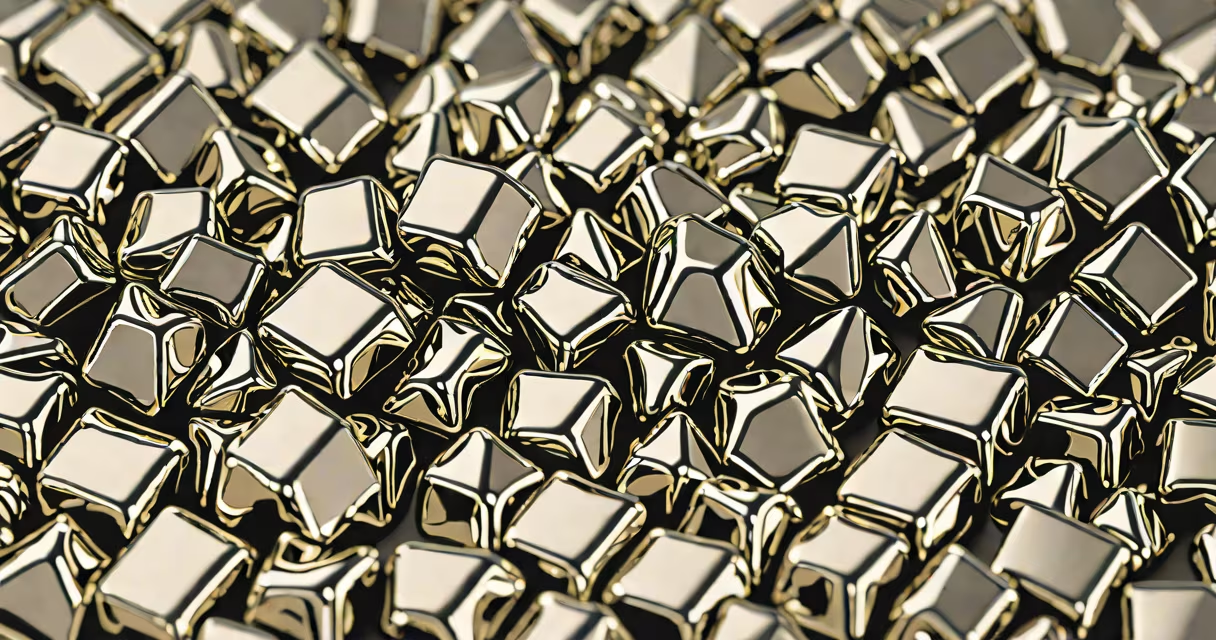
Platinum is a naturally occurring silvery-white metal with a slightly bluish tint, distinct from silver's pure white hue. This subtle difference becomes obvious when comparing the two metals side by side.
The silvery-white appearance comes from how platinum reflects light. Unlike silver, which reflects nearly all visible wavelengths equally, platinum absorbs slightly more blue light, creating that faint bluish cast. This effect is more noticeable in larger pieces or when viewing the metal at certain angles.
Platinum is often confused with silver and white gold, but each has distinct characteristics:
| Metal | Color | Key Difference |
|---|---|---|
| Platinum | Silvery-white with slight blue tint | More dense and durable than silver |
| Silver | Pure white | Tarnishes over time |
| White Gold | Bright white | Usually plated with rhodium |
To see these differences, try placing a platinum ring next to a silver one. The platinum will appear slightly darker and more blueish compared to the silver's bright white.
The distinctive color helps jewelers identify genuine platinum. When I worked with a jeweler to repair an antique platinum necklace, we used this color test along with a magnet test to confirm the metal's authenticity before proceeding with repairs.
Platinum's unique color also makes it valuable in industrial applications where corrosion resistance matters, such as in vehicle emissions systems and laboratory equipment. The slight blue tint can actually indicate higher purity levels in some manufacturing processes.
Many people think platinum is naturally shiny like silver, but raw platinum has a duller appearance. It develops its signature luster through polishing. Another misconception is that platinum is always mixed with other metals - while alloys exist, pure platinum maintains its characteristic color.