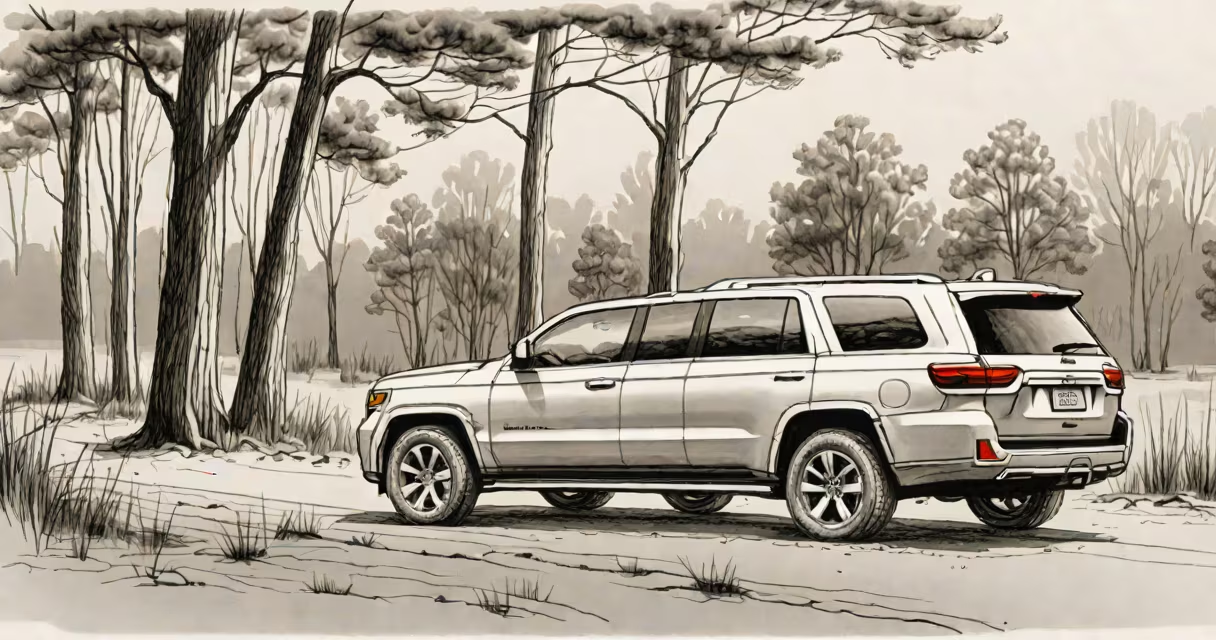
An SUV (Sport Utility Vehicle) is a large, rugged vehicle designed for both on-road and off-road use, combining elements of a car and a truck. It typically features higher ground clearance, four-wheel drive capabilities, and a spacious interior.
SUVs are distinguished by several key features:
SUVs come in various sizes and categories, each suited for different needs:
| Type | Description | Examples |
|---|---|---|
| Compact SUV | Smaller size, better fuel efficiency, ideal for urban areas | Honda CR-V, Toyota RAV4 |
| Mid-Size SUV | Balances size and performance, suitable for families | Ford Escape, Nissan Rogue |
| Full-Size SUV | Larger, more useful, often with third-row seating | Chevrolet Tahoe, Ford Expedition |
| Luxury SUV | High-end features, premium materials, advanced technology | Mercedes-Benz GLE, BMW X5 |
| Off-Road SUV | Designed for rugged terrains, often with enhanced off-road capabilities | Jeep Wrangler, Land Rover Defender |
While SUVs and crossovers share similarities, they differ in several aspects. SUVs are traditionally built on truck platforms, offering solid off-road capabilities. Crossovers, however, are built on car platforms, prioritizing fuel efficiency and comfort. SUVs are generally larger and heavier, providing more towing capacity and durability. Crossovers are lighter and more maneuverable, making them ideal for city driving.
The concept of SUVs dates back to the 1930s with the introduction of the Chevrolet Suburban. However, it was in the 1980s and 1990s that SUVs gained popularity, driven by the need for versatile vehicles that could handle both daily commutes and off-road excursions. The Jeep Cherokee, introduced in 1984, is often credited as the first modern SUV. Since then, SUVs have evolved, incorporating advanced technologies and luxury features.
According to the International Organization of Motor Vehicle Manufacturers, SUVs accounted for nearly 40% of global car sales in 2020, highlighting their widespread appeal and versatility. This trend is expected to continue as manufacturers introduce more hybrid and electric SUV models to meet environmental regulations and consumer demand.
One common misconception is that all SUVs are gas-guzzlers. While traditional SUVs tend to have lower fuel efficiency due to their size and weight, modern SUVs, especially hybrid and electric models, offer comparable or even better fuel efficiency than some sedans. Another misconception is that SUVs are exclusively for off-road use. In reality, many SUV owners use them primarily for daily commuting and family trips due to their spacious interiors and comfortable ride.
What defines an SUV is its combination of size, ruggedness, and versatility. Whether for daily commuting, family trips, or off-road adventures, SUVs offer a blend of features that cater to diverse needs. Understanding the different types and capabilities of SUVs can help consumers choose the right vehicle for their lifestyle and preferences.