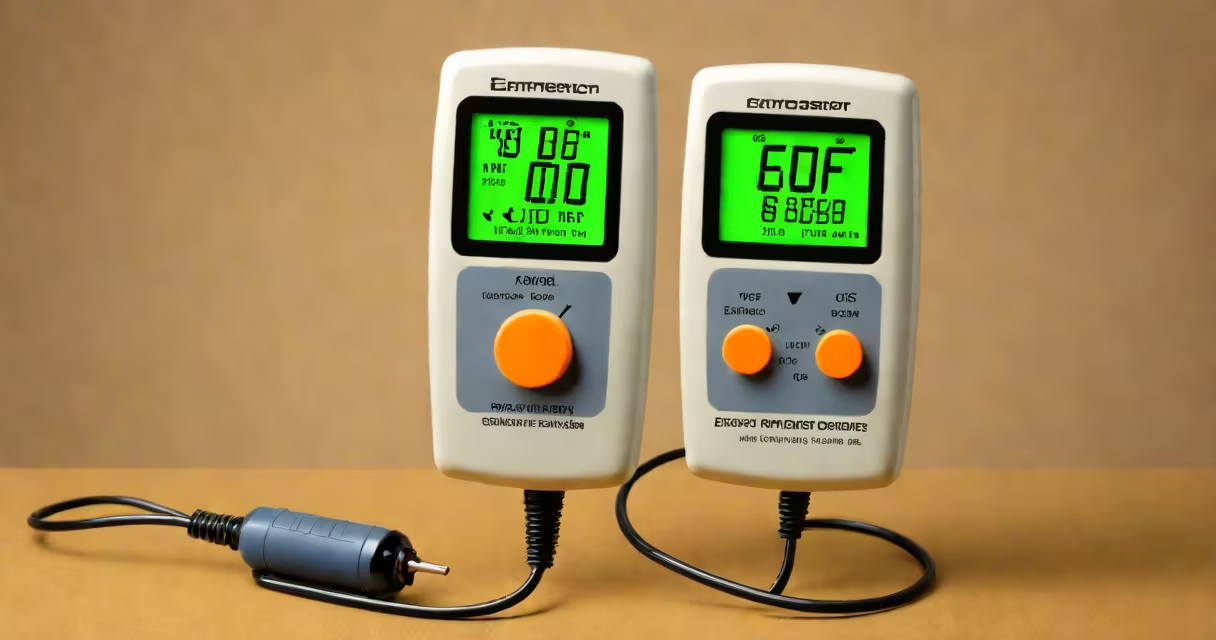
EMF readers measure electromagnetic fields to detect sources of electromagnetic radiation or potential paranormal activity. These devices identify fluctuations in electric, magnetic, or radio frequency fields.
EMF readers contain sensors that detect variations in electromagnetic fields. When exposed to an EMF source, the sensor generates a corresponding electrical signal. This signal is then processed and displayed as a reading on the device.
Most EMF readers operate within specific frequency ranges, typically between 5 Hz and 10 kHz. Some advanced models can detect higher frequencies, up to 100 kHz or more. The sensitivity and accuracy of these devices depend on their design and calibration.
| Type | Description | Common Uses |
|---|---|---|
| Single-axis meters | Measure EMFs in one direction at a time | Basic inspections, initial scans |
| Tri-axis meters | Measure EMFs in three dimensions simultaneously | Detailed investigations, professional use |
| RF field meters | Detect radio frequency fields | Identifying Wi-Fi, cell tower, and microwave interference |
EMF readers are used in various settings, including homes, offices, industrial sites, and even during paranormal investigations. They help identify sources of electromagnetic interference that can affect electronic devices, cause health concerns, or indicate supernatural phenomena.
For example, in a home setting, an EMF reader can detect electromagnetic fields emitted by power lines, appliances, or wireless routers. In industrial environments, these devices help locate sources of electromagnetic interference that can disrupt machinery or communication systems.
One common misconception is that EMF readers can only detect high-frequency electromagnetic fields. In reality, many EMF readers are designed to detect many frequencies, including low-frequency fields emitted by power lines and appliances.
Another misconception is that EMF readers can only be used for technical purposes, such as identifying sources of interference. While this is a primary use, EMF readers are also commonly used in paranormal investigations to detect fluctuations in electromagnetic fields that may indicate the presence of spirits or other supernatural entities.
I once used an EMF reader during a home inspection to identify sources of electromagnetic interference that were causing my Wi-Fi signal to drop. The device helped me locate a nearby power line that was emitting a strong electromagnetic field, allowing me to reposition my router for a better signal.
For more details on how EMF readers function and their applications, see how EMF meters work.