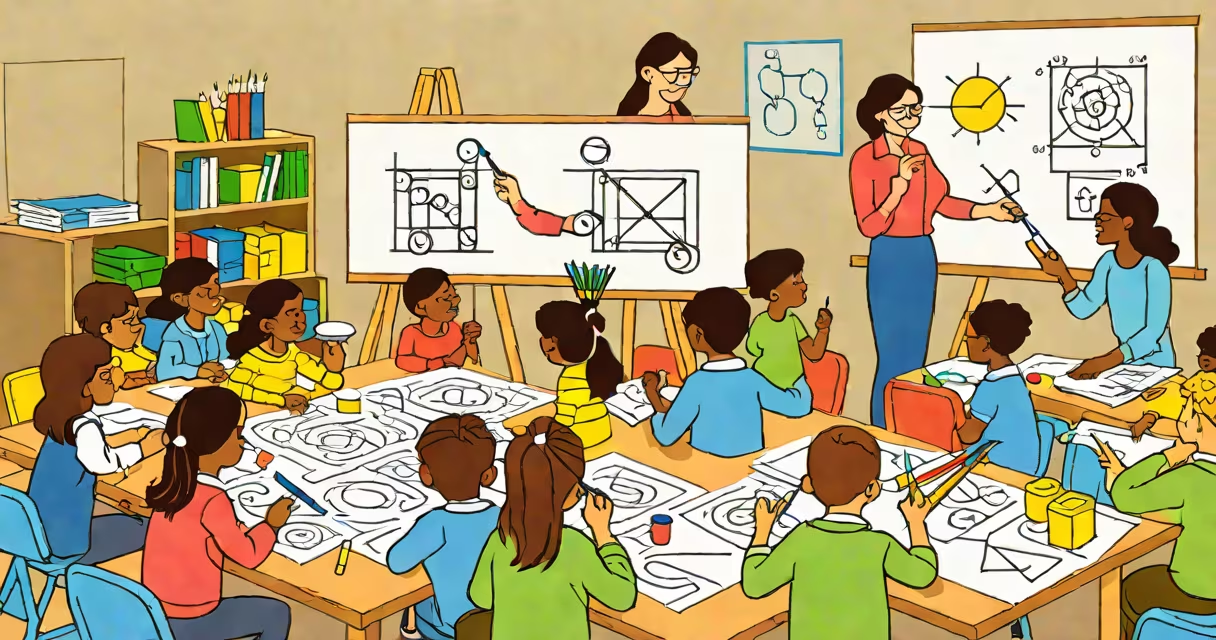
Early childhood educators teach and care for children eight, focusing on cognitive, social, and emotional development. They create safe, nurturing environments where young children learn through play, storytelling, and hands-on activities.
These educators follow developmentally appropriate practices, tailoring activities to each child's age and individual needs. They observe children closely to assess progress and adjust lessons accordingly. For example, a teacher might introduce counting through a game with blocks for a four-year-old, while using finger plays for a two-year-old.
| Type | Work Setting | Key Responsibilities |
|---|---|---|
| Preschool Teachers | Preschools, childcare centers | Plan and lead educational activities, assess progress, communicate with parents |
| Childcare Workers | Daycare centers, family homes | Provide basic care, supervise play, assist with learning activities |
| Kindergarten Teachers | Elementary schools | Teach academic and social skills, prepare children for first grade |
Early childhood educators work in various settings, including public and private schools, childcare centers, and community programs. Their work is important because the first five years of life are critical for brain development. According to the National Association for the Education of Young Children, high-quality early education can improve school readiness and long-term academic success.
One common misconception is that early childhood education is simply babysitting. In reality, educators follow structured curricula and use evidence-based teaching methods. For instance, they might use the Montessori approach, which emphasizes hands-on learning materials, or the Reggio Emilia method, which focuses on expressive languages like drawing and dramatic play.
My firsthand experience working in a preschool showed me how varied the daily routine can be. Mornings often start with circle time, where children sing songs and discuss the day's weather. Throughout the day, teachers help small-group activities, outdoor play, and snack times. They also document each child's progress and maintain open communication with parents.
Another myth is that early childhood education is not a serious field. In reality, it requires specialized knowledge of child development, classroom management, and instructional strategies. Educators must also stay updated on the latest research and best practices, often through professional development courses.
People often confuse early childhood education with elementary education or general teaching. While both fields involve education, early childhood educators focus on younger children and use different teaching methods. For example, they emphasize play-based learning and social-emotional development, whereas elementary educators focus more on academic subjects and structured lessons.
Some people think that early childhood education is only for those who want to be teachers. However, many professionals in this field work as childcare providers, program directors, or policy advocates. Some even pursue careers in research or consulting, helping to shape early education policies and practices.
Early childhood educators play a important role in shaping the future by providing young children with the foundation they need to succeed. Their work goes beyond simple care, encompassing education, social development, and emotional support. By understanding what these professionals do, we can better appreciate the importance of early childhood education.