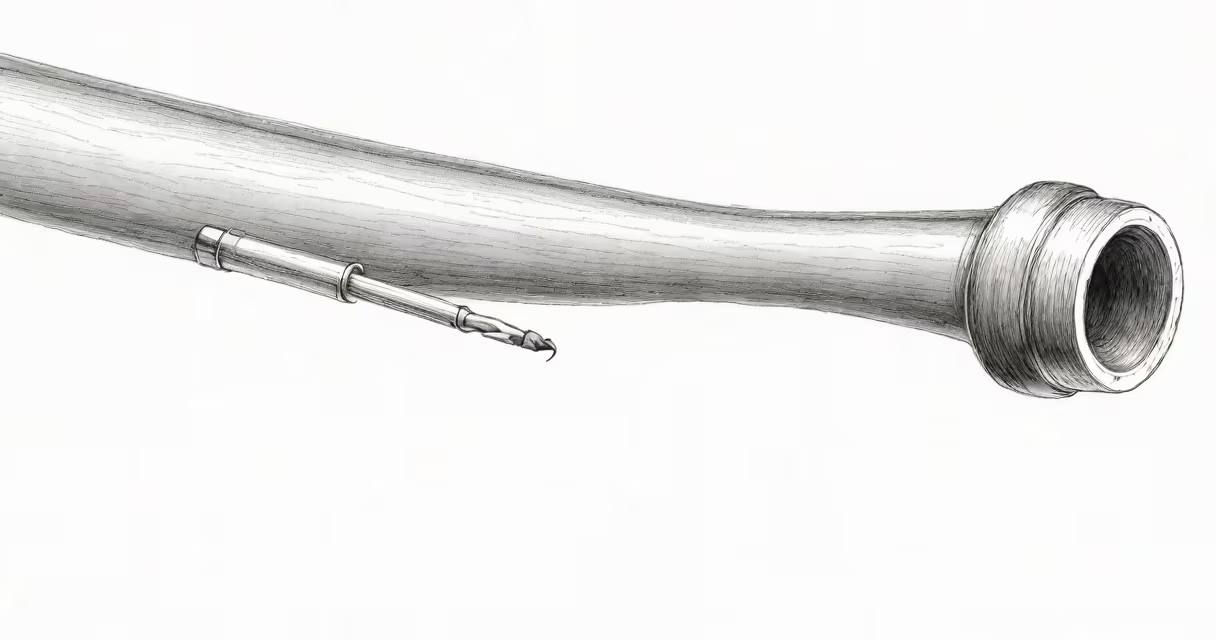
A sounding rod is a metal probe used to measure underground depth during well drilling or geotechnical surveys. It determines how far tools or pipes must descend to reach bedrock or water.
Sounding rods consist of threaded metal sections screwed together to reach greater depths. The rod descends until it hits an obstacle, and workers measure the length to calculate depth. Some modern versions include electronic sensors for precise readings.
| Type | Material | Use Case |
|---|---|---|
| Standard | Steel | General depth measurement |
| Electronic | Fiberglass with sensors | Precise geological surveys |
| Hollow-stem | Aluminum | Water well drilling |
Sounding rods measure well depth, locate underground obstacles, and assess soil composition. They're essential in construction, agriculture, and environmental monitoring. For example, a farmer drilling a new well would use a sounding rod to determine the depth of water tables and avoid hitting bedrock prematurely.
While working on a farm project, I used a sounding rod to measure well depth. The rod hit solid rock at 40 feet, preventing costly drilling mistakes. This hands-on experience reinforced the tool's reliability in practical applications.