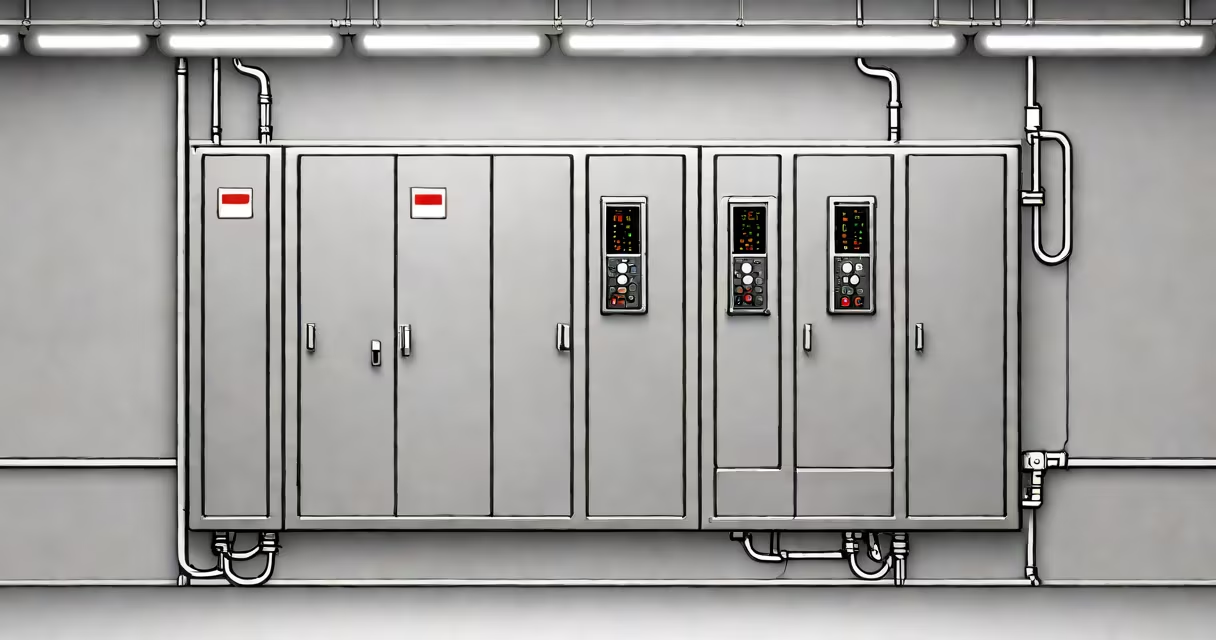
A sub panel is a smaller electrical distribution center that connects to your main service panel, typically resembling a scaled-down version of the main breaker box. These gray metal boxes contain circuit breakers and distribute electricity to specific areas of a home or building.
A sub panel receives power from the main service panel through thick wires called feeder cables. Inside the sub panel, these cables connect to a main breaker, which distributes electricity to individual circuit breakers. Each breaker controls a separate circuit, protecting it from overloads.
| Type | Voltage | Common Uses |
|---|---|---|
| Main Breaker Sub Panel | 120/240V | Whole-home distribution, garages, workshops |
| Main Lug Sub Panel | 120/240V | Add-on circuits, sheds, outbuildings |
| 200-Amp Sub Panel | 120/240V | Large homes, commercial spaces |
Sub panels are common in homes with extensive wiring needs, such as large houses, workshops, or garages. They help manage electrical loads by distributing power efficiently. For example, a detached garage might have its own sub panel to power tools and machinery without overloading the main panel.
Many people confuse sub panels with junction boxes or main service panels. Unlike junction boxes, sub panels contain circuit breakers. Unlike main service panels, they don't connect directly to the utility meter.
Sub panels often look similar to main service panels but are smaller. They typically have a gray metal cover with a handle for opening. Inside, you'll find multiple circuit breakers lined up in rows. The feeder cables entering the sub panel are thicker than standard wiring.
I once helped a friend install a sub panel in his workshop. The panel had a clear label indicating it was a 100-amp sub panel, connected to the main panel via 2/0 AWG aluminum feeder cables. This setup allowed him to run high-power tools without tripping the main panel's breakers.