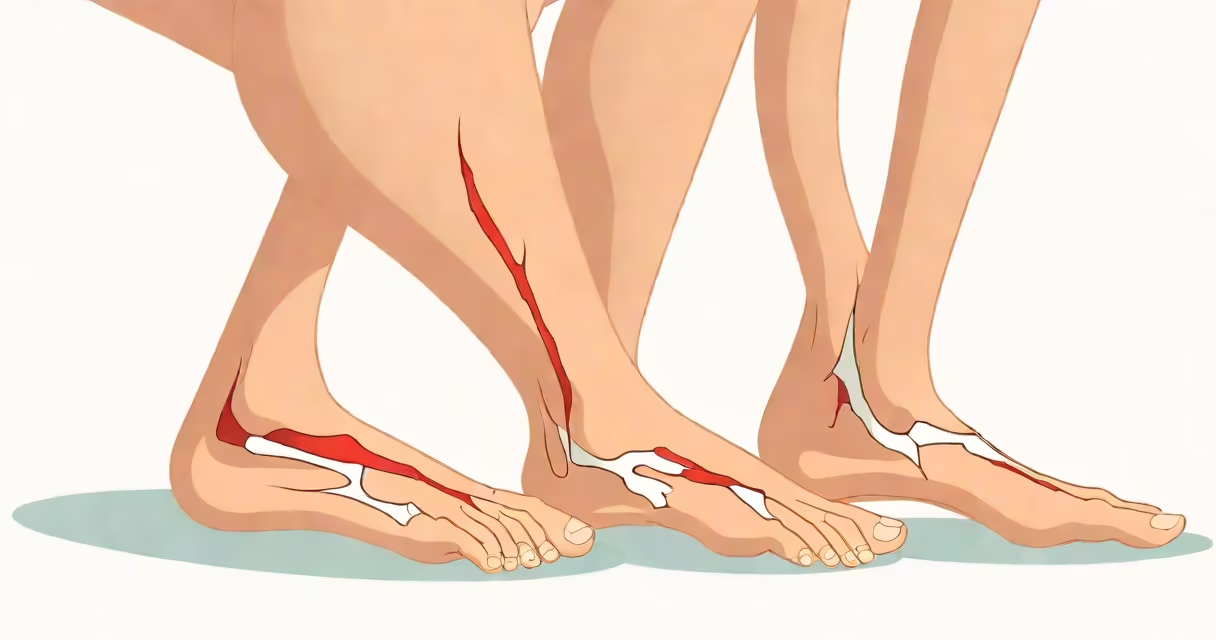
A torn calf muscle causes sudden pain, visible swelling, and bruising along the back of the lower leg. The injury often happens during activities that involve running, jumping, or sudden changes in direction.
The calf muscle consists of two main muscles: the gastrocnemius and the soleus. A tear typically occurs in the gastrocnemius, which crosses the knee joint and attaches to the heel bone via the Achilles tendon. Sudden force or overstretching can cause the muscle fibers to tear partially or completely.
For example, a basketball player who lands awkwardly after a jump may feel a sharp pain and hear a popping sound. The calf muscle may appear visibly deformed if the tear is severe.
| Type | Severity | Symptoms |
|---|---|---|
| Grade I | Mild | Mild pain, slight swelling, no loss of function |
| Grade II | Moderate | Moderate pain, noticeable swelling, reduced strength |
| Grade III | Severe | Severe pain, significant swelling, complete loss of function |
Another common mistake is assuming that a mild tear will heal on its own without proper treatment. Even minor tears require rest, ice, compression, and elevation (RICE) to prevent further damage.
Treatment for a torn calf muscle depends on the severity of the injury. Mild tears may heal with RICE and over-the-counter pain medication. Severe tears may require surgery followed by physical therapy.
Physical therapy focuses on restoring strength, flexibility, and range of motion. Exercises may include gentle stretching, strengthening exercises, and gradual return to activity.
I once treated a torn calf muscle by following RICE protocol and avoiding high-impact activities for several weeks. After the initial swelling subsided, I gradually reintroduced light stretching and strengthening exercises. Full recovery took about six weeks.
Seek medical attention if you experience severe pain, inability to walk, or signs of infection such as redness, warmth, or fever. A doctor can diagnose the injury through a physical exam and may order imaging tests such as an MRI or ultrasound.
Early diagnosis and treatment can improve outcomes and reduce the risk of chronic issues such as muscle weakness or recurrent injuries.