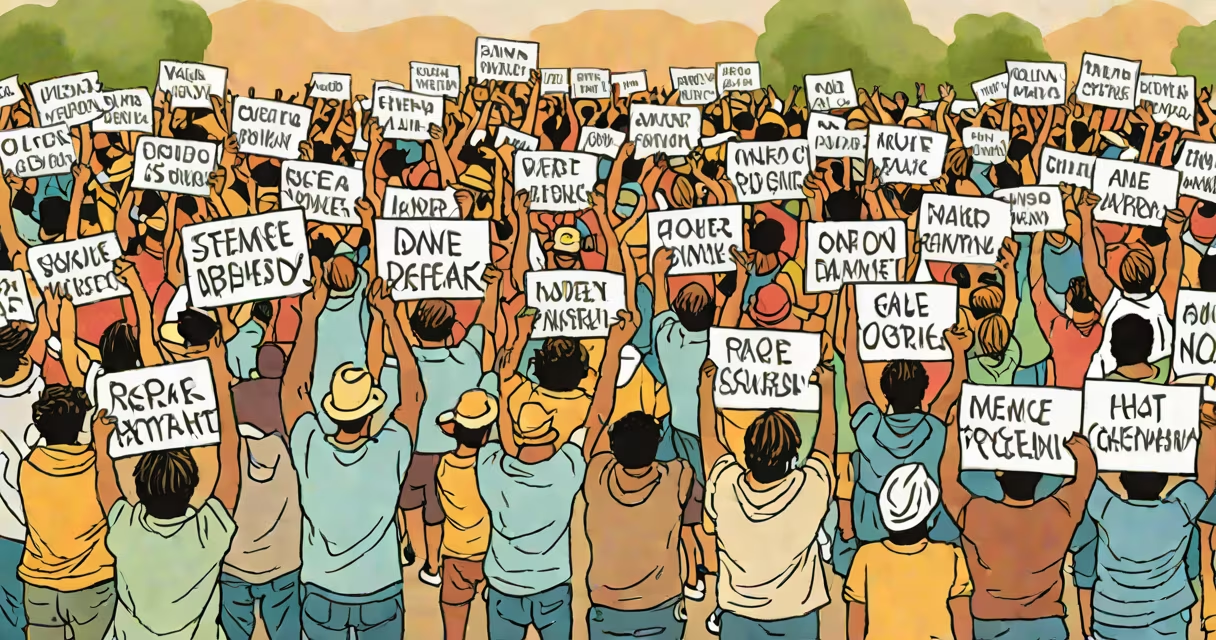
The First Amendment's assembly clause protects the right to gather peacefully for protest or advocacy. This right enables collective action to influence government and society.
The First Amendment states: "Congress shall make no law… abridging the freedom of speech, or of the press; or the right of the people peaceably to assemble." Unlike free speech, which focuses on individual expression, assembly emphasizes collective action.
This right allows groups to organize protests, rallies, and demonstrations. However, it is not absolute. Governments may impose time, place, and manner restrictions to maintain public safety. For example, a city could require permits for large gatherings in busy downtown areas.
Assemblies protected under the First Amendment include:
People exercise assembly rights in public spaces like streets, parks, and sidewalks. These areas are considered traditional public forums where free speech and assembly are most protected. Private property owners, however, can restrict assemblies on their land unless they open it to public use.
Historically, assembly has been important in movements like the Civil Rights Era. The March on Washington in 1963, where Martin Luther King Jr. delivered his "I Have a Dream" speech, relied on this right to bring attention to racial inequality.
Some assume assembly rights allow any gathering, but courts have ruled that violent or disruptive assemblies are not protected. For instance, riots or assemblies that block emergency services may face legal consequences.
Another misconception is that assembly rights apply only to political protests. They also protect religious gatherings, labor strikes, and even casual meetups if they involve advocacy or shared interests.
In 2017, the Women's March drew millions worldwide to protest policies affecting women's rights. Organizers secured permits for marches in major cities, ensuring compliance with local regulations while exercising their First Amendment rights. Courts upheld these gatherings as protected assemblies, reinforcing the importance of this constitutional safeguard.
For more details on the First Amendment, see 5 facts about the First Amendment and 5 protections of the First Amendment.