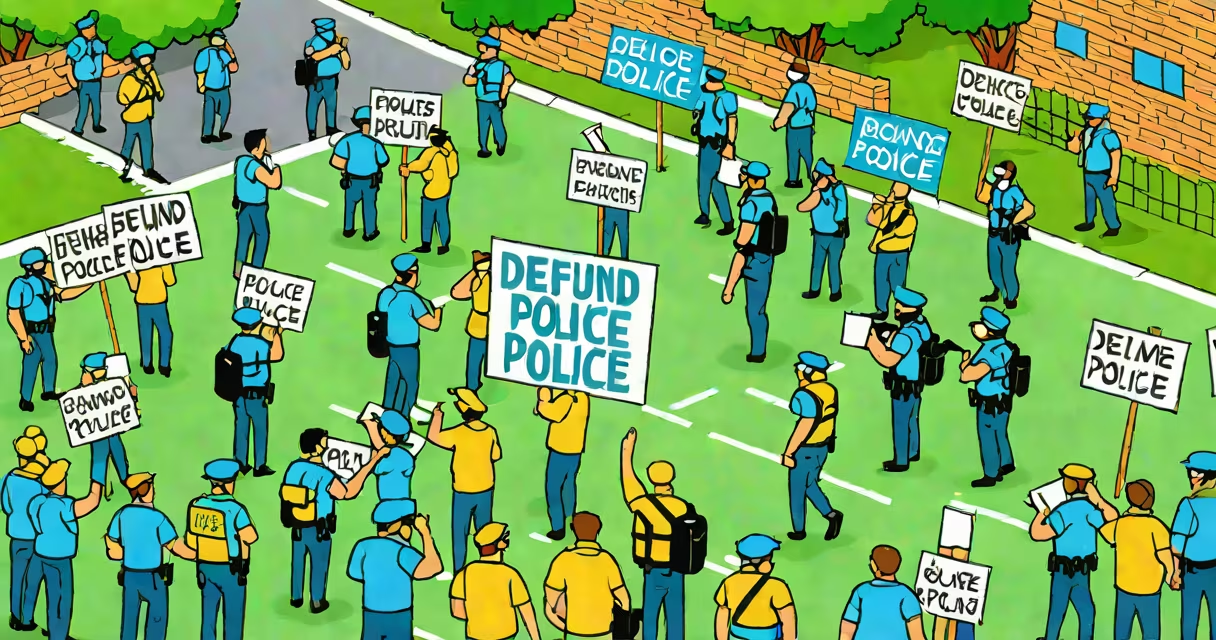
Defunding the police means reallocating funds from law enforcement agencies to social programs like mental health services, housing, and education. This movement gained traction in 2020 amid protests against police violence.
Defunding doesn't necessarily mean abolishing police departments. Instead, it proposes reducing their budgets and shifting resources to address root causes of crime. For example, cities like Minneapolis proposed cutting $1 million from the police budget in 2020 and reallocating it to violence prevention programs.
| Type | Description | Example |
|---|---|---|
| Partial Defunding | Reducing police budgets while maintaining core functions | Los Angeles cut $150 million from its police budget in 2020 |
| Abolition | Eliminating police departments entirely | Proposals in Portland, Oregon, to replace police with community safety initiatives |
Defunding advocates argue that police budgets consume too much of city budgets-often 30% or more-while failing to address systemic issues. They point to studies showing that social programs reduce crime more effectively than policing. For instance, a 2016 study by the Urban Institute found that community-based violence intervention programs reduced shootings by 30% in high-risk areas.
Many confuse defunding with simply cutting police budgets without replacement. In reality, it's about reallocating funds to better serve communities. Another misconception is that defunding leads to increased crime. However, evidence suggests the opposite: cities like Camden, New Jersey, saw crime drop after restructuring their police departments and investing in social services.
I've seen firsthand how defunding discussions play out in local government meetings. In my town, a proposal to shift $500,000 from police overtime to youth mentorship programs sparked heated debate. Supporters argued it would address underlying causes of crime, while opponents feared it would compromise public safety.
Defunding the police means reallocating law enforcement budgets to social programs to address systemic issues. While controversial, evidence suggests it can reduce crime and improve community safety. Understanding this concept requires distinguishing it from mere budget cuts or police reform.