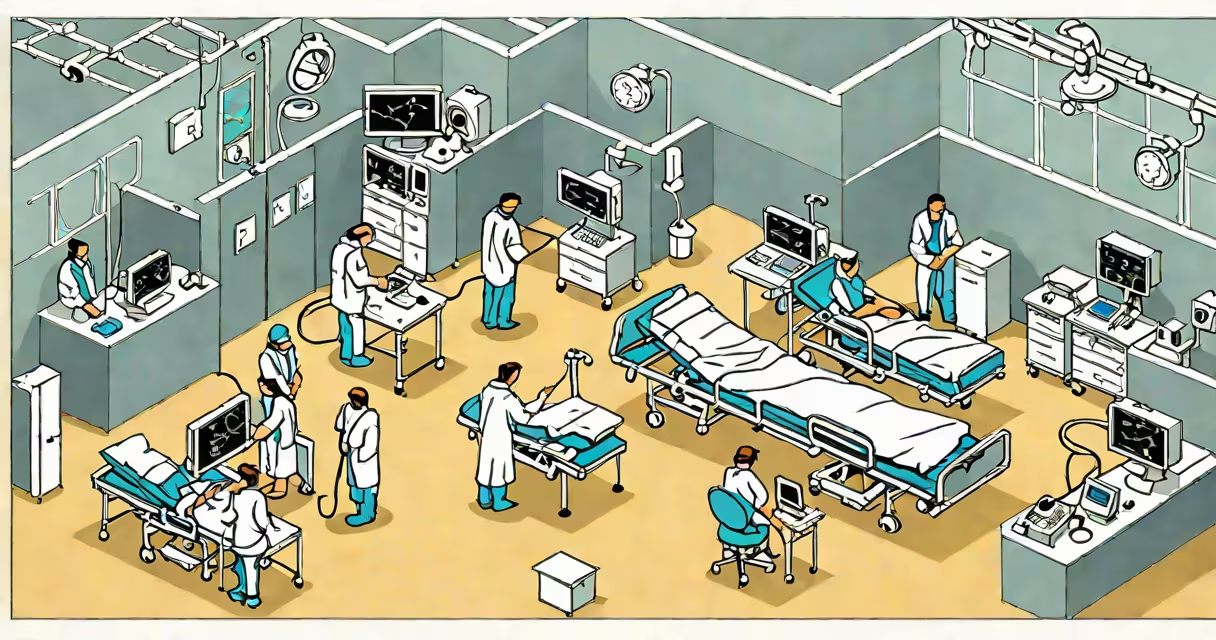
ICU stands for Intensive Care Unit, a specialized hospital department providing critical care for patients with life-threatening conditions or injuries. These units monitor and treat patients who require constant, close observation and advanced medical support.
ICUs operate with a higher nurse-to-patient ratio than regular hospital floors, often 1:1 or 1:2. This allows for continuous monitoring of important signs, rapid response to changes, and immediate intervention when needed. Equipment like ventilators, heart monitors, and IV infusion pumps are standard in ICUs.
Most ICUs focus on specific organs or systems, such as cardiovascular, neurological, or surgical care. Some hospitals have specialized ICUs for burn victims, newborns (NICUs), or coronavirus patients (COVID ICUs).
| Type | Focus Area | Typical Patients |
|---|---|---|
| Medical ICU (MICU) | General medical conditions | Patients with severe infections, respiratory failure, or kidney failure |
| Surgical ICU (SICU) | Post-operative care | Patients recovering from complex surgeries |
| Cardiac ICU (CCU) | Heart conditions | Patients with heart attacks, arrhythmias, or post-heart surgery |
| Neuro ICU | Brain and nervous system | Patients with strokes, brain injuries, or seizures |
Doctors admit patients to ICUs when they require:
According to the Society of Critical Care Medicine, about 6% of hospitalized patients require ICU care, but they account for 22% of hospital costs. This highlights the resource-intensive nature of ICU treatment.
Many people confuse ICUs with other hospital departments. Unlike regular hospital floors, ICUs provide continuous care and advanced monitoring. They differ from emergency rooms, which handle immediate, life-threatening situations but don't offer long-term critical care.
Some assume ICUs are only for elderly patients, but people of all ages may require ICU care. For example, young adults with severe injuries from car accidents or children with complications from infections might need ICU treatment.
I once visited a friend recovering from a severe infection in the MICU. The constant beeping of monitors, frequent checks by nurses, and the intense focus on his recovery were striking. It was clear how different this environment was from a typical hospital room.
Patients leave ICUs when their conditions stabilize and they no longer require constant monitoring. They may transfer to a regular hospital floor, a step-down unit for less intensive care, or a rehabilitation facility for recovery. In some cases, patients transition to hospice care if their conditions don't improve.