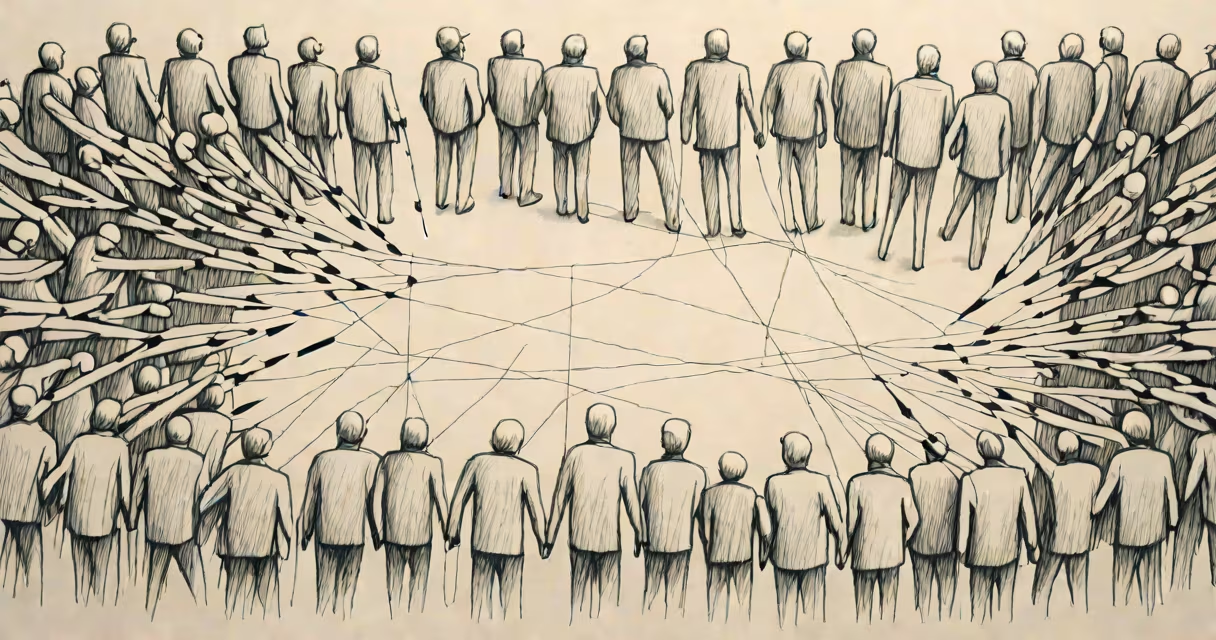
Being polarized means holding strongly opposing views that create clear divisions between groups. These divisions often form around political, cultural, or social issues, creating "us vs. them" mentalities.
Polarization occurs when people sort themselves into opposing groups based on shared beliefs or identities. This process intensifies differences while minimizing common ground. For example, in politics, polarization might mean Democrats and Republicans disagreeing sharply on policy, with little middle ground.
The process often involves several key factors:
Polarization appears in different forms depending on context:
| Type | Definition | Example |
|---|---|---|
| Political polarization | Divisions along party lines or ideological differences | Democrats and Republicans in the U.S. Congress consistently voting along party lines |
| Cultural polarization | Differences in values, lifestyles, or traditions | Debates about traditional vs. progressive family structures |
| Social polarization | Group divisions based on race, gender, or class | Discussions about racial justice sparking intense reactions along identity lines |
Many assume polarization always involves extreme positions. However, research shows polarization often reflects group identity more than individual extremism. A 2018 Pew Research study found that while Americans hold increasingly different views, most people remain moderate in their personal beliefs.
Another myth is that polarization only exists in politics. In reality, it appears in many areas, including science (vaccine debates), entertainment (fan conflicts), and even sports (rival team loyalties).
Polarization affects how societies function. It can lead to:
For example, during the COVID-19 pandemic, polarization around mask-wearing and lockdown measures created public health challenges beyond the virus itself.
Understanding polarization helps explain why certain discussions become heated and how societies might work toward greater unity. While differences will always exist, recognizing polarization's role can help bridge divides and build constructive dialogue.