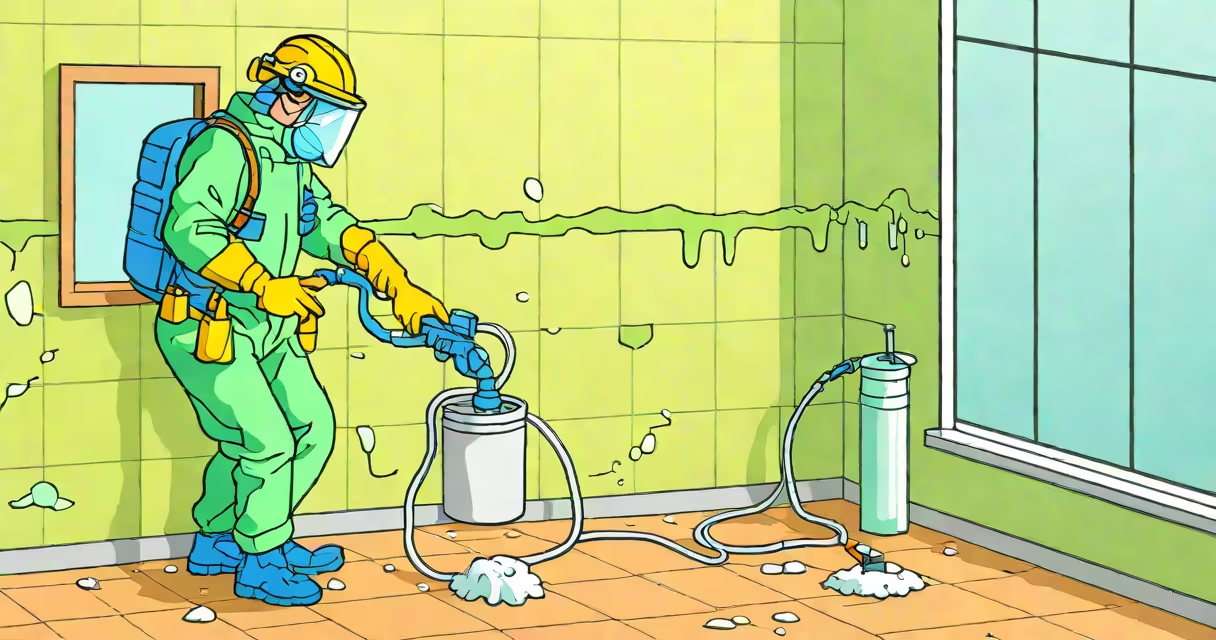
Mold remediation is the process of identifying, removing, and preventing mold growth in indoor environments. It involves cleaning, disinfecting, and repairing affected areas to restore air quality and safety.
Professionals follow a multi-step process to eliminate mold. First, they locate the source of moisture fueling growth. Next, they contain the area using physical barriers and negative air pressure to prevent spores from spreading. Then, they remove porous materials like drywall or insulation that can't be cleaned. Non-porous surfaces are scrubbed with antimicrobial solutions. Finally, they address the underlying water issue to prevent recurrence.
| Type | Scope | Example Scenario |
|---|---|---|
| Level 1 | Small areas (10 sq ft or less) | A damp spot under a sink |
| Level 2 | Medium areas (10-100 sq ft) | Visible mold on a bathroom ceiling |
| Level 3 | Large areas (>100 sq ft) | Flood damage affecting multiple rooms |
Remediation is needed whenever mold covers more than 10 square feet or affects HVAC systems. The EPA recommends hiring professionals for these cases due to health risks. Mold releases spores that can trigger allergies, asthma, and other respiratory issues. Black mold (*Stachybotrys chartarum*), often found in water-damaged buildings, produces toxic mycotoxins that require specialized cleanup.
Most people confuse remediation with simple mold removal. Removal only addresses visible mold, while remediation includes fixing moisture problems and preventing regrowth. For example, after a flood, remediation might involve extracting water, drying structures, and installing dehumidifiers-steps beyond basic cleaning.
Many believe bleach kills all mold. However, bleach only removes surface stains and doesn't penetrate porous materials. The CDC advises against using bleach on porous surfaces because it can damage them further. Instead, professionals use specialized antifungal and antimicrobial treatments.
Another myth is that mold only grows in wet areas. In reality, it thrives in hidden spaces like behind walls, under carpets, or inside HVAC systems. A musty odor often signals hidden mold. Professionals use tools like moisture meters and infrared cameras to detect these invisible growths.
In 2018, a homeowner in Florida discovered black mold in their attic after a roof leak. The mold covered about 200 square feet of drywall and insulation. A remediation team sealed off the area, removed contaminated materials, and treated the space with antimicrobial spray. They also repaired the roof and installed better ventilation to prevent future growth. The project cost $5,000 but protected the family's health and home value.
When considering mold remediation, prioritize licensed professionals who follow industry standards like those from the Institute of Inspection, Cleaning and Restoration Certification (IICRC). DIY approaches often fail to address root causes, leading to costly recurring problems.