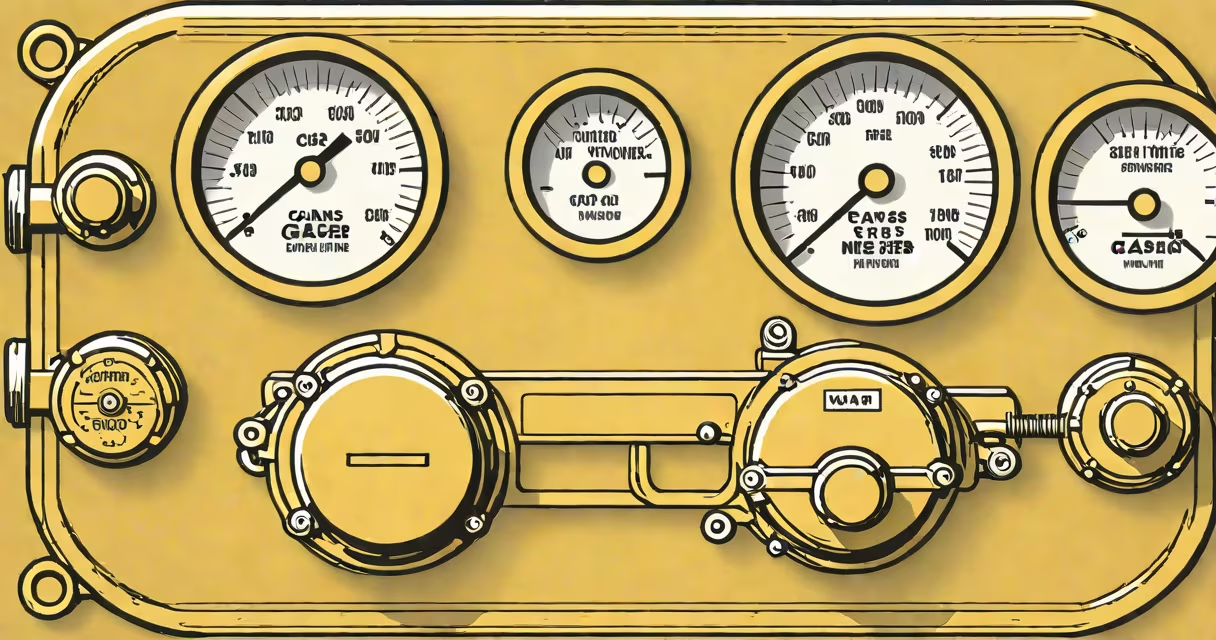
A gas meter is a device installed by utility companies to measure natural gas consumption in homes and businesses. These meters track usage to calculate billing amounts.
Gas meters measure the volume of gas passing through them. Most residential meters use mechanical components to track gas flow, while newer models may use electronic sensors. The meter records usage data, which utility workers read periodically to generate bills.
Residential gas meters typically fall into two categories:
| Type | Description | Example Use |
|---|---|---|
| Analog (Dial) Meters | Mechanical dials that rotate to show usage | Older homes, rural areas |
| Digital Meters | Electronic displays showing numerical readings | Newer constructions, urban areas |
Analog meters have multiple dials that spin as gas flows through the meter. Digital meters display numbers directly, similar to a car's odometer. Some modern meters transmit readings automatically to utility companies via wireless networks.
Most gas meters are located outside near the gas service entrance. They're usually mounted on an exterior wall or in a small box near the ground. In colder climates, they might be installed inside the home, often in basements or utility rooms.
I once helped a neighbor locate their gas meter. It was hidden behind some shrubbery, making it difficult to spot from the street. After clearing away some overgrowth, we found it mounted on the side of the house near the propane tank.
Many people confuse gas meters with water meters or electric meters. Unlike water meters, which measure liquid flow, gas meters track gaseous fuel consumption. Electric meters measure kilowatt-hours of electricity used, not gas volume.
Another common mistake is assuming all gas meters look the same. While most residential meters are similar in size and shape, commercial meters can be much larger and may have additional features for higher gas volumes.
According to the U.S. Energy Information Administration, about 50 million residential gas meters are in use across the United States. Many utility companies are upgrading older analog meters to digital models for more accurate readings and remote monitoring capabilities.
To read an analog gas meter, note the numbers on the left side of the dials, ignoring any numbers after the decimal point. For digital meters, simply record the numbers displayed. Some meters have a small screen that cycles through different readings - look for the one labeled "totalizer" or "total consumption."
Regularly checking your gas meter can help you monitor usage patterns and detect potential leaks. If you notice unusually high readings between official meter readings, contact your utility provider for assistance.