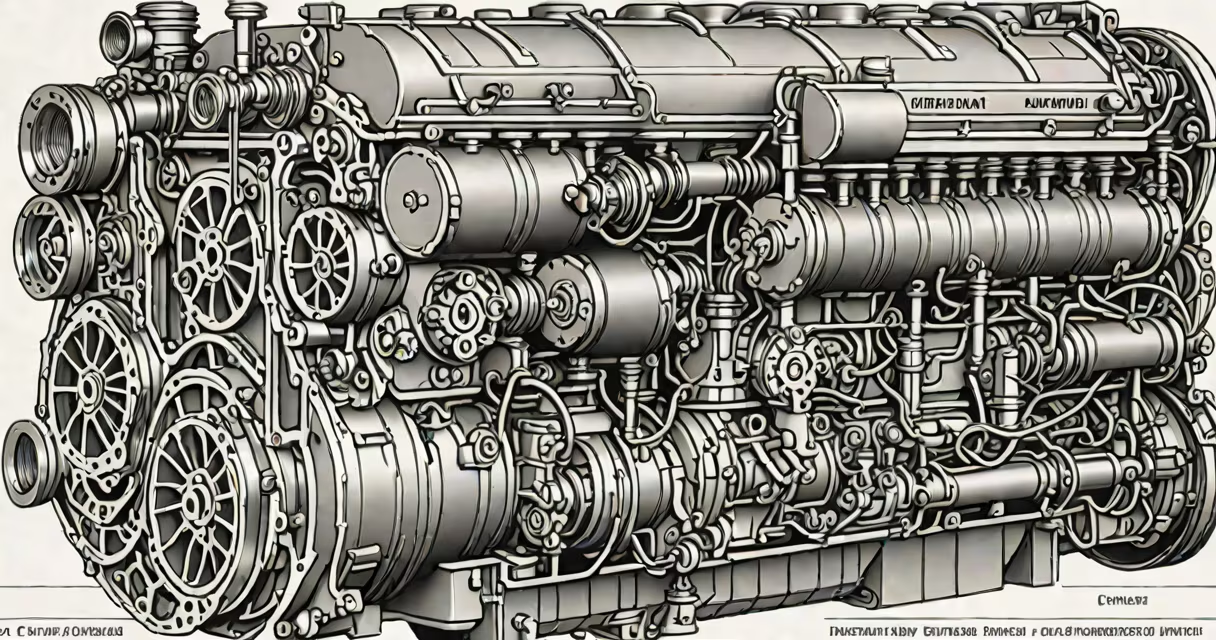
A naturally aspirated engine relies solely on atmospheric pressure to draw air into its cylinders for combustion, without any forced induction like turbocharging or supercharging.
These engines use intake manifolds and valves to create a low-pressure area during the intake stroke, allowing air to flow in naturally. The air-fuel mixture is then compressed and ignited, producing power through controlled explosions.
| Type | Configuration | Common Uses |
|---|---|---|
| Inline | Cylinders in a straight line | Cars, motorcycles |
| V-type | Cylinders arranged in a V shape | High-performance cars, trucks |
| Flat (Boxer) | Cylinders opposed horizontally | Sports cars, some motorcycles |
| Rotary (Wankel) | Triangular rotor instead of pistons | Performance cars, some aircraft |
Naturally aspirated engines are common in everyday vehicles due to their simplicity, reliability, and linear power delivery. They're often preferred in applications where immediate throttle response and predictable power characteristics are important, such as racing and high-performance driving.
For example, the Ford Mustang GT uses a naturally aspirated 5.0L V8 engine known for its responsive power and distinctive sound. This engine configuration provides a direct connection between throttle input and power output, which is favored by many driving enthusiasts.
Many people confuse naturally aspirated engines with being less useful than forced induction engines. While naturally aspirated engines may produce lower peak horsepower numbers, they often deliver power more linearly and can rev higher, resulting in excellent high-RPM performance.
Another misconception is that naturally aspirated engines are always smaller. While some high-revving naturally aspirated engines have smaller displacements, many naturally aspirated engines, like the Chevrolet Corvette's 6.2L V8, have large displacements and produce significant power.
Naturally aspirated engines differ from forced induction engines (turbocharged or supercharged) in how they draw air into the combustion chamber. Forced induction engines use a turbocharger or supercharger to compress air into the engine, increasing power output. In contrast, naturally aspirated engines rely on atmospheric pressure alone.
For example, the BMW M3 uses a twin-turbocharged inline-six engine, while its predecessor, the E92 M3, used a naturally aspirated V8. The turbocharged engine produces more torque at lower RPMs, while the naturally aspirated V8 offers a higher redline and more linear power delivery.
I've personally driven both types of engines and noticed distinct differences. The naturally aspirated V8 in the E92 M3 feels more responsive to throttle inputs and revs freely to its 8,400 RPM redline, while the turbocharged inline-six in the current M3 delivers power more abruptly and with noticeable turbo lag at lower RPMs.